Monday
31 August, 2026
News Flash
News Flash
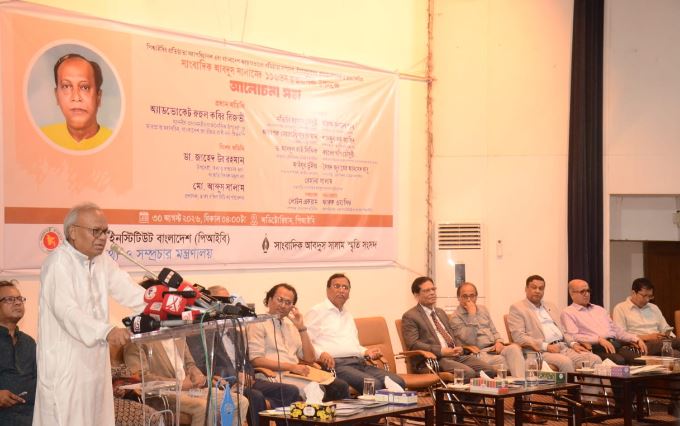
DHAKA, Aug 30, 2026 (BSS) - BNP Acting Secretary General and Prime Minister's Political Adviser Ruhul Kabir Rizvi today said veteran journalist Abdus Salam's life and struggle were a unique example of independent and objective journalism.
"Journalists like Abdus Salam are needed not only in Bangladesh but across the world today. We need people like him to distinguish truth from falsehood and stand for civil liberties and independent-minded people," he said.
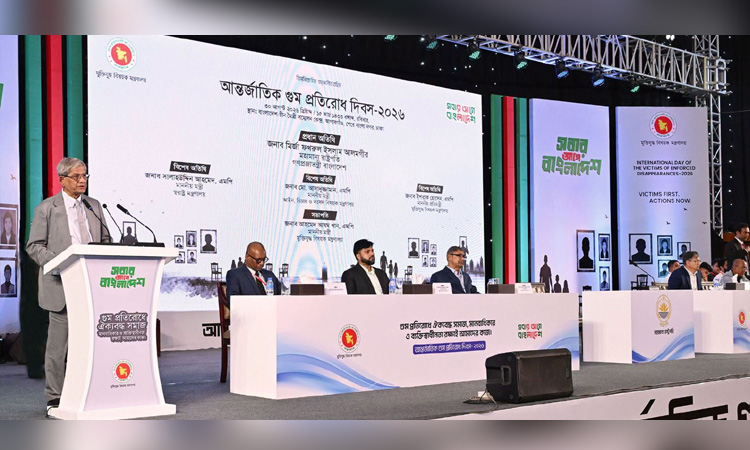
Rizvi made the remarks as the chief guest at a discussion marking the 116th birth anniversary of Abdus Salam, founder Director General of the Press Institute of Bangladesh (PIB) and founding editor of The Bangladesh Observer. Salam was also a renowned journalist of the subcontinent and a veteran of the Language Movement.
The PIB and the Ministry of Information and Broadcasting jointly organised the discussion at the PIB auditorium, with assistance from the Journalist Abdus Salam Memorial Association.
Recalling Salam's academic and professional life, Rizvi said he studied English literature at the University of Calcutta and Presidency College before joining a lucrative government job. He later left the job to pursue journalism.
Rizvi compared Salam's struggles with those of national poet Kazi Nazrul Islam, noting that both were involved in journalism, spent time in jail and faced persecution for standing against authoritarianism and vested interests.
He said Salam played an important role during the 1952 Language Movement. A week before the movement reached its peak, Salam wrote a column supporting the demand for recognition of Bangla. He was subsequently labelled anti-religious and arrested, Rizvi said.
Salam later entered politics and was elected as an MP from the United Front, Rizvi added.
He also recalled Salam's criticism of Pakistani President Ayub Khan's book Friends Not Masters in The Bangladesh Observer. The newspaper was shut down the following day and Salam was again sent to jail, Rizvi said.
"Whether under limited democracy, fascism or military rule, he faced attacks at all times," Rizvi said.
He said Salam was not merely a desk journalist but actively stood against threats to society and the state and worked as an activist alongside his journalism.
"Despite repeated blows, Abdus Salam never wavered from his position. Because of his independent-mindedness and objective journalism, he became a prominent figure not only in then-East Pakistan but also the president of the Editors' Council formed by the two wings of Pakistan," Rizvi said.
He added that Salam regarded journalism as a sacred commitment, making truth and objectivity the core principles of his work. "He never bowed to money, threats or power," Rizvi said.
PIB Director General Faruk Wasif chaired the programme, while Bangladesh Pratidin Editor Loton Ekram moderated it.
Information and Broadcasting and Culture Adviser Dr Zahid Ur Rahman and Dhaka South City Corporation Administrator and freedom fighter Abdus Salam attended the event as special guests.
Managing Director and Chief Editor of Bangladesh Sangbad Sangstha (BSS) Kader Gani Chowdhury, The Financial Express Editor Shamsul Haque Zahid, CPD Coordinating Fellow Prof Mostafizur Rahman, National Press Club General Secretary Ayub Bhuiyan, Television Editors Council Convener Dr Abdul Hai Siddique, its Member Secretary Syed Zubayer Ahmed Babu and Journalist Abdus Salam Memorial Association President Rehana Salam also took part in the discussion.
Dr Zahid Ur Rahman said a democratic government should accept criticism and allow the media to work freely.
"If a democratic government wants to be re-elected, there is no benefit in restricting freedom of expression. Rather, the government must accept criticism and allow the media to work freely," he said.
DSCC Administrator Abdus Salam said great figures emerge in every field like beacons, illuminating the way for others. He described veteran journalist Abdus Salam as one such figure and recalled his role as the founder of PIB.
Kader Gani Chowdhury that said no state can hold its head high if the media is not properly managed. Journalists must fulfill their duties with a combination of patriotism, courage and wisdom, standing on the side of truth and justice.
"The example that journalist Abdus Salam set in the field of journalism through a combination of courage, patriotism, and wisdom should be followed by current and young journalists," he said.