Saturday
05 September, 2026
News Flash
News Flash
DHAKA, June 23, 2026 (BSS) - Directorate General of Health Services (DGHS) have launched a nationwide training programme to enhance physicians' skills
and preparedness in managing dengue patients as Bangladesh braces for a potential rise in infections during the monsoon season.
The initiative, which includes doctors from government hospitals, private medical college hospitals and corporate healthcare facilities, aims to ensure
proper clinical management of dengue cases and bring the fatality rate as close to zero as possible through adherence to national treatment protocols.
DGHS Officials said the training would be provided to physicians across all divisions and dengue-prone districts to strengthen their capacity in patient
identification, triage and treatment.
As part of the nationwide effort, the Bangladesh Society of Medicine (BSM) has already completed the second batch of its Training of Trainers (ToT)
programme on dengue clinical management. Around 135 physicians have received training in two phases in the capital.
The programme is being conducted under the supervision of the Ministry of Health and Family Welfare with support from the Bangladesh Society of
Medicine, the Disease Control Division of DGHS and UNICEF Bangladesh.
Speaking to BSS, BSM Convener Committee Member Dr Md Elias Bhuiyan said 68 doctors from government hospitals and 67 from private hospitals had
participated in the two training batches conducted in Dhaka.
"We will soon begin similar programmes in all eight divisions. Around 70 physicians from each division will receive training," he said.
Dr Bhuiyan added that special training programmes would also be arranged in dengue-prone districts, beginning with eight to ten districts reporting
higher infection rates. Between 60 and 70 physicians from each of those districts will be trained initially before the programme is expanded
nationwide.
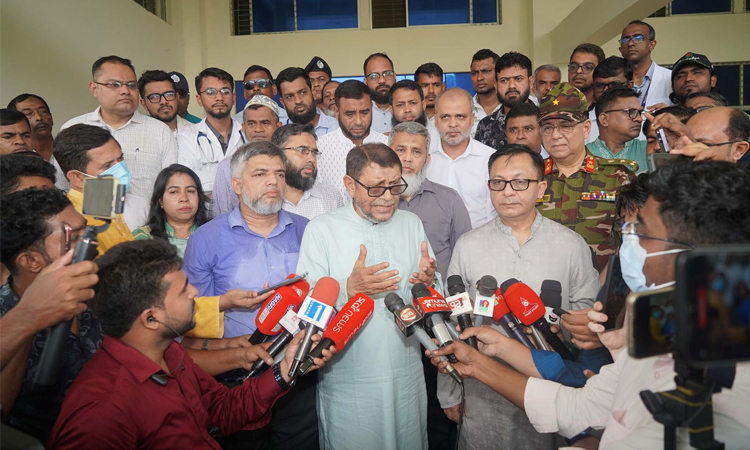
The national training programme on dengue case management was formally inaugurated on June 7 by Health Minister Sardar Md Sakhawat Hossain.
At the inaugural event, the minister described dengue as a major public health challenge for Bangladesh and stressed that combating the disease
required the collective participation of all citizens rather than relying solely on the health sector.
According to official data, Bangladesh has witnessed a significant dengue burden in recent years. In 2023, a total of 321,179 dengue cases were
reported, resulting in 1,705 deaths. The number of cases declined to 101,214 in 2024 with 575 deaths, while 102,861 infections and 413 deaths were
recorded in 2025.
To strengthen monitoring and response mechanisms, the government has formed a special coordination cell comprising officials from the Communicable Disease Control (CDC) unit, the Institute of Epidemiology, Disease Control and Research (IEDCR), the Management Information System (MIS) and the hospital management wing.
Since assuming office, the BNP-led government under Prime Minister Tarique Rahman has intensified dengue prevention efforts. Authorities have launched
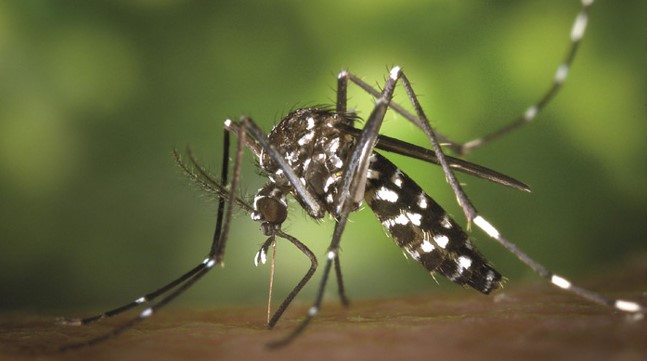
mobile courts to identify and eliminate Aedes mosquito breeding grounds, decided to establish dengue corners at upazila hospitals and prepared a field
hospital at the Dhaka Medical College Hospital premises to handle a possible surge in patients.
Additional field hospitals may be established if required, health officials said.
DGHS Director General Professor Dr Prabhat Chandra Biswas told BSS that private hospitals had been requested to reserve 10 percent of their beds for
free treatment of dengue patients, while diagnostic centres were asked to provide up to 80 percent discounts on dengue-related tests.
He said the national dengue treatment guidelines had also been updated with technical support from the Bangladesh Society of Medicine and that physicians
across the country were now being trained based on the revised protocols with assistance from UNICEF.
Data from the DGHS Health Emergency Operation Centre and Control Room show that, as of June 22, a total of 1,743 dengue patients had been hospitalised
in Dhaka Division, including the two city corporations. Barishal Division recorded 1,343 hospital admissions, followed by Chattogram with 986, Khulna
with 558, Rajshahi with 179, Mymensingh with 140, and both Rangpur and Sylhet with 30 patients each.
A total of 10 dengue-related deaths have been reported so far this year, including five in June alone.
Monthly figures indicate a rising trend in infections, with 1,081 cases recorded in January, 409 in February, 353 in March, 640 in April, 714 in May
and 1,842 cases reported in the first 22 days of June.