Thursday
27 August, 2026
News Flash
News Flash
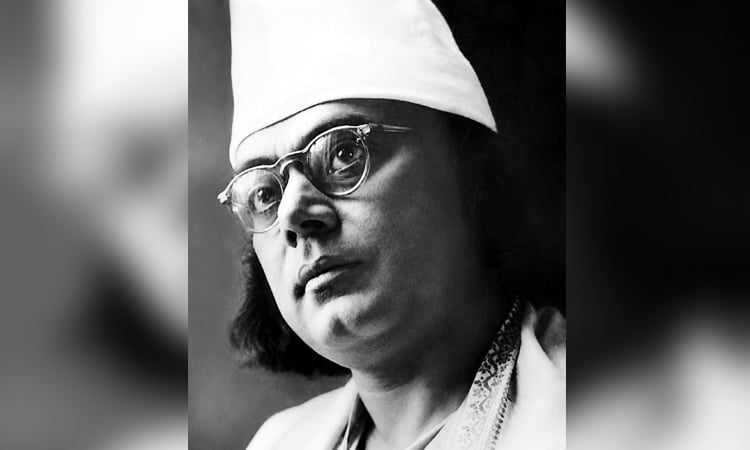
DHAKA, Aug 27, 2026 (BSS) - The 50th death anniversary of National Poet Kazi Nazrul Islam was observed across the country today with various programmes paying rich tribute to the poet and his enduring contributions to Bangla literature and culture.
On August 29, 1976 (12th Bhadra, 1383 in the Bangla calendar), the poet breathed his last at the then PG Hospital, now Bangladesh Medical University in Dhaka. He was buried with state honours beside the Dhaka University Central Mosque.
In Bangladesh, the poet's death anniversary is observed on August 27 every year as per Gregorian calendar as the date coincides with Bhadra 12, 1383, the day of demise of the poet.
The BNP government has declared the period from May 25, 2026 to May 25, 2027 as Nazrul Barsho (Nazrul Year) to commemorate the 127th birth anniversary of the poet.
Marking the 50th death anniversary Dhaka University, Bangla Academy, Bangladesh Shilpakala Academy, Kabi Nazrul Institute and other institutions, political parties, socio-cultural and professional organisations organized different programmes.
The programmes include placing wreaths at the poet's grave, discussions, poetry recitation, musical soiree, and staging dramas based on his literary works.
After placing a floral wreath at the grave of the National Poet on DU campus this morning, BNP Acting Secretary General and Prime Minister's Political Adviser Ruhul Kabir Rizvi said National Poet Kazi Nazrul Islam was the main source of inspiration for all national movements, ranging from the country's freedom struggle to the 2024 mass uprising.
“From our independence movement to the 2024 mass uprising, Nazrul served as the key inspiration. Even today, when anyone conspires against the sovereignty of the country, the words of Nazrul teach us to stand up and resist," he said.
Rizvi added, “Kazi Nazrul Islam was not only the poet of rebellion and love, but he also sounded the very first call for the independence of this subcontinent, defying the iron fist of colonial rule.”
A Khatme Quran was held after Fajr prayers at the Masjidul Jamiya, the central mosque of Dhaka University.
At 6:30am, teachers, students, officers and employees of the university led by the vice-chancellor gathered at the foot of Aparajeyo Bangla and proceeded in a procession to the poet's grave.
They placed wreaths at the grave and paid their homage to the poet. Later, a discussion was held at the open stage on the grave premises with the vice-chancellor in the chair. Professor Dr Tariq Manjur, director of the Nazrul Research Centre, delivered the commemorative lecture.
DU Vice-Chancellor Prof Dr ABM Obaidul Islam at a discussion said the contribution of National Poet Kazi Nazrul Islam to Bengali literature and society is unparallel, expressing the view that another poet of Nazrul's stature is unlikely to emerge in Bangladesh.
Prof Obaidul also expressed gratitude to Prime Minister Tarique Rahman for declaring 2026 as the 'Nazrul Year', saying the poet is being remembered throughout the year through various programmes across the country.
Nazrul Islam's granddaughter Khilkhil Kazi, at the discussion, called upon the people to uphold the poet's ideals of humanity, communal harmony and equality, saying Nazrul always placed humanity above religious divisions.
“Kazi Nazrul Islam taught us how to love people and stand beside them. He showed us that humanity is the ultimate truth above all religions- a principle we must always remember,” she said.
Meanwhile, the Kabi Nazrul Institute organised a discussion titled "Immortal Nazrul", along with a doa mahfil and performances of Hamd and Naat.
Bangladesh Betar, Bangladesh Television and various private television channels and radio stations broadcast special programmes marking the occasion.
Nazrul bearing the nick name Dukhu Mia was born on 11th Jaisthya of 1306 in the Bangla calendar in Churulia village of Bardhaman district in West Bengal, India. His father was Kazi Faqeer Ahmed and mother was Zahida Khatun.
The nation drew inspiration from Nazrul's poems and songs during the Liberation War in 1971 and subsequent democratic movements and struggles.
Nazrul wrote more than 3,000 songs and composed many of them, which are collectively known as Nazrul Geeti or Nazrul Sangeet.
He developed his literary skills while working with theatrical groups and later served in the British Indian Army. After leaving the army, he became a journalist in Kolkata, then known as Calcutta, and emerged as a strong opponent of British colonial rule.
Through his poetry and writings, Nazrul voiced revolutionary ideas. His celebrated works include "Bidrohi" (The Rebel) and "Bhangar Gaan" (The Song of Destruction), while his publication "Dhumketu" (The Comet) also reflected his anti-colonial views. His activities in the Indian independence movement led to repeated imprisonment by the British authorities. While in prison, he wrote "Rajbandir Jabanbandi" (Deposition of a Political Prisoner).
In 1942, at the age of 43, Nazrul began suffering from an unknown illness that gradually affected his speech and memory.
Nazrul came to Dhaka with his family from Kolkata on May 24, 1972, at the initiative of the Bangladesh government and was provided a residence in Dhanmondi.
The Bangladesh government granted him citizenship on February 18, 1976, and he was awarded the prestigious Ekushey Padak in the same year.
The poet died later that year and was laid to eternal rest beside the Dhaka University Central Mosque, where people continue to pay tribute to him as the nation's symbol of rebellion, equality and humanism.