Tuesday
25 August, 2026
News Flash
News Flash
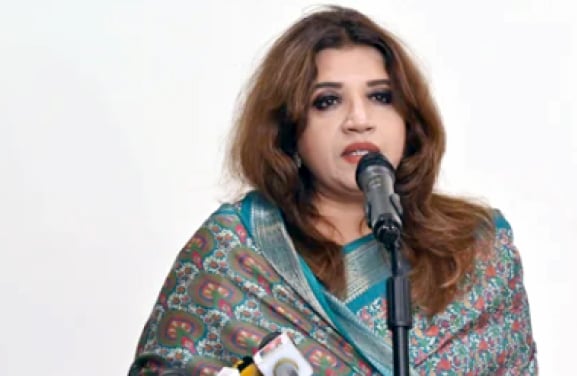
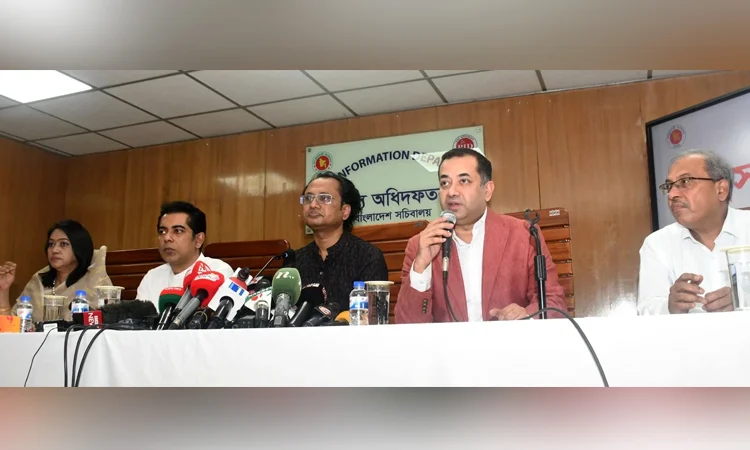
DHAKA, August 25, 2026 (BSS) – State Minister for Foreign Affairs Shama Obaed Islam today said the government is committed to protecting human rights and ensuring that no citizen, irrespective of political affiliation, is unjustly detained or imprisoned out of political vendetta.
“The government will definitely ensure that no one is unjustly imprisoned or detained due to political vendetta,” she told journalists at the foreign ministry this afternoon.
Shama said the government's commitment to due process and fundamental rights applies to supporters of every political party, including opposition parties and the Awami League, whose activities currently face a ban.
“No party, be it the opposition party, Awami League, or any party, the current government will definitely ensure that no one is unjustly imprisoned or detained due to political vendetta,” she said.
The State Minister said Bangladesh had witnessed unprecedented violations of human rights over the previous 17 years, with BNP leaders and activists among those who suffered most.
“The kind of human rights that have been violated in Bangladesh in the last 17 years has never been violated in the history of Bangladesh,” she said.
“The biggest victim is the Bangladesh Nationalist Party, its leaders and activists,” she added.
Shama said the government does not want a recurrence of what she described as the country's previous “fascist era” and remains determined to guarantee fundamental rights to every citizen.
“We will never want the past fascist era to return now or in the future. We want all human rights to be ensured to every citizen,” she said.
She said the government has a responsibility to protect the rights of citizens and prevent the justice system from being driven by political vengeance.
“Our government's stand is that we are trying to protect human rights. We are responsible to the people,” she said.
Turning to foreign policy, the State Minister said Bangladesh's approach is centred on safeguarding national interests while maintaining respectful and balanced relations with all countries.
“Our foreign policy is first and foremost a ‘Bangladesh policy’... with equal rights with everyone and maintaining our own interests with respect,” she said.
Shama said the elected government's political mandate has also strengthened Bangladesh's position in negotiations with international partners.
“When Bangladesh is talking, the Prime Minister of Bangladesh is talking, then all the other stakeholders including China are listening to our words with more attention, more seriously,” she said.
“Now that Bangladesh is an elected government, we have a stronger position in our negotiation space,” she added.
Rohingya crisis needs political solution
On the Rohingya issue, Shama said Bangladesh intends to use its strengthened diplomatic position to mobilise greater international engagement and pressure towards a durable political solution to the protracted crisis.
“The matter is absolutely a political problem, it is a very sensitive matter and we need to solve this problem politically,” she said.
She said Bangladesh remains engaged through official and unofficial communication and dialogue with different stakeholders in Myanmar as part of efforts to address the crisis.
“We are trying to involve the international community more,” she said, referring to an upcoming high-level UN session on the Rohingya crisis in September where Prime Minister Tarique Rahman is expected to participate.
The State Minister said Bangladesh would also explore whether the Muslim world could exert greater pressure on Myanmar to help create momentum towards a solution.
She said the crisis has grown considerably more complex since the massive influx began in 2017, particularly because of Myanmar's evolving internal political and security situation.
Shama referred to the emergence of the Arakan Army and other stakeholders in Rakhine State as well as security challenges along the border, including human smuggling and drug trafficking.
She said the precise number of Rohingyas in Bangladesh is difficult to determine due to continuing arrivals and births in the camps.
“So in that case, we don't know the exact number right now, but it will definitely be over 1.3 million,” she said, noting that around 30,000 children are born there annually on average.
Shama said Chinese President Xi Jinping, during Prime Minister Tarique Rahman's recent visit to China, strongly expressed Beijing's willingness to cooperate with Bangladesh in finding a solution to the crisis.
She also expressed skepticism about the effectiveness of existing arrangements on the Rohingya issue unless the United Nations and other major stakeholders become more actively engaged.
The State Minister said Bangladesh could gain additional diplomatic leverage from Foreign Minister Dr Khalilur Rahman's upcoming role as President of the UN General Assembly.
“From that place, we have a power to speak for Bangladesh in the international community. We think that at least in the next year, we will be able to use this capacity a little better,” she said.
Shama said Bangladesh would continue pursuing a “Bangladesh policy” in its international engagement, protecting national interests while maintaining relations with other countries on the basis of equality and mutual respect.