Tuesday
18 August, 2026
News Flash
News Flash
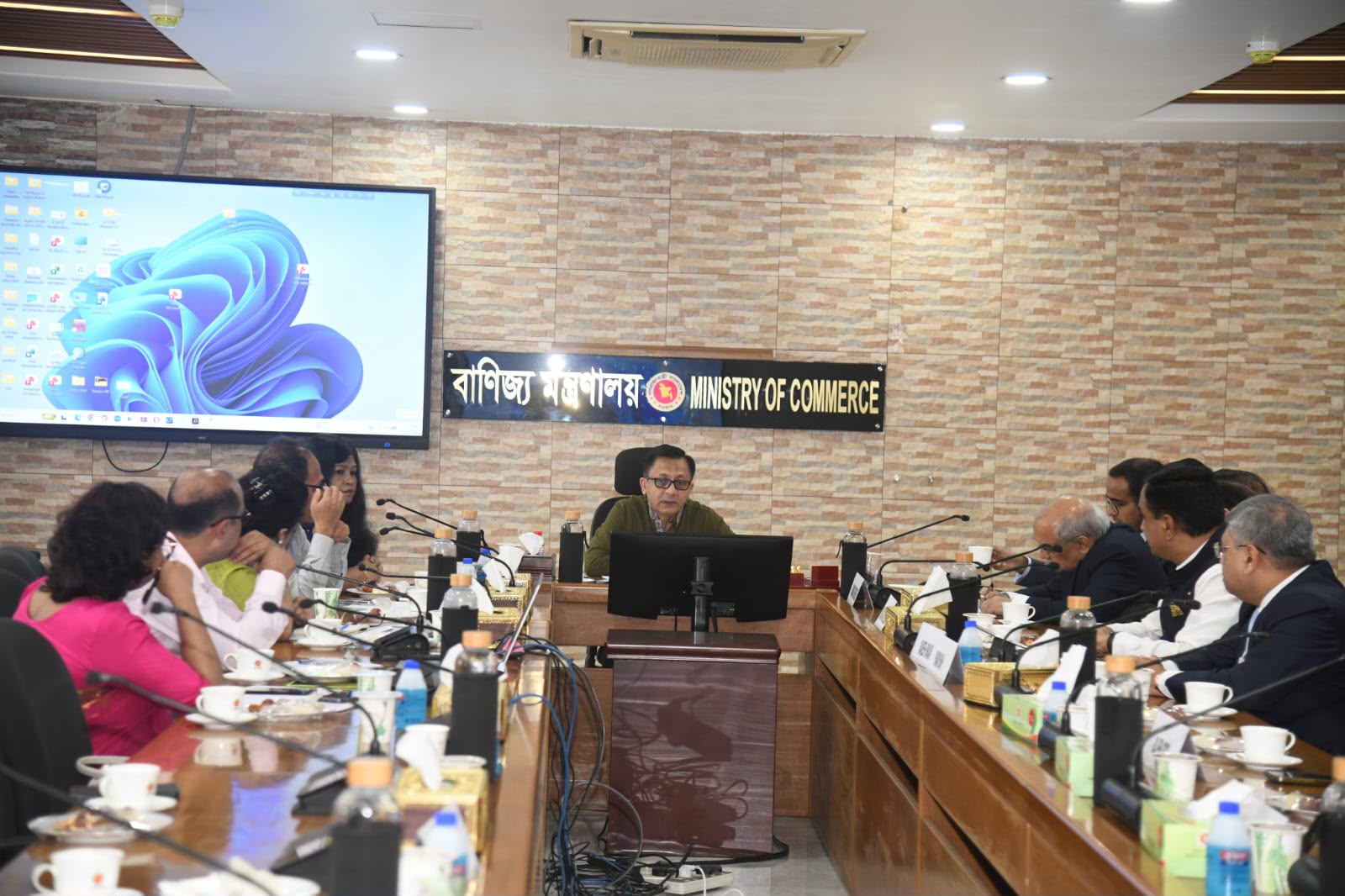
DHAKA, Aug 18, 2026 (BSS) — The Confederation of Indian Industry (CII) has proposed forming two joint business-to-business taskforces to accelerate trade and investment cooperation between Bangladesh and India, with a focus on digital transformation and infrastructure investment and financing.
The proposal came at a meeting between a CII delegation and Commerce Minister Khandakar Abdul Muktadir at the Ministry of Commerce today, said a press release.
Indian business leaders and representatives of several leading companies, including firms already investing in Bangladesh, attended the meeting.
Talking to reporters after the meeting, the commerce minister said Indian businesses operating in Bangladesh highlighted difficulties in transporting raw materials and goods through land ports, particularly the Benapole land port.
“More efficient cargo handling at Benapole and smoother movement of goods across the border will reduce transportation and raw material costs for businesses. This will ultimately help increase bilateral trade,” he said.
The Indian business delegation proposed forming two B2B taskforces involving businesses from both countries.
One taskforce would focus on sharing India's experience and cooperation in digital transformation, while the other would explore ways to increase Indian investment and financing in Bangladesh's infrastructure sector.
Welcoming the initiative, the commerce minister said substantial infrastructure investment would be required if Bangladesh is to become a trillion-dollar economy.
“Bangladesh needs huge investment in new railways, highways, ports, LNG infrastructure and other sectors. If Indian investors are interested in these areas and such investment is beneficial for Bangladesh, we will view the cooperation positively,” he said.
The minister said political and commercial relations between the two countries could not be viewed completely separately, adding that increased trade, investment and business connectivity would benefit both countries.
Referring to the example of the European Union and other regional trade blocs, he said regional cooperation was important for achieving economic progress.
Asked about the market situation six months after assuming office, Muktadir said that reducing prices was not merely a matter of market monitoring, as it was closely linked to energy and electricity prices, interest rates on loans, productivity, transportation and infrastructure.
“Bangladesh's logistics costs are around 16 percent of GDP, compared with the global average of around 10 percent,” he said, adding that higher logistics costs increase expenses from production centres to retail markets and ultimately affect consumers.
He said better connectivity, uninterrupted and affordable energy supplies, and an efficient supply chain could create scope for reducing commodity prices.
The minister cautioned against expecting immediate results in reducing prices, saying that developing necessary infrastructure and energy capacity takes time.
He said the government is working to develop new LNG infrastructure, improve gas supplies and ensure uninterrupted operation of power plants.
Regarding seasonal price increases of green chilli, onions and vegetables, Muktadir said supply shortages occurred during certain periods despite increased domestic production.
He said the Ministry of Agriculture was taking initiatives, including contract farming, to increase planned production and reduce seasonal supply gaps.
The commerce minister said coordinated improvements in energy, infrastructure, production and supply chains would help stabilise the market and gradually reduce the cost of living.