BSS
  02 Jul 2026, 18:15
Update : 02 Jul 2026, 18:20

Bangladesh seeks extended LDC graduation preparatory period for smooth transition: Muktadir

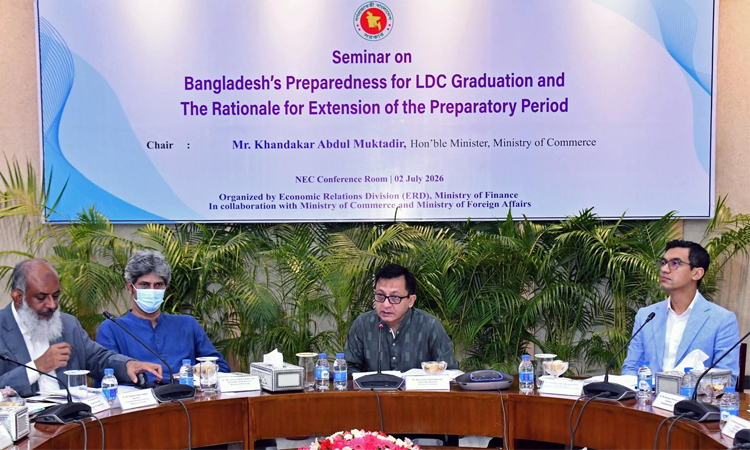
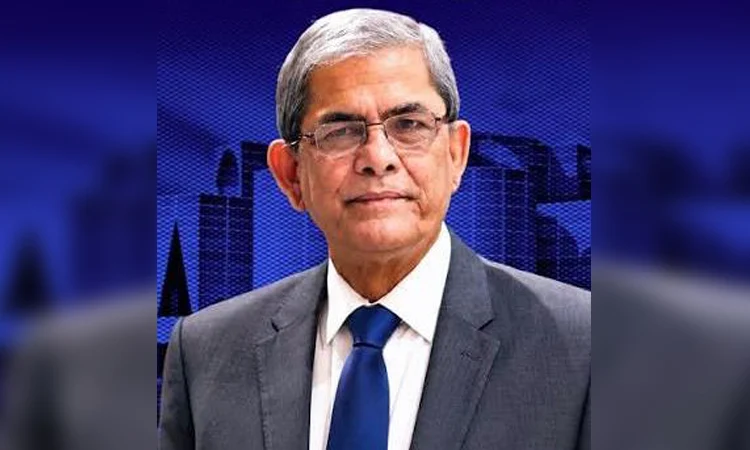
Commerce Minister Khandakar Abdul Muktadir says Bangladesh seeks three-year LDC graduation extension to ensure sustainable economic transition and reforms. Photo : Ministry

DHAKA, July 2, 2026 (BSS) – Commerce Minister Khandakar Abdul Muktadir today said that Bangladesh is seeking a three-year extension of the preparatory period for graduation from the Least Developed Country (LDC) category to ensure a smooth, sustainable and irreversible transition rather than delay the graduation process.

"We are not seeking this deferral to slow down the momentum. Rather, we seek it to ensure a sustainable, stable, and effective economic transformation," he said while chairing a seminar titled "Bangladesh's Preparedness for LDC Graduation and the Rationale for Extension of the Preparatory Period" held at NEC conference room in the city, said a press release.

The seminar was jointly organised by the Economic Relations Division (ERD), the Ministry of Commerce and the Ministry of Foreign Affairs to brief foreign diplomats, development partners and other stakeholders on Bangladesh's graduation preparedness and the rationale for extending the preparatory period.

Bangladesh has formally requested the United Nations Committee for Development Policy (UNCDP) to extend the preparatory period by an additional three years.

Following consultations and a review of the prevailing circumstances, the UNCDP has responded positively and submitted its assessment report to the United Nations Economic and Social Council (ECOSOC). 

The matter is now expected to be considered by ECOSOC before being placed before the United Nations General Assembly (UNGA) for a final decision.

The commerce minister said Bangladesh had faced multiple global and domestic challenges during the ongoing preparatory period, including volatility in global trade, geopolitical tensions, inflationary pressures and supply chain disruptions.

"These circumstances have placed pressure on the macroeconomy and constrained institutional capacity. Therefore, the government's immediate priority is to restore macroeconomic stability and strengthen the foundations for sustainable development," he said.

Referring to the Graduation Readiness Assessment conducted by the United Nations Office of the High Representative for the Least Developed Countries, Landlocked Developing Countries and Small Island Developing States (UNOHRLLS), he said the current situation was not sufficiently conducive for Bangladesh to graduate within the existing timeline, making additional preparatory time necessary.

The minister said the government had already adopted a roadmap comprising 25 priority reforms focusing on macroeconomic stability, trade and investment reforms, deregulation, competitiveness, institutional strengthening and human resource development.

He said the government was working to reduce the time required to start a business from one year to only 14 days, enabling companies to open letters of credit (LCs) for importing machinery on the 15th day.

Efforts are also underway to eliminate complexities and overlaps in business registration and licensing procedures to significantly reduce the time and cost of doing business, he added.

Muktadir said although the present government assumed office only four months ago, it had already launched major reform initiatives.

State Minister for Planning Zonayed Abdur Rahim Saki said the government was working to restore the economy and rebuild institutions while addressing the challenges of a fragile economy and a weak financial sector.

He stressed the need for continued international support measures and assistance from development partners during the extended preparatory period, saying cooperation from all stakeholders would be essential to achieve sustainable development and prosperity.

ERD Secretary Md. Shahriar Kader Siddiky, in his keynote presentation, highlighted Bangladesh's economic, structural, fiscal and external vulnerabilities alongside the government's reform agenda, governance mechanism and phased roadmap for effectively utilising the proposed extension period.

European Union Ambassador Michael Miller said Bangladesh should not lose momentum in implementing reforms despite the proposed extension.

He said the EU was closely examining prospects for deeper trade relations with Bangladesh, adding that any future arrangement would require greater market openness and a level playing field.

Foreign Secretary Asad Alam Siam, Finance Division Secretary Dr. Md. Khairuzzaman Mozumder, Commerce Secretary Md. Ataur Rahman Khan, representatives from the private sector, development partners, think tanks and diplomatic missions also addressed the seminar.

Ambassadors and high commissioners participating in the event underscored the importance of export diversification, financial sector reforms and expansion of the tax base to ensure a sustainable LDC graduation.

Private sector representatives said the proposed extension would provide additional time to accelerate deregulation efforts and diversify exports, strengthening Bangladesh's readiness for graduation.