Monday
24 August, 2026
News Flash
News Flash

DHAKA, May 24, 2026 (BSS) – Japanese electric vehicle (EV) company ‘glafit’ is set to launch a pilot project in Bangladesh with 800 electric bikes in the city, aiming to position the country as a regional hub for its innovative EV business model.
The initiative is backed by Musashi, a key supplier for Honda, whose representatives are currently visiting Dhaka to review preparations for the project, including the installation of charging and battery-swapping infrastructure.
As part of the operational rollout, glafit Bangladesh Limited signed a strategic partnership agreement with Rangpur Metal Industries Limited, a sister concern of PRAN-RFL Group, on January 15.
Under the agreement, glafit will collaborate with PRAN-RFL’s ‘Best Buy’ retail network to establish charging and battery-swapping stations across Dhaka and other areas.
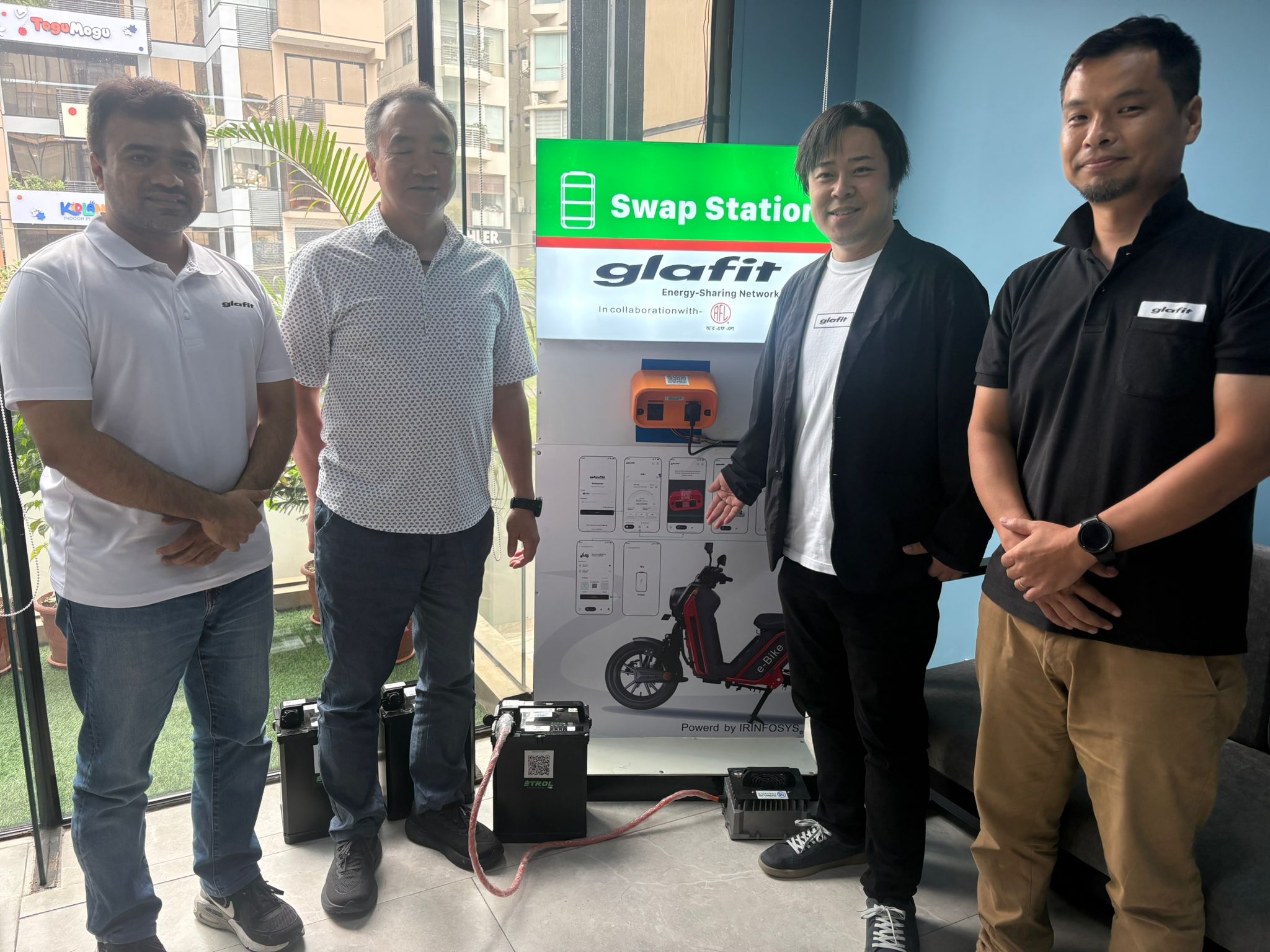
Officials said the collaboration would combine PRAN-RFL’s extensive domestic distribution network with glafit’s advanced Japanese EV technology and digital systems.
“The project includes Internet of Things (IoT)-enabled technology and a dedicated mobile application designed to monitor and control bike operations. The company is primarily targeting the delivery and logistics sectors, aiming to reduce operational costs and improve efficiency for businesses,” glafit Chief Executive Officer Teizo
Narumi told BSS.
He said Bangladesh offers strong growth potential for the EV sector due to its high population density, increasing transportation demand, and urgent need to address air pollution in urban areas, particularly in Dhaka.
Narumi also highlighted the country’s young demographic profile, noting that Bangladesh’s average age of around 27 provides a dynamic workforce and growing consumer market compared to Japan’s aging population.
He said the initiative is expected to create employment opportunities for young people through delivery and logistics services linked to the EV ecosystem.
However, Narumi stressed the need for clear government policies and regulations for the EV sector.
He noted that the rapid and largely unregulated expansion of electric three-wheelers has created challenges for formal manufacturers and investors.
The glafit chief urged the authorities concerned to introduce safety standards and guidelines, particularly for batteries and charging systems, to ensure a stable environment for advanced EV manufacturing and investment.
He also indicated that the company may consider establishing manufacturing facilities in Bangladesh in the future, as Japan’s aging population continues to create challenges for domestic industrial production.
Akira Mataga, Open Innovation Director of the Musashi, said Musashi is providing financial support to Glafit to launch the business in Bangladesh as part of efforts to promote sustainable urban mobility and expand the country’s emerging EV ecosystem.
To support the initiative, Hasan Kamrul, Country Representative of glafit Bangladesh and Global Business Head of glafit Japan Headquarter, said Glafit has entered into a partnership with PRAN-RFL Group for the development of charging and battery-swapping infrastructure across Dhaka.
Under the agreement, he said, EV charging and battery-swapping stations will be installed at ‘Best Buy’ outlets operated by PRAN-RFL.
Initially, the company plans to focus on the delivery and logistics sectors, aiming to introduce a more efficient and environmentally friendly transportation model for urban goods movement, he added.
Kamrul said the charging and battery-swapping network will use IoT-enabled smart systems so users can locate nearby charging stations, monitor battery status, reserve or access swapping points through a mobile app, and manage EV operations digitally.
He said Bangladesh was selected as the first country for this business model due to its strong market potential, demographic advantages, and urgent environmental needs.
He noted that Dhaka’s high population density creates significant demand for efficient two-wheel transportation, while the city’s severe
air pollution situation underscores the importance of transitioning to cleaner mobility solutions.
Kamrul also highlighted the employment potential of the project, particularly within the growing delivery and logistics sectors, adding
that Bangladesh’s young and energetic population presents a favorable environment for the expansion of innovative mobility services.
He stressed the importance of establishing clear government policies and regulatory frameworks for the EV industry, particularly concerning battery safety and manufacturing standards.
According to him, a structured policy environment would help ensure fair competition and support sustainable industry development.
Referring to the motto of the business, Kamrul said the project’s objective extends beyond commercial interests and aims to improve urban lifestyles, reduce transportation costs for commuters, create employment opportunities, and contribute to environmental improvement through cleaner transportation solutions.
Glafit, founded in Wakayama in 2017, specializes in personal electric mobility devices, including folding electric mopeds and
self-stabilizing vehicles. The company is expanding its sustainable transit technology with support from investors including Panasonic and Yamaha Motor.