Tuesday
25 August, 2026
News Flash
News Flash
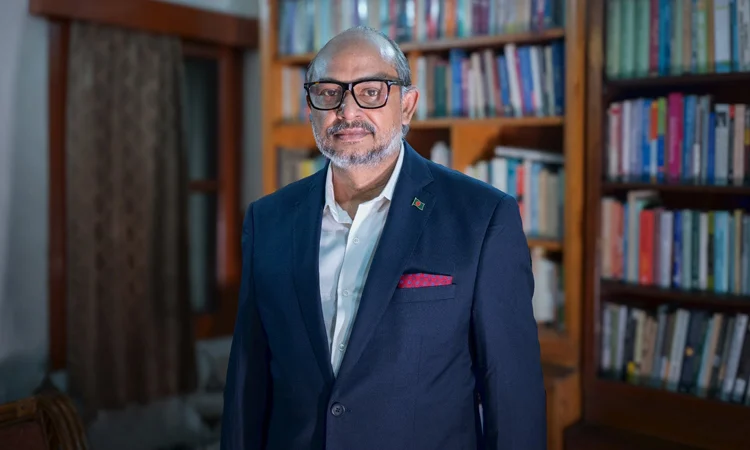
DHAKA, April 15, 2026 (BSS) - Dr Rashed Al Mahmud Titumir, prime minister's adviser on the ministries of finance and planning, has announced a significant shift in the nation's economic strategy, emphasizing realistic and future-ready planning over the number-based narratives of the past.
"The growth figures which were previously highlighted lacked data reliability. Under the new blueprint, the government will prioritize job creation, particularly for youth, women, and university graduates who are currently facing rising unemployment," he said.
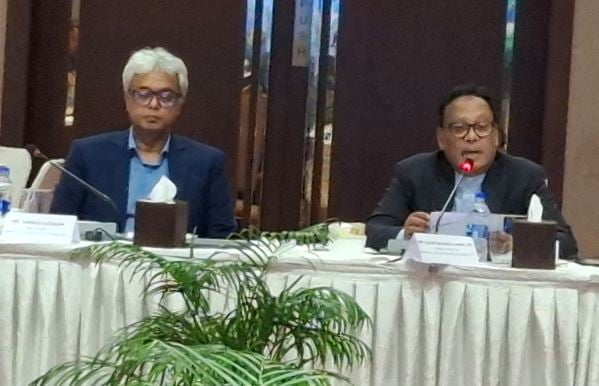
The adviser made the remarks today while talking to reporter after the first meeting of the Advisory Committee for the General Economics Division at NEC conference room in the city.
In his speech, Titumir outlined a vision to transform the national economy into a US$1 trillion powerhouse by 2034 while ensuring that growth is inclusive and generates employment.
To safeguard against future global crises, the adviser mentioned that the government is focusing on strategic reserves for food and energy.
This includes a push to increase the extraction of domestic gas and other energy resources to ensure national energy security, he added.
The adviser expressed concern over recent economic census data showing a decline in industrial production.
He stressed the need for industrial diversification and enhanced productivity to build a resilient economy.
He also identified deep-seated crises in the education and health sectors, specifically citing a decline in students' skills and overall performance as a major challenge.
To support the population within a damaged economy and a hostile international environment, he said, the government has introduced Family Cards and Farmer Cards to bolster social protection and improve living standards.
The adviser noted that the new economic blueprint calls for a fundamental change in governance, focusing on transparency and accountability.
Titumir stated that the government aims to move away from plans that were isolated from the public.
He proposed making data-such as energy supply schedules-publicly available to allow citizens to evaluate government effectiveness.
Additionally, he said, the government seeks to restore confidence in the capital markets, which have been hampered by post-COVID scandals that discouraged small investors.
By converting election pledges into implementable strategies, he said, the government aims to navigate current economic headwinds and ensure a more equitable distribution of wealth.