Tuesday
25 August, 2026
News Flash
News Flash
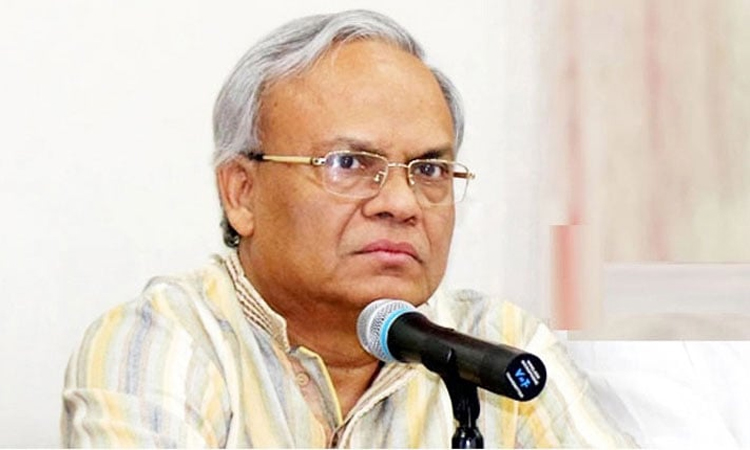
DHAKA, April 2, 2026 (BSS) - BNP Senior Joint Secretary General and political adviser to the Prime Minister Advocate Ruhul Kabir Rizvi today emphasized that there is no alternative to a neutral administration to ensure good governance.
"If the administration lacks neutrality and efficiency, it leads to disorder, corruption, and instability in the state which ultimately opens the door for foreign or imperialist interference," he told a discussion at North South University Auditorium on the occasion of the Great Independence and National Day.
Rizvi said that judging officials by political affiliation-such as whether a deputy commissioner is 'our man' or which party a divisional commissioner belongs to-leads to extreme division, ultimately undermining both democracy and the state.
He stressed that to ensure neutrality and efficiency in administration, recruitment and management must be based on merit and competition.
"Without good governance, disorder rises, public funds are plundered and siphoned abroad, and international powers get opportunities to interfere. A weak state risks being labeled a failed state," he said.
On national interest, Rizvi said political differences may exist, but on issues of sovereignty, independence, and national interest, everyone must stand together. "By maintaining unity in national interest, no power can overpower Bangladesh," he added.
Rizvi highlighted that Bangladesh's independence is not limited to the nine-month Liberation War of 1971, but is the continuation of a long historical struggle.
"Since 1757, the people of this region have repeatedly faced attempts to suppress their desire for self-determination, yet each time they have fought to assert their rights," he added.
Rizvi said Bangladesh's independence was achieved through long periods of deprivation, resistance, and bloody struggles.
Addressing the history of the Liberation War, Rizvi said efforts have been made at various times to distort it. "Sometimes it is portrayed merely as an India-Pakistan war, whereas the truth is that it was the war of the Bangladeshi people," he said.
He noted that farmers, workers, students, military personnel, police, and members of the EPR all participated in the struggle, and the freedom fighters emerged from among them.
Rizvi criticized the tendency to confine the credit for independence to a single family or group, calling it a distortion that has polluted the nation's collective spirit.
Regarding the younger generation, he said the true history of independence has not been properly presented to them. "However, the youth are now understanding the truth and raising their voices against injustice. It is the nature of youth to rebel against wrongdoing," he said.
Explaining the true meaning of independence, Rizvi emphasized that mere geographical freedom does not make a nation fully independent. "Civil liberties, freedom of expression, voting rights, and the rule of law are essential for complete independence," he said.
On democracy, he said it is rooted in people's rights and freedom of expression. "If the voice of one leader or party is treated as the sole truth, then it is not democracy," he added.