Monday
10 August, 2026
News Flash
News Flash
BANGKOK, March 31, 2026 (BSS/AFP) - Swathes of northern Thailand choked under a blanket of haze caused by crop burning and forest fires, putting the country's second city atop global air pollution rankings on Tuesday.
Seasonal air pollution is a feature of life for much of Asia, associated with agricultural burning and weather patterns that trap pollutants.
The issue has become a political and economic headache for tourist-dependent Thailand, and prompted lawsuits and a legislative push by clean air activists.
Despite the efforts, northern Thailand's Chiang Mai tourist destination topped the global rankings for world's most polluted major city for part of Tuesday, according to the IQAir monitor.
The level of PM2.5 pollutants -- cancer-causing microparticles small enough to enter the bloodstream through the lungs -- hit 110 micrograms per cubic metre.
The World Health Organization recommends 24-hour average exposures should not be more than 15 micrograms for most days of the year.
Even worse hit was Pai, a usually verdant destination for backpackers and nature lovers in Mae Hong Son province, where PM2.5 levels topped 600, according to some monitors.
Dao, a cafe worker who declined to give her family name, has lived through years of seasonal air pollution in Pai but said this year was especially bad.
"I've never seen this much pollution in Pai before," she told AFP.
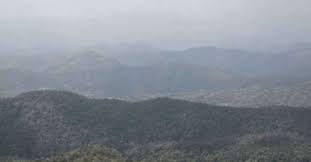
She shared photos showing the usually green, hilly vista from the cafe obscured by grey-brown haze.
"I feel suffocated. How are we going to live like this?"
- Clean air bill -
Another long-time Pai resident, organic farmer George Wolstencroft, also declared the haze "probably the worst I've ever seen it".
The Brit, who has lived in the region for 22 years, called the situation a "humanitarian disaster".
"In any direction, the smoke is visible less than 50 metres (164 feet) away... Even homes that are fully sealed are unable to stop the smoke infiltrating the air."
Chiang Mai's governor and other senior provincial officials were meeting with the national government to discuss the situation on Tuesday.
In a statement, the Chiang Mai governor's office said illegal burning and forest fires in national parks were causing the hazardous haze.
The interior ministry issued a statement urging stepped up monitoring and enforcement against those carrying out illegal burning.
Local media said one subdistrict in Chiang Mai was preparing a disaster declaration over the situation, a move that would speed up deployment of emergency spending and compensation for those affected.
Thailand's Geo-Informatics and Space Technology Development Agency, a government body, said it had recorded a "new high" for 2026 of 4,750 fire hotspots across the country on Monday.
It said more than 5,000 hotspots were detected across the border in Myanmar, with thousands more combined across Laos, Cambodia, Vietnam and Malaysia.
The spike in air pollution comes as clean air activists warn a bill to enshrine the right to breathable air and to tax emitters is in danger of dying in parliament.
The bill was put on hold when parliament was dissolved last year, and if it is not picked back up within a limited window, the process will go "back to the drawing board", the Thailand Clean Air Network has said.
More than 10 million people required treatment for pollution-related health problems in Thailand in 2023, according to the health ministry.