Monday
10 August, 2026
News Flash
News Flash
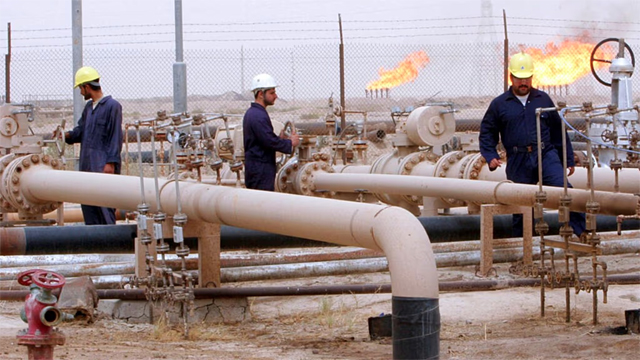
TRIPOLI, Feb 12, 2026 (BSS/AFP) - Libya granted oil exploration and production licences on Wednesday to several foreign energy companies, including giants Chevron and BP, for the first time since the fall of longtime leader Muammar Gaddafi.
The North African country's oil industry has faced significant challenges following the NATO-backed revolt that toppled and killed Gaddafi in 2011, and its territory is still divided between rival authorities.
But with energy production and exports at their strongest since then, Libya is seeking to draw major global energy companies.
In addition to Chevron, Wednesday's winners of the latest bidding round included Africa's largest privately-owned energy company, Nigeria's Aiteo.
The other winning bidders were consortiums: Spain's Repsol with BP, Eni North Africa with QatarEnergy, and Repsol with Hungary's MOLGroup and Turkiye Petrolleri.
But only five blocks drew bids out of a total of 20 offered up for exploration and extraction.
The National Oil Corporation (NOC) did not announce the cost of the licenses, and said there would be another bidding round later this year.
- 'Lingering uncertainty' -
"The limited response to the licensing round is underwhelming for the NOC, especially given that dozens of companies -- including prominent international oil companies -- had pre-qualified," said Hamish Kinnear, an analyst with UK-based Verisk Maplecroft.
"It is likely that lingering uncertainty over Libya's political dysfunction and insecurity in the areas around the blocks on offer were factors in the underwhelming response," he told AFP.
Libya currently produces around 1.5 million barrels a day, sitting on Africa's largest oil reserves at an estimated 48.4 billion barrels.
But it remains split between Prime Minister Abdelhamid Dbeibah's UN-backed government based in Tripoli and an eastern administration backed by Khalifa Haftar.
Geoff Porter, an analyst with North Africa Risk Consulting, said the bids were "a considerable disappointment when measured against expectations".
"The lack of participation shows that oil companies are still wary of above ground risks in Libya, the reliability of Libyan institutions, and whether the bid round format is the best option for securing the best acreage and best terms," Porter told AFP.
"The TotalEnergies and ConocoPhillips deal showed that you can do gre-a-gre with the NOC and get better terms," Porter added.
- 'Improve the terms' -
Last month, Libya signed agreements worth more than $20 billion of investment by TotalEnergies and ConocoPhillips, to increase oil production over 25 years.
Dbeibah, who announced the deal, said the goal was to boost daily oil production by 850,000 barrels within that timeframe.
Libya expert Jalel Harchaoui agreed that the bidding round was "no great success".
For him, lackluster interest may suggest the existence of "private, one-on-one negotiations" between the government and other companies on the sidelines of the public bidding.
He said "ExxonMobil and other major corporations" were already holding talks with Libya that would "bypass any kind of structured bidding process".
NOC chief Masoud Suleman said a committee would be created to "improve the terms" of the bidding system and negotiate with candidates to grant unallocated blocks.
Still, Wednesday's announcements were "a return of trust and resuming institutional work in one of the country's most important sectors after a long period of pause and challenges", Suleman said during the ceremony.
"They are part of a broader national path that aims for prosperity, growth, the return of normalcy."