Wednesday
09 September, 2026
News Flash
News Flash
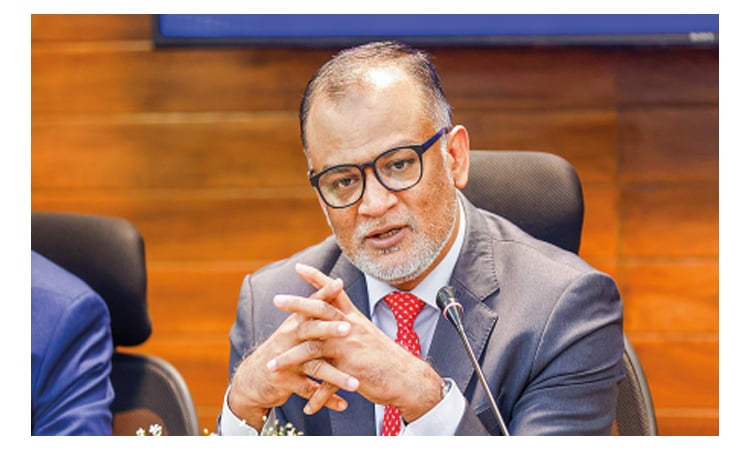
DHAKA, Feb 10, 2026 (BSS) - Commerce Adviser Sk. Bashir Uddin today said that the signing of Agreement on Reciprocal Trade (ART) with the United States (US) is a pivotal milestone for bilateral relations.
“The agreement will serve as a powerful magnet for international investment while cementing Bangladesh’s position as a key strategic partner in the Indo-Pacific region,” he said.
The commerce adviser said this while speaking at a press conference at the Ministry of Commerce conference room in the city, said a press release.
The Government of Bangladesh on Monday night formally signed the landmark ART with the US, signaling a transformative shift in the nation’s economic trajectory.
The successful signing concludes nine months of intensive, high-level negotiations led by the Ministry of Commerce in close coordination with the National Board of Revenue (NBR), the Bangladesh Embassy in Washington, and other relevant ministries.
This diplomatic effort was initiated following the imposition of reciprocal tariffs on Bangladeshi exports in April 2025.
Through sustained engagement and constructive dialogue with the Office of the United States, Bashir said, Bangladesh successfully negotiated a reduction of the reciprocal tariff rate to 19 percent.
He said that the ART stands as a cornerstone of the interim government’s strategy to modernize the national economy.
“Framed as a balanced, strategic, and forward-looking document, the agreement is designed to catalyze Bangladesh’s integration into global value chains (GVCs). By establishing a predictable and transparent trade environment, the framework seeks to attract high-value foreign direct investment (FDI) and enhance trade facilitation,” he added.
The adviser mentioned that the ART covers a wide range of thematic areas, including trade in goods and services, customs procedures and trade facilitation, rules of origin, sanitary and phytosanitary measures, technical barriers to trade, investment, electronic commerce, government procurement, intellectual property rights, labor, environment, competition, subsidies, state-owned enterprises, transparency, and cooperation.
The ART includes a special provision for textiles and apparel, introduced by the United States in response to Bangladesh's persistent demand, he added.
Under this provision, he said, a to-be-specified volume of Bangladeshi textile and apparel exports will be eligible for a zero reciprocal tariff rate, linked to the use of U.S.-produced textile inputs such as cotton and man-made fibers.
“ This provision is unique and not included in similar U.S. agreements with other countries. To fully benefit from this provision, Bangladesh will need to strengthen its backward linkage and raw material supply in the textile sector,” he added.
The adviser mentioned that the Agreement also provides duty-free market access for selected pharmaceutical and agricultural products from Bangladesh, expanding export opportunities beyond apparel and supporting diversification of the export basket.
“Bangladesh has secured important flexibility in digital trade, as it is not required to consult the United States before entering into digital trade agreements with third countries,” he added.
He said that the Agreement also ensures that Rules of Origin will be developed in consultation with Bangladesh, safeguarding its production structure and export capacity.
“Bangladesh has offered substantial market access for U.S. goods across its tariff schedule, including staged tariff reductions over five or ten years an approach not observed in other comparable agreements,” he added.
In addition, he said, the Agreement includes commitments on labor, environment, transparency, and governance, as well as a termination (exit) clause incorporated at Bangladesh's initiative.
Overall, he said that the ART is expected to enhance market access, promote investment and trade facilitation, preserve regulatory space in digital trade, and strengthen Bangladesh's integration into global value chains.
The Government of Bangladesh views the Agreement as a balanced, strategic, and forward-looking framework that protects national interests while deepening economic cooperation with the United States, he added.