Tuesday
04 August, 2026
News Flash
News Flash
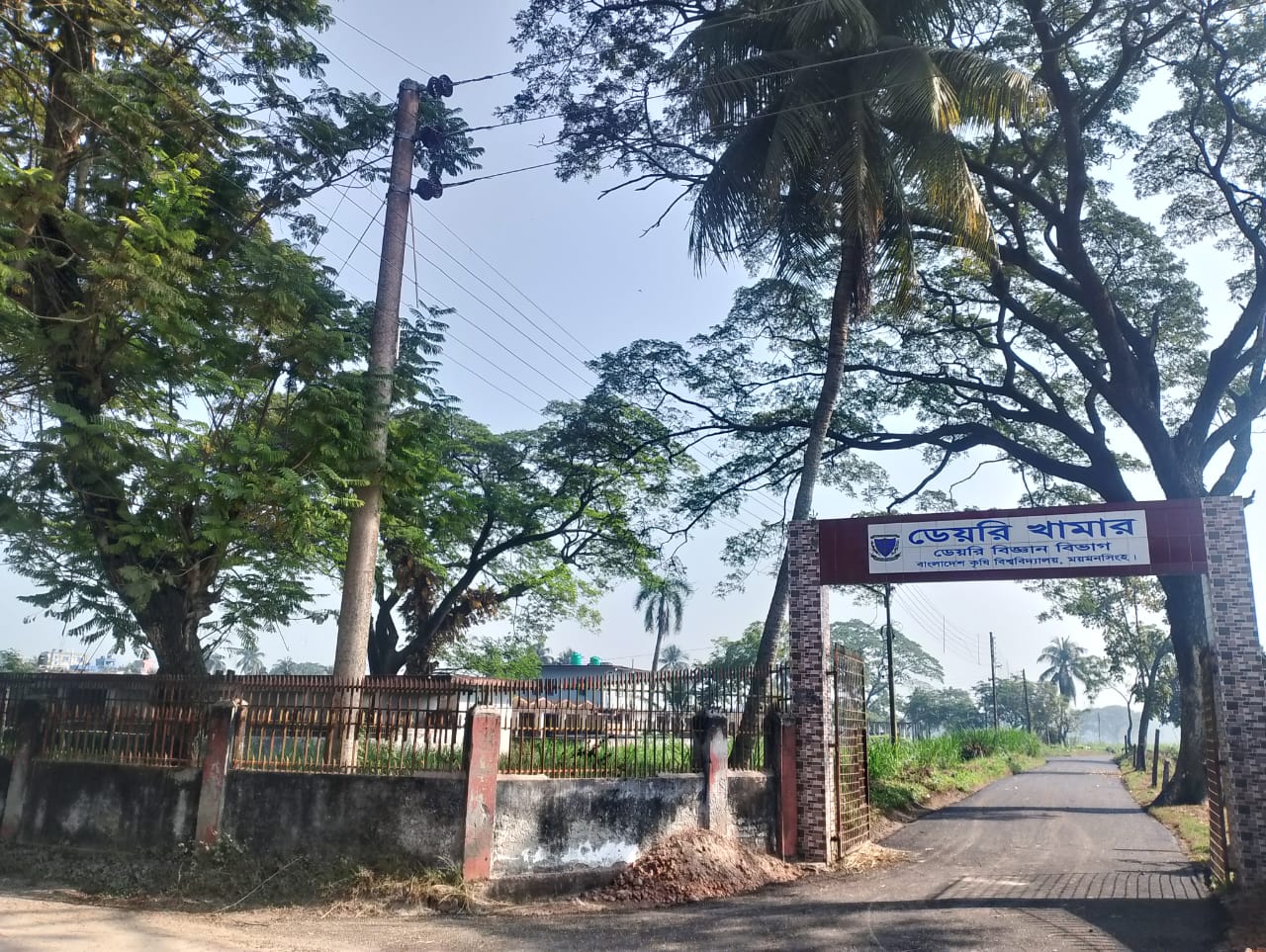
MYMENSINGH, Jan 17, 2026 (BSS) - Bangladesh Agricultural University (BAU), known for its natural beauty and aesthetic architecture, has long been a cornerstone of agricultural and livestock research in the country.
Among its key facilities, the university’s 70-acre dairy farm has emerged as a unique and vital center for education, research and sustainable livestock development.
Established just three years after the founding of the university, the dairy farm has evolved over the decades with continuous modernization. Today, it stands as a comprehensive hub combining animal husbandry, farming, education, research and production.
According to farm sources, the dairy unit currently houses around 270 animals, including 70 dairy cows, 120 calves, 31 cows in reproductive rest and 49 buffaloes.
Improved breeds such as Holstein Friesian, Jersey, Shahiwal and Red Chittagong cattle are raised alongside Murrah, Nili-Ravi and indigenous buffalo breeds.
The farm produces an average of 380 litres of milk daily. A portion is used for calf feeding, while the remainder is sold to university teachers, officials, employees, students and local residents at Taka 75 per kilogram. In addition to raw milk, the farm produces yogurt, cheese and ghee, which are widely appreciated for their quality and taste.
Beyond production, education and research remain the core strengths of the dairy farm. Graduate and postgraduate students of the Department of Dairy Science receive hands-on training, gaining practical experience in areas such as animal nutrition, milk production, disease prevention and reproductive management.
Simultaneously, research is being conducted on improving milk yield, animal health, nutrition and disease control.
To ensure animal health, regular vaccination and deworming programs are carried out. Preventive measures are taken against major infectious diseases including anthrax, foot-and-mouth disease and lumpy skin disease (LSD). High-quality feed management further supports the health and productivity of the livestock.
Tamanna, a graduate student of the Department of Dairy Science, said the farm serves as a vital practical learning platform. “We can directly observe and apply what we learn in theory. This hands-on experience will play a crucial role in our future careers,” she said.
Postgraduate student Md. Abdur Rahman highlighted the research potential of the facility. “We are working on improved cow and buffalo breeds, milk quality,
productivity and animal health. With more modern equipment and research support, international-standard research could be produced here,” he said.
Dr. AKM Masum, executive member of the dairy farm and professor of the Department of Dairy Science, said the farm has been producing skilled graduates since the establishment of the university.
“Our students are working with distinction both at home and abroad. However, increased budgetary support and the introduction of modern technologies are essential to further expand research and advanced education programs,” he said.
Overall, BAU’s dairy farm is not merely a milk production unit but a successful model of integrated education, research and sustainable livestock development in Bangladesh.