Saturday
22 August, 2026
News Flash
News Flash
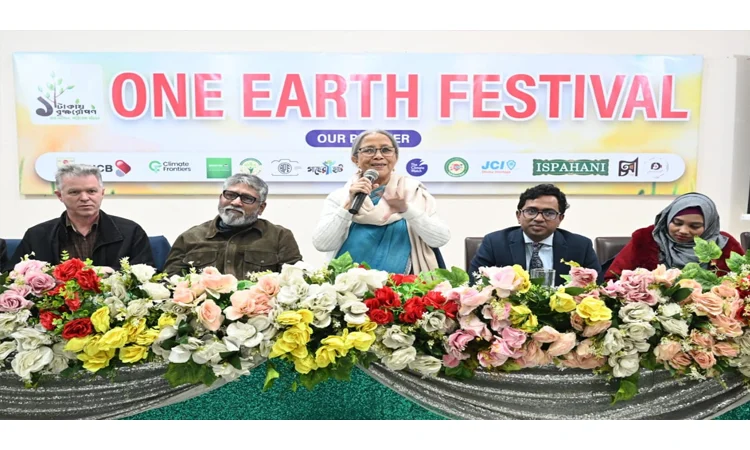
DHAKA, Jan 10, 2026 (BSS)- Fisheries and Livestock Adviser Farida Akhter today said tree plantation is not merely an environmental initiative; it is deeply linked to social and economic security of rural people.
She made the remarks while speaking as the chief guest at the ‘One Earth Festival’ organised by under the banner of ‘One Taka Tree Plantation’ at Sher-e-Bangla Agricultural University.
The adviser said people in different countries have gained international recognition solely through tree plantation efforts.
Referring to Nobel Laureate Kenyan environmental activist Wangari Maathai, the adviser said it is possible to carry a commitment to environmental protection until the very last moment of life.
She recalled an instruction of Maathai to bury her in a coffin made of biodegradable water hyacinth, a unique example of environmental consciousness.
The adviser said indiscriminate cutting of indigenous aquatic trees such as koroch and hijol is destroying the natural character of the haors and fish habitats.
Unplanned construction of embankments in the name of protecting agriculture is obstructing water flow, which is severely harmful to fish production, she said.
Criticising irresponsible tourism in Tanguar Haor and other tourist spots, she said plastic waste, cigarette butts and other materials discarded by tourists are causing serious damage to fish and aquatic biodiversity.
Farida said many factories in industrial zones including Narayanganj are not effectively operating effluent treatment plants (ETPs) causing pollution of the Shitalakkhya River and entire Meghna basin.
As a result, the breeding of important fish species, including hilsa, is under threat, she said expressing concern over the misuse of sonar technology in marine fishing.
Out of around 235 industrial trawlers in the country, at least 70 are using sonar technology, leading to indiscriminate catching of all fish species, she said.
According to a recent survey, she said, 475 species of aquatic animals have been identified in Bangladesh’s seas, out of which five species are globally unique. The risk of destroying this resource is unacceptable, she said.
Regarding vannamei shrimp, the adviser said it is a foreign and invasive species that poses a serious threat to indigenous freshwater prawn (golda) and black tiger shrimp (bagda).
Despite commercial pressure, she made it clear that no approval would be given for anything that harms native species.
Deputy Attorney General Barrister Nur Muhammad Azami, BRAC University Registrar Dr David Dowland and Coordinator of Waterkeepers Bangladesh Sharif Jamil, among others, also spoke.
Advocate Azim Patwary of the Bangladesh Supreme Court presented the keynote paper while Sheikh Abdullah Yasin, president of ‘One Taka Tree Plantation’ programme delivered welcome address.