Saturday
12 September, 2026
News Flash
News Flash
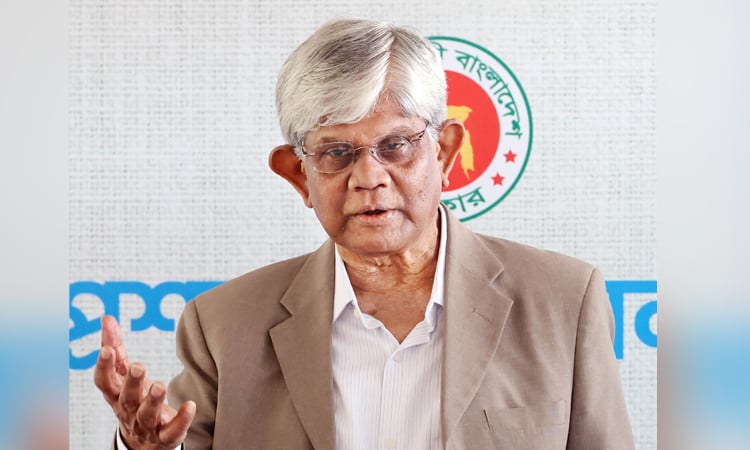
DHAKA, Jan 6, 2026 (BSS) – Finance Adviser Dr Salehuddin Ahmed today said that the suspension of IPL broadcasts in Bangladesh should not be viewed through an economic or trade lens.
He stressed that it has had no bearing on government decisions, procurement processes or broader financial engagements.
“There has been no impact at all on our economy,” he said, adding, “Our international tenders and purchases are conducted transparently and independently. Sports or such issues were not even mentioned in our discussions. From my perspective, there is no connection between this matter and our economic decisions.”
The Finance Adviser said this while responding to queries of reporters after chairing two separate meetings on the Advisers Council Committee on Economic Affairs and the Advisers Council Committee on Government Purchase held at the Cabinet Division Conference Room at Bangladesh Secretariat today. The Finance Adviser chaired the meeting. Power and Energy Adviser Dr Fouzul Kabir Khan also briefed the media.
Both the Finance Adviser and the Energy Adviser described Bangladesh’s response to the issue surrounding cricketer Mustafizur Rahman and the Indian Premier League (IPL) as “robust and appropriate”.
Both the advisers also emphasised that Bangladesh remains committed to maintaining constructive relations with India and ensuring that sports, trade and diplomacy continue without unnecessary disruption.
They also dismissed concerns that the issue could have any adverse economic or commercial impact on the country.
Dr Salehuddin underscored that the controversy did not originate from Bangladesh, noting that Mustafizur Rahman is a globally recognised player and effectively a sporting ambassador for the country.
“This didn’t start from Bangladesh. Mustafizur is a very good and famous player. He was selected purely on merit, for technical reasons, not out of any favour. Suddenly restricting him from playing …is unfortunate. It is regrettable for both countries.”
He added that sports should ideally remain separate from politics, warning against allowing emotions to escalate tensions unnecessarily.
“We don’t want this to aggravate relations between the two countries,” he said.
“History shows that even during times of political tension, sports continued — including during the Olympics. These are emotional issues on both sides, but we should handle them with restraint.”
Echoing similar views, Energy Adviser Dr Fouzul Kabir Khan said the government’s stance was proportionate and justified, describing it as a natural reaction to the initial action taken by the other side.
“There is always an action and a reaction. We’ve to be careful so that no one goes overboard. When a Bangladeshi player is called and then suddenly withdrawn, a response is expected. I believe the response was proper, robust and appropriate.”
He said Bangladesh’s position on issues such as IPL broadcasting and the discussion around venue changes for upcoming international tournaments sent a clear but measured signal.
“This response is not only justified, it is also making the other side reflect,” the Energy Adviser said, adding that voices within India itself have expressed concern over politicising sports.
Referring to remarks by Indian parliamentarian Shashi Tharoor, Dr Fouzul Kabir Khan said such actions should be avoided in the interest of regional goodwill and the spirit of cricket.
“We hope that good sense will prevail from the side where this issue originated. Cricket should continue, and so should our economic and trade relations,” he added.
Reiterating the government’s position, Finance Adviser Dr Salehuddin Ahmed said Bangladesh had not taken any reactive or retaliatory steps but merely responded in a balanced manner.
“Bangladesh didn’t initiate anything. A top player was suddenly restricted. The response we gave was completely robust and entirely appropriate. This is simply a reflection of Newton’s third law — every action has a reaction.”
He also noted that cultural and sporting figures often serve as bridges between nations when formal political engagement faces challenges.
“Sportspersons, writers, poets — they act as ambassadors of goodwill. That is why such matters should be handled with sensitivity.”