Monday
17 August, 2026
DHAKA, Dec 26, 2025 (BSS) – Ten-year-old Saida Tabassum and her three-year-old brother, Md Shafique Raiyan, are in a constant fight for survival.
At the same time, their parents struggle every day to meet the high cost of their treatment, leaving the family overwhelmed with distress.
Although doctors advised their mother to undergo treatment during pregnancy, the advice was not followed, putting the lives of the two children at risk.
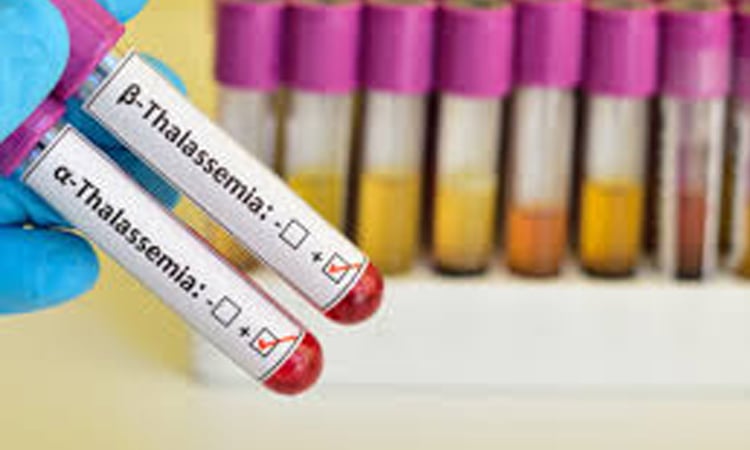
Thalassemia major is a condition in which the body cannot produce enough haemoglobin to meet its needs, making patients dependent on regular blood transfusions from donors.
“The patient has to depend on blood transfusions every three to four weeks throughout life. Besides the financial and emotional stress, arranging safe blood regularly is the biggest challenge our family faces,” said the mother of Saida and Shafique.
Experts said thalassemia is a blood disorder caused by the weakening and destruction of red blood cells. It also results from defective or missing genes that severely impair the production of haemoglobin—an essential protein that enables red blood cells to carry oxygen.
They added that if both parents are thalassemia carriers, there is a 25 percent chance that their child will also have the disorder.
“Such a child is diagnosed with thalassemia major,” they explained, adding that these children require blood transfusions at regular intervals throughout their lives.
According to experts, more than 60,000 people in Bangladesh are currently suffering from thalassemia, largely due to a lack of awareness among couples before marriage.
A 2024 survey conducted by the Bangladesh Bureau of Statistics (BBS) found that 11.4 percent of people aged between 14 and 35 in the country are thalassemia carriers. Each year, an estimated 6,000 to 13,000 children are born with the disease, posing a serious threat to the health of future generations.
Experts blamed parental ignorance for the spread of thalassemia, the most common genetic disorder passed on to children. They said the disease can be effectively prevented through genetic screening and proper counselling.
“To save families from lifelong suffering, all couples should test their carrier status before planning a child,” said Dr Md Abdur Rahim, secretary general of the Bangladesh Thalassemia Foundation.
“If every expectant mother is informed and encouraged to undergo testing to determine whether she is a thalassemia carrier, the spread can be significantly reduced,” he said.
“Awareness plays a crucial role in preventing thalassemia. Due to ignorance, many parents skip diagnosis and unknowingly pass faulty genes to their children,” Dr Rahim added.
“Thalassemia is not curable with medicines, but it is completely preventable. Bone marrow transplantation is not only expensive but also a complex process due to donor matching. Therefore, mass awareness about prevention is essential to halt its occurrence,” he said.
Dr Rahim also stressed the need for government intervention, saying, “The government must motivate gynaecologists and pathology centres to ensure that every pregnant woman undergoes the HbA2 test before the 14th week of pregnancy.”
In developed countries, experts noted, patient awareness is high, and people voluntarily opt for screening tests.
Organisations such as the Bangladesh Thalassemia Foundation (BTF) and the newly launched Bangladesh Thalassemia Patients and Parents’ Welfare Association (BTPWA) are actively working to improve patients’ quality of life and raise awareness to prevent new cases.