Thursday
27 August, 2026
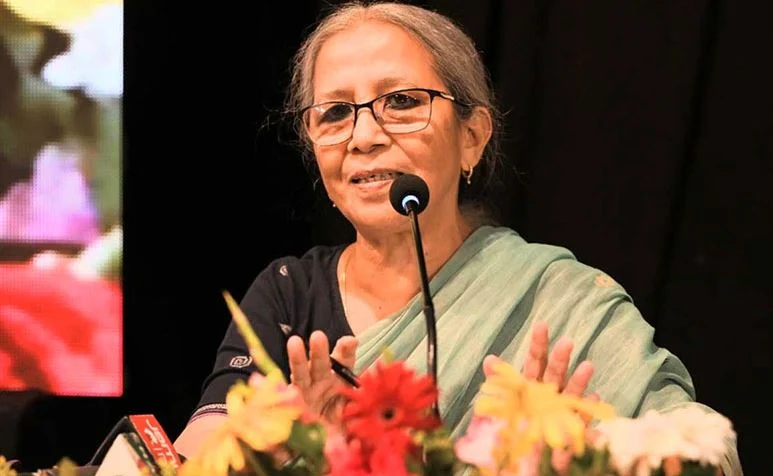
Dhaka, Dec 17, 2025 (BSS) - Fisheries and Livestock Adviser Farida Akhter today said the effective implementation of the 'One Health' approach requires strong coordination among three key sectors -- human health, animal health and the environment.
"We have moved beyond the conceptual stage and truly become a collective 'we'. Joint efforts by the ministries of Health and Family Welfare, Environment, Forest and Climate Change and Fisheries and Livestock reflect this shared commitment," she said.
The adviser made the remarks while chairing a seminar titled 'One Health Programme: Potential, Challenges and Future Strategy', organised by the Ministry of Fisheries and Livestock at a city hotel.
Farida Akhter stressed that One Health should not remain a theoretical concept but demands real, ethical commitment and a coordinated mindset. "This is not the time to work in isolation. A 'whole-of-government' and 'whole-of-nation' approach is now essential," she said.
She noted that while humans are victims of many diseases, they are also often responsible for creating health risks through unsafe food practices, environmental pollution, excessive use of antibiotics and unplanned urbanisation. Emphasising the need for preventive and primary healthcare services, she said these measures are crucial to addressing growing health hazards.
Highlighting the close links among climate change, zoonotic diseases, food security and public health, the adviser said a decision has been taken to implement the One Health programme through an integrated development project proposal (DPP), placing three project directors under the respective ministries.
Expressing strong optimism, she said the initiative would be implemented successfully by addressing human health, livestock, fisheries and environmental concerns together, setting a positive example for Bangladesh.
Environment, Forest and Climate Change Adviser Syeda Rizwana Hasan said development planning must adopt an integrated and forward-looking approach that places environmental protection, biodiversity and public health at its core.
"The price society pays for environmental and ecological destruction in the name of development is extremely high," she said, adding that while roads and infrastructure can be built, ecosystems like the Sundarbans or rivers cannot be recreated.
She noted that climate change, epidemics and environmental crises repeatedly remind us that all elements of nature are closely interconnected. "Humans are not the owners of nature but an integral part of it," she said.
Rizwana also pointed out that excessive procedural complexity, lack of inter-ministerial coordination, and lengthy decision-making processes are major barriers to implementing the One Health programme.
Planning Division Member Dr Kaiyum Ara Begum, Health Services Division Secretary M Saidur Rahman, Environment, Forest and Climate Change Secretary Dr Farhina Ahmed and other officials also addressed the seminar.
Fisheries and Livestock Secretary Abu Taher Muhammad Jaber delivered the vote of thanks.