Wednesday
26 August, 2026
News Flash
News Flash
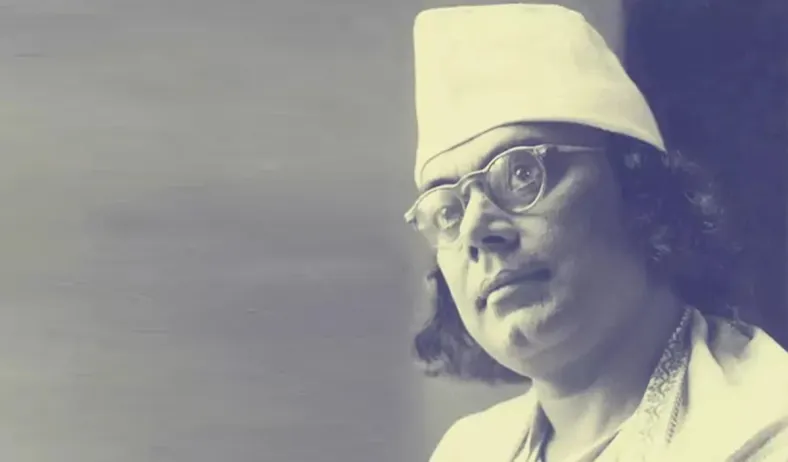
DHAKA, Aug 26, 2026 (BSS) - The 60th death anniversary of National Poet Kazi Nazrul Islam will be observed in the country tomorrow in a befitting manner.
On August 29 (12th Bhadra, 1383 in Bangla calendar) in 1976, the poet breathed his last at the then PG Hospital, now Bangladesh Medical University, in the city. But his death anniversary is observed on August 27 in Bangladesh as per Bengali calender
The poet was buried with state honour beside the Dhaka University central mosque.
Kazi Nazrul was a poet, lyricist, musician and philosopher.
Earlier, the government declared the period from May 25, 2026, to May 25, 2027, as Nazrul Barsho (Nazrul Year) to commemorate the 127th birth anniversary of poet Nazrul.
Bangla Academy, Shilpakala Academy, Kabi Nazrul Institute and different other institutions, political parties, socio-cultural and professional bodies have chalked out elaborate programmes to par respect to the national poet.
The programmes include placing of wreaths at the grave of the poet, discussions, song and poetry recitation sessions and staging of dramas from the creative literary works of the poet.
Besides, Bangladesh Betar and Bangladesh Television, and other private television channels and radio stations will air special programmes.
Nazrul was born on 11th Jaishttha of Bengali year in 1306 in the village Churulia, West Bengal of India's Bardhaman district. His father's name was Kazi Faqeer Ahmed and mother was Zahida Khatun. His nickname was Dukhu Mia.
The nation got inspirations from Nazrul's poems and songs during the great Liberation War in 1971 and all other democratic movements and struggles.
Nazrul wrote nearly 3,000 songs and composed many of them which are known as Nazrul-Geeti or Nazrul Sangeet.
He learned of poetry, drama, and literature while working with theatrical groups. After being in the British Indian Army, Nazrul made himself a journalist in Kolkata (then Calcutta). He was against the British Raj in India. He talked about revolution through his poetic works. Some examples are "Bidrohi" ("The Rebel") and "Bhangar Gaan" ("The Song of Destruction"), as well as his publication "Dhumketu" ("The Comet"). His work in the Indian independence movement often led to going to jail by British authorities. While in prison, Nazrul wrote the "Rajbandir Jabanbandi" ("Deposition of a Political Prisoner").
At the age of 43 (in 1942) he began suffering from an unknown disease. He was losing his voice and memory.
Nazrul came to Dhaka from Kolkata with his family on May 24, 1972 by the government initiative and was allocated a residence in Dhanmondi.
The Bangladesh government granted the poet Bangladeshi citizenship on February 18, 1976 and awarded the prestigious Ekushey Padak in the same year. Later, he died on August 29 (12th Bhadra) in the same year but his death anniversary is observed on August 27 in Bangladesh as per Bengali calender.