Monday
10 August, 2026
News Flash
News Flash
DHAKA, August 10, 2026 (BSS) - The Cabinet today gave final and in principle approval to the draft Bank Resolution (Amendment) Act, 2026, the draft Visa Policy, 2026 and the draft National Human Rights Commission Act, 2026.
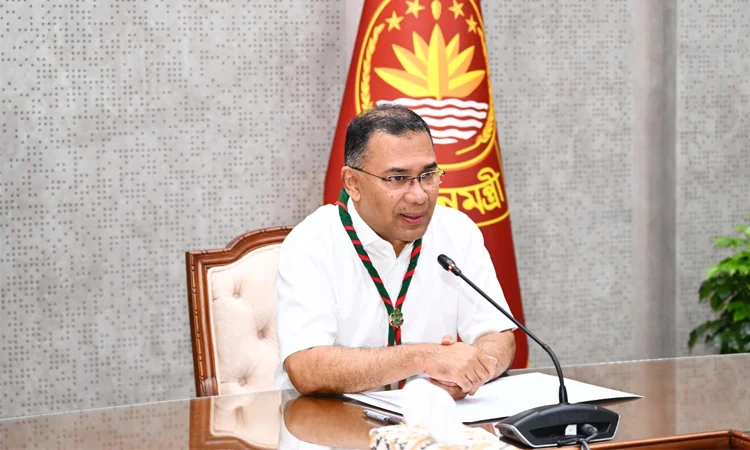
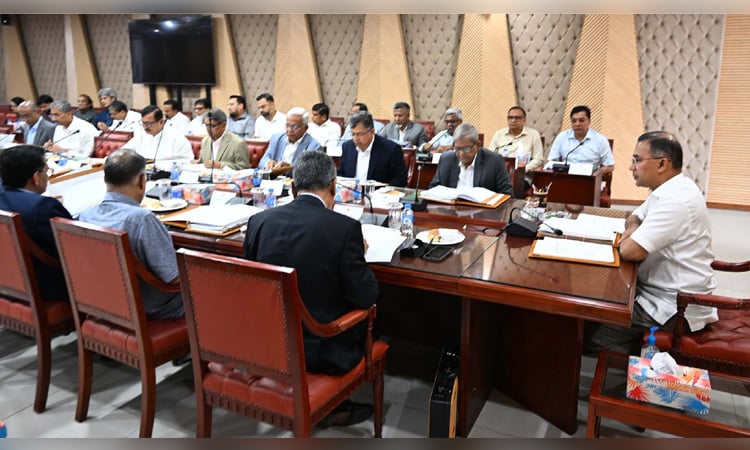
The approval was given in the 16th meeting of the Cabinet at the Secretariat with Prime Minister Tarique Rahman in the chair.
The Bank Resolution Ordinance, 2025 was promulgated with a view to providing timely solutions to risks arising from capital shortfalls, liquidity crises, insolvency or any threat to the existence of scheduled banks, and ensuring financial stability.
With a view to transforming the ordinance into an Act, it was placed as a bill in the first session of the 13th Jatiya Sangsad and subsequently referred to a parliamentary ‘Special Committee’ formed for detailed scrutiny.
The committee recommended placing the ordinance in an amended form. In line with the recommendation, some provisions of the ordinance were separated for implementation through rules.
Besides, considering the government’s financial liabilities, the interests of customers and the realities of the banking sector, a new Section 18A was incorporated into the law and the bill was placed before Parliament. The ‘Bank Resolution Act, 2026’ was subsequently passed in the form in which it was placed.
The provision was incorporated to introduce a market-based alternative mechanism alongside the existing resolution tools, keep banks under resolution operational while restructuring them, address capital shortfalls and liquidity crises, protect the interests of depositors and investors, and reduce the government’s financial exposure.
As no individual or institution applied in compliance with all the conditions of Section 18A of the Bank Resolution Act, 2026, the draft Bank Resolution (Amendment) Act, 2026 was prepared with the objective of repealing the section.
Meanwhile, the Cabinet approved the draft Visa Policy, 2026 with a view to making the entry into and departure from Bangladesh by foreigners easier and more orderly; attracting foreign investment, businesses and skilled human resources; promoting the tourism and hospitality sectors; ensuring technology and knowledge transfer; maintaining national security and international diplomatic balance; managing international travel based on the principle of reciprocity; and developing a modern and diversified migration framework.
The new policy aims to make the existing visa system more up-to-date, secure, dynamic and streamlined.
The Visa Policy, 2006 had 33 visa categories, while the new policy provides for 34 visa categories.
Based on the new policy, all previous visa-related circulars will be cancelled and an integrated and modern visa framework will be developed at both the national and international levels.
The Ministry of Home Affairs, the Department of Immigration and Passports, and Bangladesh missions abroad will jointly implement the framework.
The Cabinet also gave final and in principle approval to the draft National Human Rights Commission Act, 2026.
The notable features of the National Human Rights Commission Act, 2026 are as follows:
The Commission will consist of one Chairperson and four Commissioners, with a provision for including at least one woman. In addition, the selection process will give priority, on the recommendation of the Selection Committee, to qualified candidates from ethnic minority and disadvantaged communities;
The Selection Committee will include a university professor, a civil society representative, and representatives of ethnic minority or disadvantaged communities;
The jurisdiction of the Commission will be clearly defined, while the complaint submission process will be made easier;
Provisions have been made for an effective investigation mechanism and for empowering the Commission to issue interim orders, including ensuring the immediate safety of victims;
The Commission will have the authority to issue interim orders during an investigation to ensure the immediate safety of victims or prevent harm;
A provision has been included for establishing a National Preventive Mechanism Unit, in accordance with the Optional Protocol to the United Nations Convention against Torture, to prevent torture, death or enforced disappearance in custody.