Tuesday
30 June, 2026
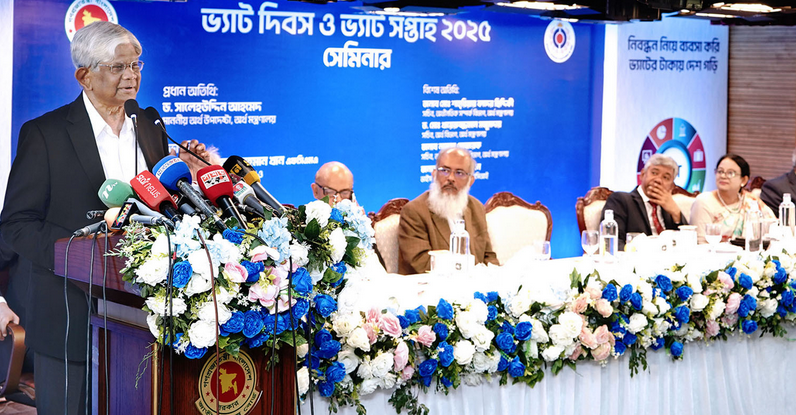
DHAKA, Dec 10, 2025 (BSS) – Attaching importance on boosting the existing tax to GDP ratio in the country, Finance Adviser Dr Salehuddin Ahmed today emphasized on modernizing the tax administration as well as making the revenue management more taxpayers, IT and business friendly.
The Finance Adviser also underscored the urgent need to curb VAT leakage, widen both the VAT and income tax coverage alongside modernizing Bangladesh’s tax administration to reduce public hassle and boost domestic resource mobilization.
“Bangladesh’s economic progress depends fundamentally on its ability to mobilize domestic resources rather than relying excessively on foreign loans and grants,” he said.
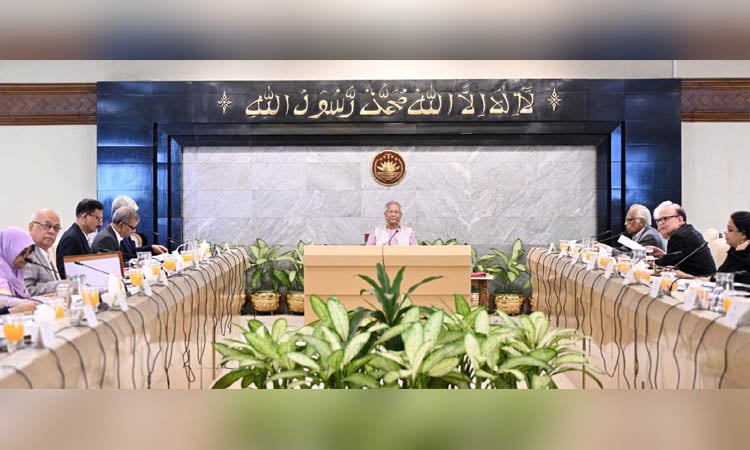
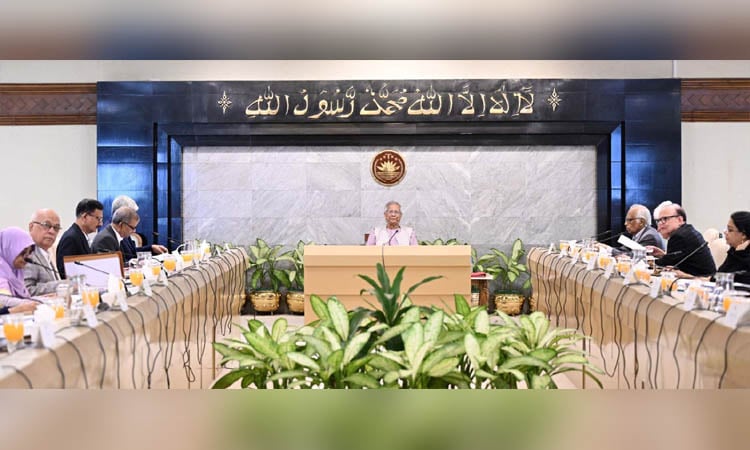
Dr Salehuddin Ahmed made the remarks while addressing a seminar organized marking the ‘VAT Day and VAT Week 2025’ at the Multipurpose Hall of the Revenue Board Building in the capital’s Sher-e-Bangla Nagar.
Finance Secretary Dr Md Khairuzzaman Mozumder, Economic Relations Division (ERD) Secretary Md Shahriar Kader Siddiky, Financial Institutions Division Secretary Nazma Mobarek, Science and Technology Secretary Md Anwar Hossain, FICCI Vice-President Yasir Azman, ICC Bangladesh President Mahbubur Rahman and Policy Research Institute (PRI) Chairman Dr Zaidi Sattar also spoke.
NBR Chairman Md Abdur Rahman Khan presided over the event where NBR Member (VAT audit) Syed Mushfequr Rahman presented the keynote paper.
NBR Member (VAT Policy) Md Azizur Rahman delivered the welcome address.
The Finance Adviser stressed that VAT remains one of the most powerful and modern forms of taxation worldwide, yet Bangladesh continues to collect far less VAT as a share of GDP compared to neighbouring countries—even though the economy has expanded significantly.
“There is no doubt about the need for VAT. In many countries, VAT contributes far more to national income. In our country, however, VAT collection remains extremely low compared to GDP,” he said.
The Finance Adviser pointed out that a major obstacle is VAT leakage at the retail and business levels. “A very unfortunate reality in Bangladesh is that VAT sometimes doesn’t reach the government’s treasury,” he said.
He called for a fundamental shift in mindset among businesses and consumers so that both parties accept VAT as a national obligation and insist on proper documentation and compliance.
He urged customers to demand VAT invoices and expect businesses to remit VAT properly. “People must be convinced that paying VAT ultimately benefits them—through improved public services,” he added.
Dr Ahmed also expressed concern over the country’s chronically low tax-to-GDP ratio, saying Bangladesh cannot fulfill its development ambitions without strengthening domestic revenues.
Priority sectors such as education, healthcare and social protection remain constrained when the State is forced to rely on external borrowing, he said.
“The biggest challenge is that our tax-GDP ratio is extremely low. Without increasing our own resources, how will we carry out development work? Loans and grants restrict our flexibility and limit our ability to prioritise the needs of our people,” he said.
Dr Ahmed argued that widening the base of both VAT and income tax is essential. In many advanced economies, he noted, taxpayers are willing to contribute as much as 26 percent of their income because they trust that their money is used transparently and returned to them in the form of quality public services.
“For people to pay tax willingly, the government must ensure that taxpayers receive services and trust that their money is used properly,” he said.
The Finance Adviser also urged the National Board of Revenue (NBR) to move swiftly to broaden the system, modernize processes and make tax compliance more convenient.
He emphasised the need for an IT-driven, business-friendly and people-friendly approach where taxpayers are not harassed and where both filing and payment are simplified.
He also suggested gradually reducing reliance on supplementary duties, increasing the share of income tax and VAT, and strengthening non-tax revenues.
“If the system is made easier and modernized, people will not hesitate to pay VAT. We must expand good practices, reduce hassle, and strengthen enforcement to ensure that VAT reaches the treasury,” he said.
Dr Salehuddin Ahmed expressed optimism that if reforms continue over the next two months, a significantly modernised and streamlined system will be ready for the next government to take forward.
He urged all stakeholders—including businesses, consumers and NBR officials—to disseminate VAT awareness widely so that customers across the country demand proof of VAT payment during shopping and help close leakages.