News Flash

JATIYA SANGSAD, July 9, 2026 (BSS) - The cabinet today gave in-principle and final approval to the draft Invest Bangladesh Act, 2026 placed by the Prime Minister’s Office (PMO).
It seeks to integrate the functions of the Bangladesh Investment Development Authority (BIDA), the Bangladesh Economic Zones Authority (BEZA), and the Public-Private Partnership Authority (PPPA) under a single institutional framework.
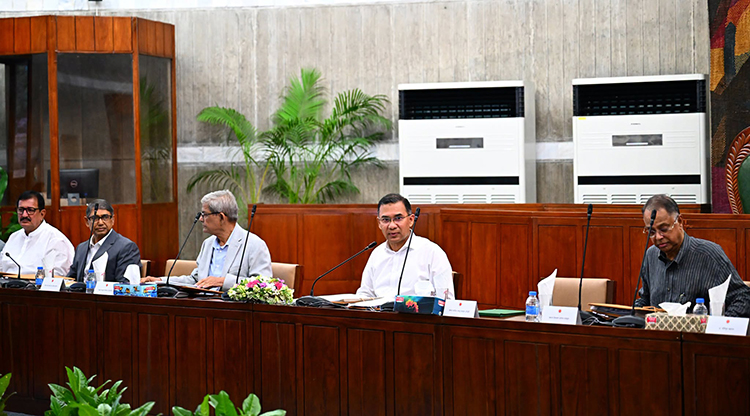
The cabinet gave the approval in a meeting with Prime Minister Tarique Rahman in the chair at the cabinet room of the Jatiya Sangsad here today, according to a press release.
The new authority is expected to serve as the country’s apex investment promotion and coordination agency.
The proposed law is aligned with the current government’s election manifesto commitment to creating a business-friendly environment.
It is expected to facilitate the implementation of single-window clearance, one-stop services, the digitalisation of approval and licensing processes, increased domestic and foreign investment, industrialisation, expanded public-private partnerships, and employment generation.
The law will reduce existing policy inconsistencies in investment promotion.
It will also eliminate duplication and overlap in the mandates of different agencies, enhance coordination among relevant institutions, and strengthen institutional capacity. In doing so, it will establish an integrated investment management framework that is consistent with international standards and best practices.
The key features of the proposed law are:
Industrial Zones: It provides for the integration of declared industrial zones, including economic zones and free trade zones, under a unified framework.
Service Coordination: It enables the establishment of standard procedures and timelines for licensing, approvals, and the delivery of investor services.
PPP Approvals: It provides a framework for PPP approvals and allows simplified approval procedures for small-scale PPP projects through the relevant ministry or division.
Idle Government Assets: It allows unused government land, buildings, shares, and ownership rights to be utilised for productive economic activities.
Digital Platform: It provides for bringing all investment- and business-related services under a single digital platform.
The cabinet also approved the draft of the National Renewable Energy Development Strategy (2026-2030) placed by the Power Division.
The draft strategy aims to establish a secure, affordable, sustainable and low-carbon energy system.
The strategy has been finalised based on the recommendations of a committee formed following the decisions of the special Cabinet meeting held on April 16, 2026, as well as inter-ministerial reviews, public consultations, and feedback from 31 ministries, divisions, agencies, research institutions, experts and investor organisations.
The strategy's primary objective is to increase the share of renewable energy in the country's total electricity generation to 20 percent by 2030 and ensure at least 15 percent electricity savings through effective demand-side management.
Achieving these targets will help gradually reduce dependence on imported fossil fuels, strengthen energy security, ease the subsidy burden on the power sector, and support Bangladesh in fulfilling its international climate commitments.
To encourage private investment, the strategy includes policies and incentives for the expansion of rooftop solar power, net metering, the Operational Expenditure (OPEX) model, smart grids, Battery Energy Storage Systems (BESS), solar-powered irrigation, floating solar power, waste-to-energy projects, wind power, hydropower, biogas, electric vehicle charging infrastructure and clean cooking technologies.
To facilitate investment and financing in the renewable energy sector, the strategy proposes the establishment of a Renewable Energy Fund, concessional financing, credit guarantees, the development of a carbon credit mechanism, rationalisation of import duties, tax holidays, and special incentives for local manufacturing and backward linkage industries.
The strategy also places special emphasis on social inclusion and environmental protection. Measures will be taken to protect agricultural land, ensure the participation of potentially affected communities, promote the recycling of solar panels and batteries, improve e-waste management, and develop skilled human resources. It also sets a target of ensuring that at least 30 percent of the skilled workforce in renewable energy technologies will be women.
To ensure effective implementation and monitor progress, the Power Division will launch a real-time online monitoring dashboard and regularly review implementation through inter-ministerial coordination meetings. In addition, a National Policy Council, to be chaired by the Prime Minister, will be established to provide high-level policy direction, coordination and accountability.
The cabinet also approved the draft of the Import Policy Order, 2026-2029, placed by the Ministry of Commerce.
Under Section 3(1) of the Imports and Exports (Control) Act, 1950, an Import Policy Order is issued every three years. The current policy expired on June 30, 2024, but has remained in force until the issuance of a new order. Accordingly, the Cabinet has approved the draft Import Policy Order, 2026-2029.
The key features of the proposed policy are as follows:
Modern Payment Methods for Imports:
In line with modern international trade practices, the policy allows industrial and commercial enterprises to import goods through Sales Contracts alongside Letters of Credit (LCs), irrespective of the value of the imports. It also permits the use of Open Account and other international payment methods approved by Bangladesh Bank.
Free Trade Zones and Central Bonded Warehouses:
The policy introduces provisions for establishing Free Trade Zones (FTZs) and Central Bonded Warehouses (CBWs). These measures are expected to help position Bangladesh as a regional trade, logistics and re-export hub, while attracting foreign investment, expanding exports, strengthening supply chains, improving the ease of doing business and ensuring easier access to industrial raw materials.
Support for Export-Oriented Industries:
To promote export diversification and the development of high-value-added export sectors, the policy expands facilities allowing export-oriented industries to import raw materials and production inputs free of cost (FoC).
Food Safety Standards:
The policy incorporates provisions relating to Codex Standards, Fit for Human Consumption, Melamine-free, and HGP-free (Hormone Growth Promotants-free) requirements to strengthen food safety and align with international standards.
Incentives for Non-Resident Bangladeshis:
For the first time, the policy defines "Non-Resident Bangladeshis" and facilitates the import of capital machinery, spare parts and raw materials for their approved industrial enterprises. It also encourages expatriate investment by allowing internationally accepted payment methods in line with Bangladesh Bank's foreign exchange regulations.
Trade Facilitation Measures:
To implement Bangladesh's obligations under the WTO Trade Facilitation Agreement (TFA), the policy introduces provisions for faster customs clearance, risk-based customs management, post-clearance audits, the Authorised Economic Operator (AEO) programme, electronic licences and permits, online certification and electronic payment systems.
Restrictions on Hazardous Pesticides:
To protect public health, the environment and biodiversity, the policy prohibits or regulates the import of several pesticides that are internationally classified as Highly Hazardous Pesticides (HHPs) and have been scientifically proven to be harmful.
Livestock Research:
To support genetic improvement of domestic livestock, scientific research and advanced breeding technologies, the policy permits the import of semen from Specific Pathogen Free (SPF) and Bovine Spongiform Encephalopathy (BSE)-free cattle, buffaloes, goats and sheep for research purposes, subject to prior approval from the Department of Livestock Services.