Thursday
06 August, 2026
News Flash
News Flash
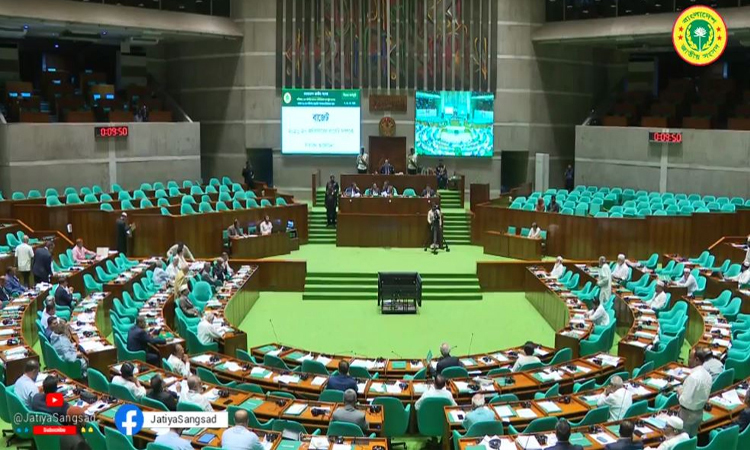
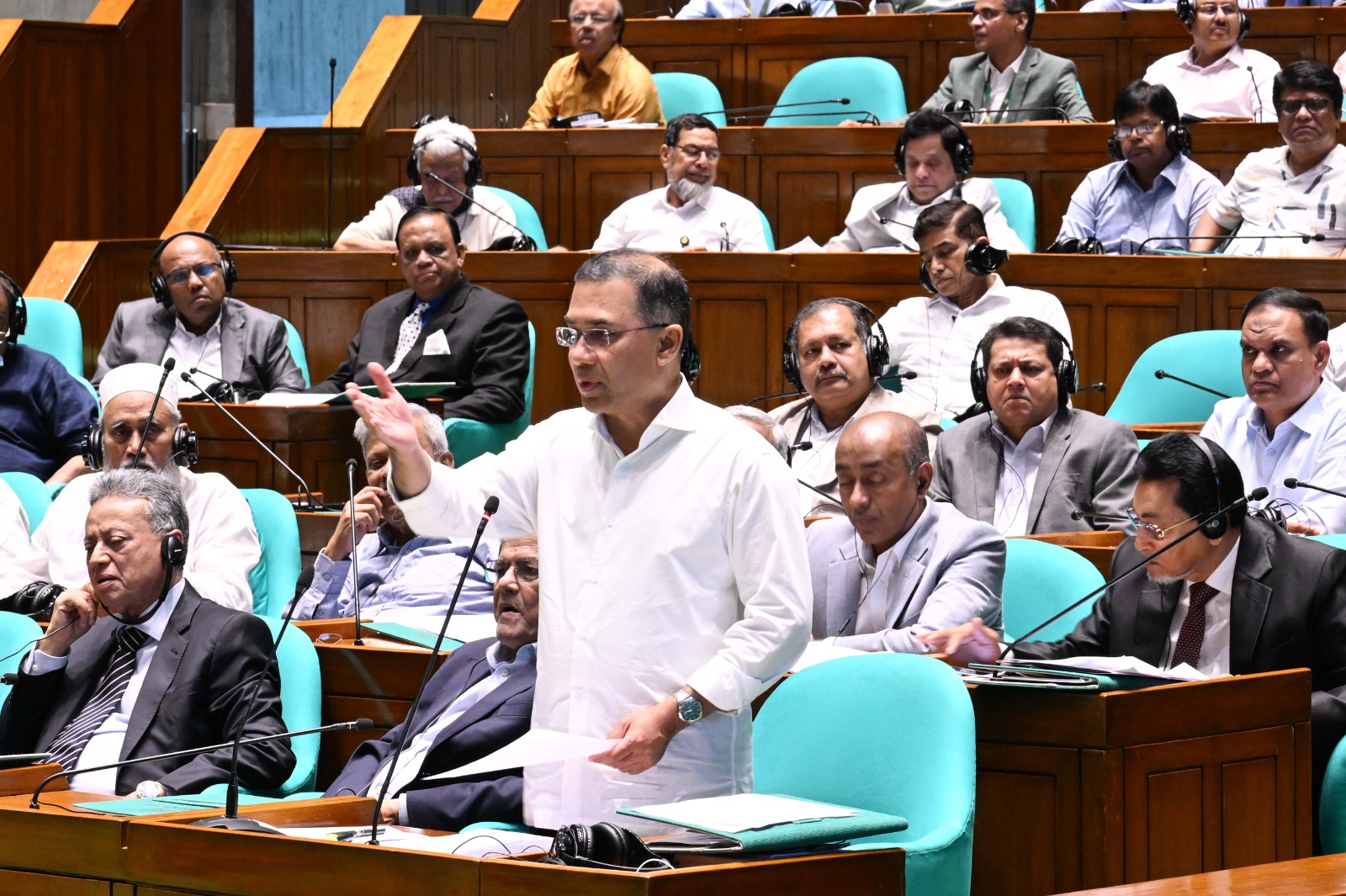
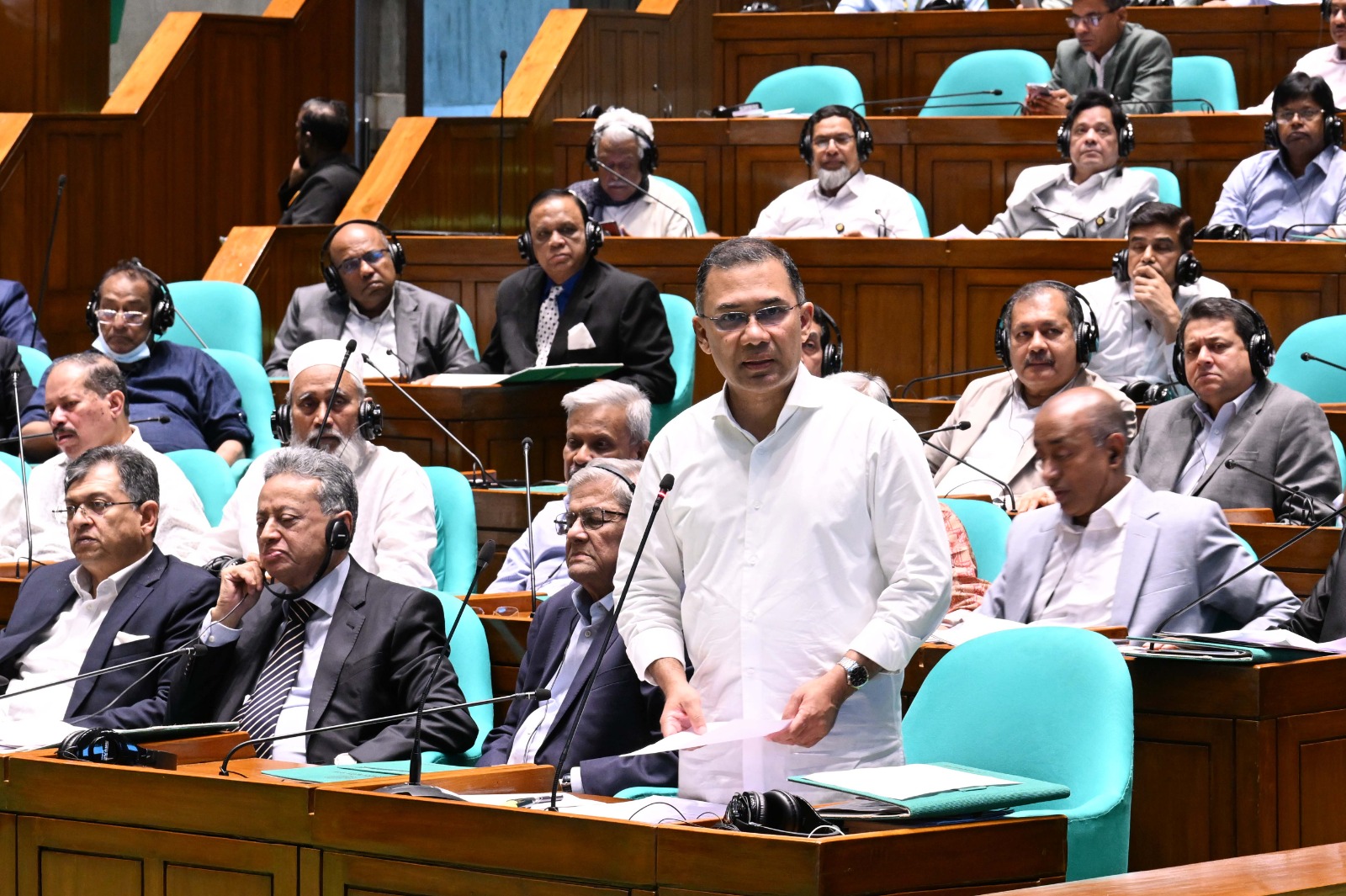
SANGSAD BHABAN, June 28, 2026 (BSS) -Commerce Minister Khandakar Abdul
Muktadir today said the government is working on to bring down inflation,
improve the investment climate, strengthen export-oriented industries and
prepare the country for a smooth graduation from the Least Developed Country
(LDC) category.
Taking part in the general discussion on the proposed national budget for
FY2026-27 in the Jatiya Sangsad today, the minister highly praised the budget
presented by the finance minister, describing it as one that had "exceeded
expectations by miles."
He said the proposed budget has been built around the central themes of
stability, investment and growth, with greater emphasis on human capital
development through increased allocations for education, health, skills
development and soft power rather than excessive spending on large
infrastructure projects.
Muktadir, also the minister for Industries and Textiles and Jute, said the
government has set a GDP growth target of 6.5 percent for the coming fiscal
year and is working towards transforming Bangladesh into a one-trillion-
dollar economy by 2034 through sustained annual real growth of around 8.5 to
9 percent.
To achieve that objective, he said, "Bangladesh must improve the efficiency
of public expenditure, reduce the Incremental Capital Output Ratio (ICOR),
raise the tax-to-GDP ratio and significantly increase both public and private
investment,"
On inflation, the commerce minister said the government's strategy focuses on
reducing production, logistics and transportation costs rather than relying
only on monetary measures.
He noted that Bangladesh's logistics cost currently stands at around 16
percent of GDP compared with the global benchmark of about 10 percent.
The minister said the government is improving efficiency at Chattogram Port
through greater private sector participation, reducing container handling
time and lowering freight and customs clearance costs.
He also said steps are being taken to improve market information systems and
address supply chain inefficiencies so that unnecessary price hikes between
producers and consumers can be reduced.
Referring to the government's renewable energy initiatives, the minister said
the ongoing programme to generate 10,000 megawatts of solar power and the
gradual introduction of electric and plug-in hybrid vehicles would lower
production and transport costs, thereby helping contain inflation.
On Bangladesh's LDC graduation, the minister said the government has already
sought a three-year deferment of the graduation timeline. If approved,
Bangladesh would graduate in November 2029, allowing more time to strengthen
competitiveness and prepare businesses for the post-LDC trade regime.
He said creating a conducive investment environment remains one of the
government's highest priorities.
The minister acknowledged that gas shortages continue to constrain industrial
production and said the government is working to increase LNG imports through
an additional Floating Storage and Regasification Unit (FSRU), which would
supply an additional 550-600 million cubic feet of gas per day.
He also said a feasibility study is underway to establish a dedicated LNG
network for fertilizer factories that frequently remain idle because of gas
shortages.
Highlighting reforms to improve the ease of doing business, the minister said
the government has simplified procedures for establishing new businesses and
expects investors to be able to reach the stage of opening letters of credit
for importing machinery within 14 days.
He added that company registration, trade licence issuance, import and export
registration certificates and several other services are being integrated and
digitised, while overlapping regulatory requirements are being removed.
The minister said trade licences would soon be obtainable entirely online
without visiting any office, with fees automatically reaching the respective
local government institutions.
Focusing on export diversification, he identified the leather sector as one
of the country's highest priority industries.
He said Bangladesh's leather exports have remained below US$1 billion for
several years despite the country's huge raw material base.
The government is therefore undertaking coordinated reforms, including
upgrading the Savar Central Effluent Treatment Plant (CETP), ensuring
environmental compliance of all tanneries and helping them obtain
internationally recognised Leather Working Group (LWG) Gold certification.
These measures, he said, would enable Bangladesh to produce higher value-
added leather products and expand leather exports to US$10-12 billion in the
future.
The commerce minister also highlighted the jute sector as another major
export priority.
He said Bangladesh currently produces around 1.5 million tons of jute
annually and the government has proposed a joint research laboratory with
China to improve productivity, develop diversified jute products and explore
new international markets.
He said greater emphasis would be placed on producing high value-added
blended fabrics and other diversified jute goods instead of relying primarily
on traditional packaging materials.
Expressing confidence in the country's economic prospects, the minister said
the government's reform agenda and the proposed budget would strengthen
macroeconomic stability, attract greater investment, expand exports and put
Bangladesh firmly on the path towards achieving its long-term development
goals.