BSS
  17 Jun 2026, 16:27
Update : 17 Jun 2026, 16:36

Bangladesh pursuing regularization opportunities for undocumented Bangladeshis abroad: Minister

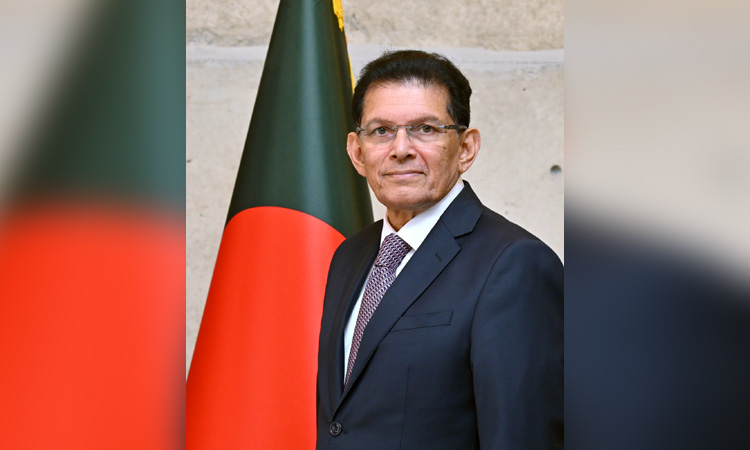
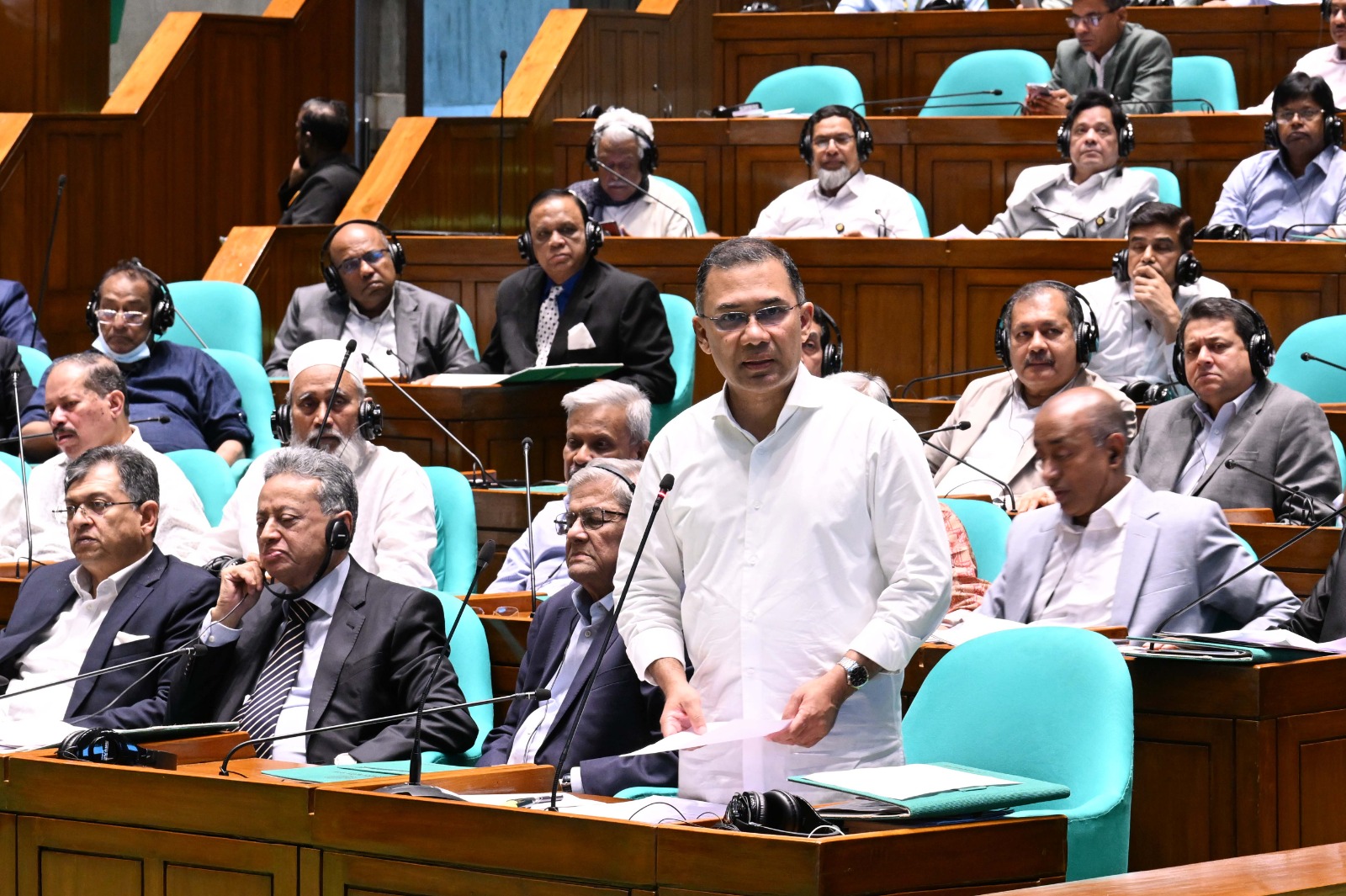
Foreign Minister Dr. Khalilur Rahman-File Photo

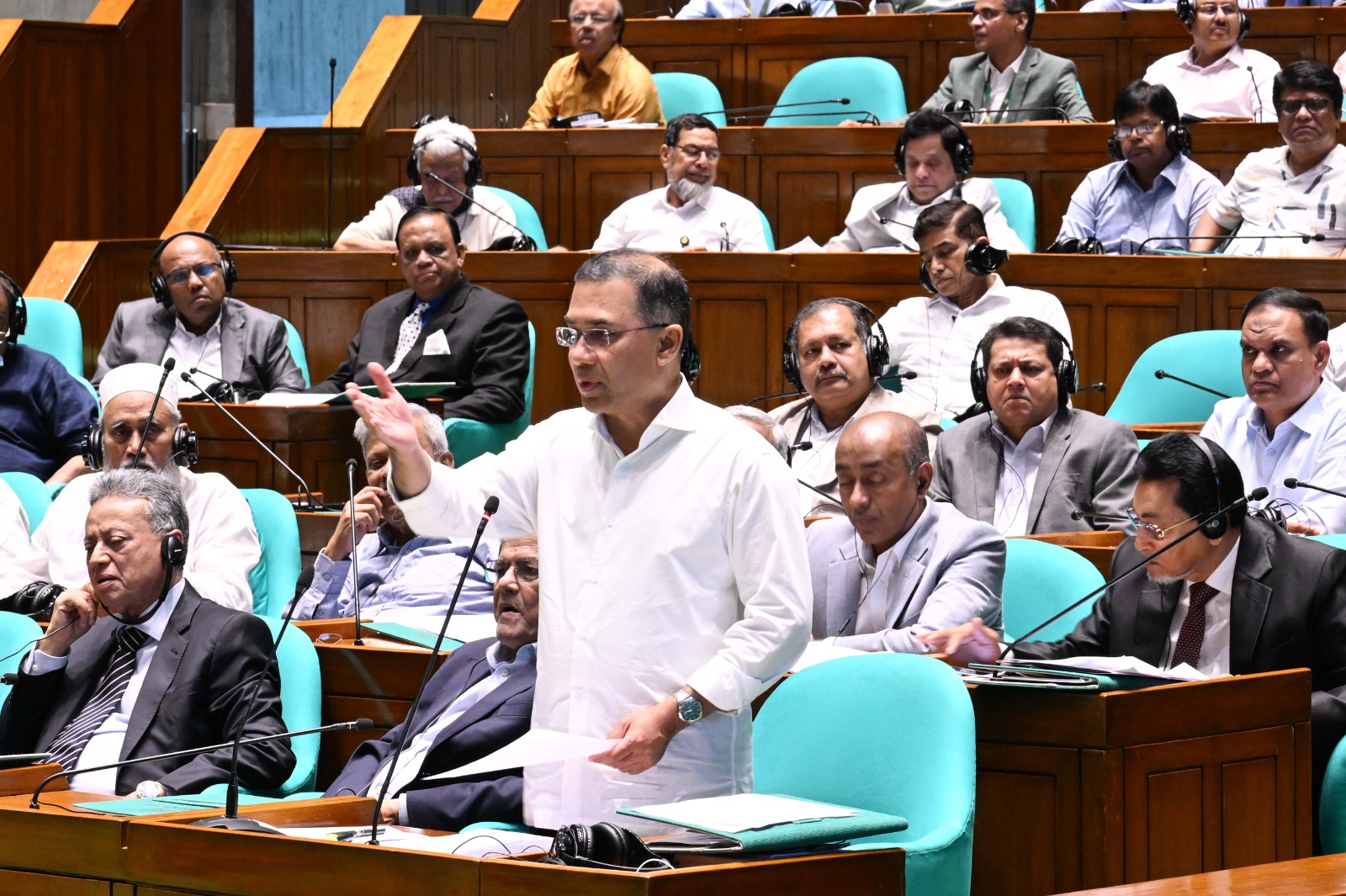
SANGSAD BHABAN, June 17, 2026 (BSS) - Minister for Foreign Affairs Dr. 
Khalilur Rahman today said Parliament that the government is maintaining 
diplomatic engagement with countries hosting undocumented Bangladeshi 
migrants to expand opportunities for their regularisation, while emphasizing 
that the issue ultimately depends on the laws and policies of the respective 
states.

Responding to a starred tabled question from ruling party lawmaker Md. 
Jahandar Ali Miah (Madaripur-3) in the Jatiya Sangsad, he said Bangladeshi 
expatriates are making an outstanding contribution to national development 
and remain a key driving force behind the country's economic progress. 

The day's sitting began with Speaker Hafiz Uddin Ahmad, Bir Bikram, in the 
chair.

"Our Bangladeshi brothers and sisters living abroad are making a unique 
contribution to national development. They are one of the principal driving 
forces of our economic advancement," he said the House.

"The present government attaches the highest importance to their welfare, 
protection of rights and preservation of dignity," he added.

Dr. Rahman said Bangladesh is continuing diplomatic contacts and discussions 
at different levels with countries where Bangladeshi nationals are working 
without proper documentation.

"Within the framework of the laws and regulations of those countries, we are 
pursuing diplomatic engagement so that opportunities for regularisation can 
be expanded for eligible and employed Bangladeshi nationals," he added.

The minister noted that Bangladeshi missions abroad are actively providing 
consular support and facilitating participation in regularisation and amnesty 
programmes announced by host countries.

"Whenever a country announces an amnesty or regularisation programme for 
irregular migrants, our embassies provide necessary information, guidance and 
overall assistance to undocumented Bangladeshis residing there," he 
continued.

Referring to recent developments in Europe, Dr. Rahman said Spain's 
initiative to legalise nearly 500,000 undocumented migrants could benefit 
around 20,000 Bangladeshis.

"As you are aware, the Spanish government has undertaken an initiative to 
grant legal status to approximately 500,000 irregular migrants. As a result, 
an estimated 20,000 Bangladeshi citizens are expected to gain opportunities 
for legal residence and employment," he said.

However, he stressed that the regularisation of undocumented migrants remains 
a sovereign decision of the host country.

"The legalisation of irregular migrants residing in a foreign state primarily 
depends on that country's own laws, policies and decisions. Therefore, 
despite all efforts and goodwill on the part of the Government of Bangladesh 
and its embassies, regularisation cannot be guaranteed through unilateral 
initiatives by Bangladesh alone," he said.

Highlighting the government's broader migration policy, Dr. Rahman said the 
administration places the highest priority on safe, legal and orderly 
migration.

"Irregular migration often exposes our citizens to human trafficking, labour 
exploitation, legal complications and other risks. For this reason, the 
government gives the highest priority to legal, safe and orderly migration," 
he told parliament.

The minister said Bangladesh is working to preserve existing labour markets 
and open new ones through bilateral and multilateral engagements with 
countries in Europe, East Asia, Africa and South America.

He informed the House that memorandums of understanding are currently being 
processed with countries including Cambodia, Thailand, Malta, Mauritius, 
Spain, Serbia, Russia, Turkey, Fiji, Albania, Austria and Bosnia and 
Herzegovina. Discussions are also underway with Guyana regarding the 
recruitment of healthcare workers.

Dr. Rahman underscored skills development as the cornerstone of labour market 
expansion.

"The government considers skills development to be the foundation for 
expanding overseas employment opportunities," he said, adding that special 
emphasis is being placed on international-standard technical training, 
language education, skills certification and workforce preparation based on 
global market demand.

He noted that skills development programmes have already begun under the 
European Union's Talent Partnership initiative, while free Japanese language 
training has been introduced at Technical Training Centres (TTCs) across 
Bangladesh.

The foreign minister also highlighted a memorandum of understanding signed 
between Bangladesh and the Philippines on April 1, 2026, covering nursing 
training and cooperation in the health sector. In addition, he said, 
Australia has recently launched a six-million-dollar project to enhance the 
skills of Bangladeshi workers by drawing on Australia's TAFE and TVET 
experience.

Concluding his remarks, Dr. Rahman said expatriate Bangladeshis are valuable 
national assets and important partners in the country's economic advancement.

"We believe that every Bangladeshi working abroad is a valuable national 
asset and an important partner in our economic progress. But, irregular 
migration is harmful both to the migrant and to the country's reputation," he 
said.

"To prevent irregular migration from the outset, we are working with the 
International Organization for Migration (IOM) and also engaging bilaterally 
with various countries," he added.