Friday
07 August, 2026
News Flash
News Flash
By Moshtak Ahmed
DHAKA, July 15, 2026 (BSS) - The government is seeking to draw on the Netherlands' globally acclaimed expertise in water management to strengthen Bangladesh's long-term flood management strategy.
The issue was discussed in detail at a recent seminar organised by the Embassy of the Netherlands, where the Dutch Ambassador and water management experts exchanged views with Bangladeshi stakeholders on flood control, drainage and water conservation.
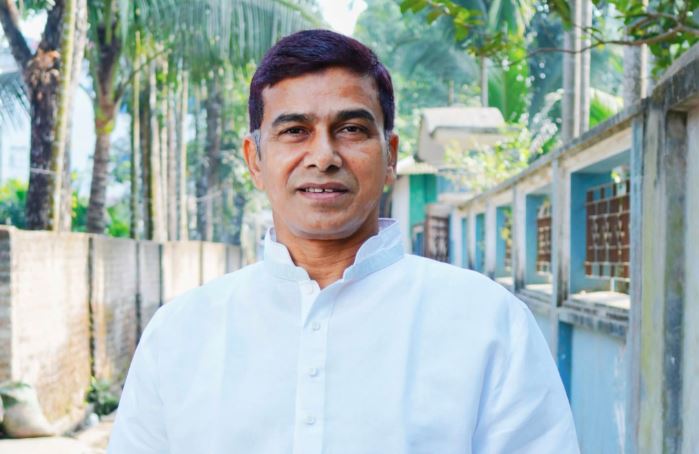
"The Netherlands has developed one of the world's most successful water management systems. Their experience is highly valuable for a riverine country like Bangladesh," State Minister for Water Resources Forhad Hossain Azad told BSS in an interview in view of recent flood in Chattogram and
Sylhet divisions.
"We are working to incorporate that expertise into our long-term plans to build a more effective and resilient flood management system," he added.
Azad said the government is placing increasing emphasis on sustainable water management and climate resilience as part of its broader strategy to reduce flood risks and improve water resource management across the country.
The government is working with the highest level of preparedness to tackle the ongoing flood situation as it has stockpiled approximately 13 lakh geo-bags (geotextile bags) for the repair of flood-damaged embankments in flood hit districts, he said.
Outlining the government's post-flood preparedness and relief measures, he said more than 700,000 geo-bags have already been supplied for the rapid repair of damaged embankments and prevention of riverbank erosion across different parts of the country.
In addition, over 650,000 geo-bags and nearly 65,000 synthetic geo-bags have been kept in reserve, he said, adding, "Altogether around 13 lakh geo-bags are ready to be dispatched immediately to affected areas as needed."
Forhad said the government has not yet received a complete assessment of the overall damage caused by the ongoing floods.
However, he said, data collection in the affected districts of the Chattogram Division and the Sylhet Division, including Habiganj and Moulvibazar, is almost complete.
The state minister said comprehensive reports from district administrations and field-level officials are expected by Wednesday afternoon.
"We are closely monitoring the situation in the Chattogram Division and the Sylhet region. At the same time, we are concerned about the situation in Feni, where water levels are rising. Therefore, advance preparations have been taken to deal with any possible scenario," he continued.
The state minister said all leave for officials and employees of his ministry has been cancelled. Officials and engineers of the Bangladesh Water Development Board in Feni, Sylhet, Moulvibazar, Habiganj districts and the Chattogram Division are stationed in the field and they are responding
immediately to reports of waterlogging or embankment damage and taking the necessary measures, he added.
"Our goal is to restore damaged sluice gates as quickly as possible and resolve drainage problems wherever they occur. We hope to complete most of the emergency work within the next week," he said.
Forhad Hossain Azad said recent heavy rainfall and upstream runoff had damaged embankments in several areas. In one area of Cox's Bazar, three controlled cuts were made in an embankment, with the assistance of local residents, to relieve excessive water pressure, he added.
In another location, a strong current breached the embankment, and emergency reconstruction work using geo-bags is now underway, he said.
The state minister said emergency repairs to the major embankments damaged by the ongoing floods are expected to be completed within the next 15 days. He also said the government has taken steps to utilize the Netherlands' expertise to improve long-term flood management.
The state minister recalled that Shaheed President Ziaur Rahman signed an understanding with the Government of the Netherlands on water management in 1977 and visited the country in 1979 to inspect various projects.
Building on that experience, the present government also wants to strengthen international cooperation in this sector.
The state minister noted that most of Bangladesh's polders and flood control infrastructure were built during the 1960s and 1970s.
"After decades of use, many embankments and polders now require rehabilitation," he said, adding that in some cases, controlled drainage is necessary to remove excess water based on local conditions.
However, modernization of this infrastructure remains essential for the long term, he said.
Regarding the budget, the state minister said his ministry has received its allocated budget for the current fiscal year.
However, Prime Minister and the Finance Minister have assured that additional funds will be provided if required in view of the flood situation.
He said members of parliament, deputy commissioners and local administrations from various districts have submitted requests for riverbank protection work at around 1,500 locations during the monsoon season.
Emergency erosion control measures have already been completed at about 500 sites, while work is continuing at the remaining 1,000 locations.
According to the state minister, members of parliament, district administrations and engineers from the Bangladesh Water Development Board are jointly inspecting each location to determine the required number of geo-bags.
Damage varies from site to site, ranging from 50 metres to 200, 500 or even 700 metres, and the response is being tailored accordingly, he said.
He said the government has introduced several measures to ensure transparency in the use of geo-bags. Although there were complaints regarding geo-bag use in the past, such irregularities are no longer possible.
Each geo-bag is filled with the prescribed amount of sand, and work is carried out in the presence of local public representatives, Water Development Board officials and other concerned stakeholders.
Forhad added that signboards are being displayed at every project site indicating the number of geo-bags being used, allowing the public to monitor the work. Modern technology is also being used to verify where and how many geo-bags have been deployed, he said.
"In the past, there were allegations that contractors would place 50 geo-bags but bill for 100. Now there is no opportunity even to place 99 bags and bill for 100. The government is taking a firm stance to ensure transparency and accountability," he said.
The state minister said whenever reports of damage are received from any area, the executive engineer, sub-divisional engineer, supervising engineer and chief engineer concerned are immediately dispatched to the site.
They assess the damage and begin emergency work without delay. Instructions have been issued to complete all such work within the stipulated timeframe.
If any contractor fails to complete the work on time, appropriate action will be taken, including cancellation of the work order if necessary, he said.
The state minister said the government plans to use around 30 lakh geo-bags during the current season based on anticipated requirements, and the budget has been allocated accordingly.
There will be no shortage of geo-bags if emergency needs arise anywhere in the country, he said.
Concluding the interview, Forhad the state minister said the government is working not only to address the current floods but also to modernize and strengthen the country's future disaster management system.
Coordinated efforts by field-level officials, local administrations, public representatives and the people will continue to minimize losses from floods and riverbank erosion.