Friday
07 August, 2026
News Flash
News Flash
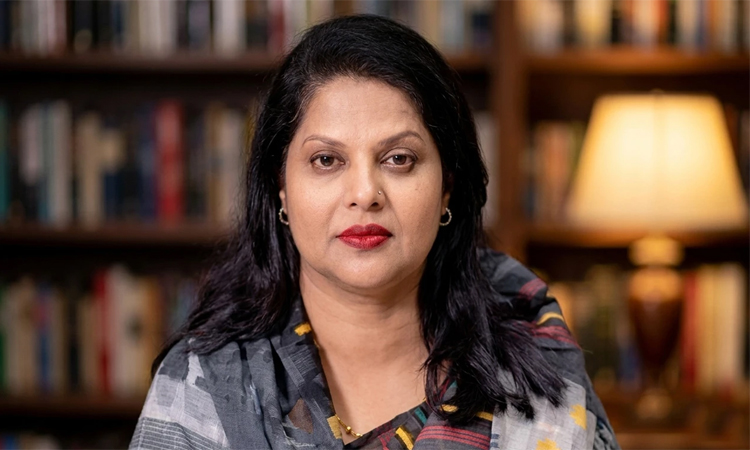
DHAKA, June 4, 2026 (BSS) – Farida Khanom, the first woman Deputy Commissioner (DC) of Dhaka district, has pledged to build a more humane, transparent and citizen-friendly administrative system in the capital.
She said the district administration system traces its roots back to 1772, when British administrator Warren Hastings introduced the framework of district governance in the Indian subcontinent, which later evolved into the present administrative structure of Bangladesh.
Dhaka’s district administration also began in the same era, marking a long historical legacy of the governance in the capital.
Over more than 250 years, the post of District Collector has evolved into the modern role of Deputy Commissioner (DC).
In this long administrative history, Dhaka District is being led for the first time by a woman DC in the person of Farida Khanom, a 25th BCS cadre officer.
In an exclusive interview with the Bangladesh Sangbad Sangstha (BSS), she said that administering Dhaka district is one of the most complex and demanding responsibilities in the country due to its huge population, rapid urbanisation, high population density, land-related complications, infrastructure pressure and diverse civic challenges.
She noted that ensuring services for more than one and a half to two crore people require strong leadership, experience and efficient use of technology.
“Gaining public trust is the greatest achievement of an administrator,” she said, adding that her priority is to ensure transparency, accountability, teamwork and humane service delivery.
Farida Khanom said she has already taken steps to strengthen monitoring, reporting and coordination across all branches of the district administration to improve efficiency and responsiveness.
She emphasised that citizens should not face unnecessary hardship or uncertainty while receiving public services.
“The responsibilities of the Dhaka DC are closely linked with the country’s overall governance system. Every decision taken in the capital has a national impact,” she said.
Highlighting women’s leadership in public administration, she said her appointment would inspire more women to pursue careers in administration, judiciary, diplomacy and technology.
“A single success can inspire confidence in many others,” she added.
She also outlined several ongoing initiatives under her leadership, including strengthened humanitarian assistance, faster services for elderly, women and children, recovery of government land and modernization of land administration.
She said land management remains one of the most sensitive sectors in Dhaka due to litigation backlog, illegal occupation and delays in services such as mutation and record correction.
Priority reforms have already been initiated in this regard.
According to her, steps have been taken to expedite e-mutation services, expand online land development tax collection, reduce pending land cases, enforce relevant laws effectively and strengthen field-level monitoring and grievance redress mechanisms.
She further highlighted ongoing efforts to protect and recover government khas land, noting that recent eviction drives have helped boost public confidence.
A digital database of government land in Dhaka district is also being developed to prevent illegal occupation in the future.
Emphasising digital transformation, she said more than 30 district services are already available through the MyGov platform, and efforts are underway to bring all remaining services online in phases.
“People should not have to come to government offices unnecessarily. Services must be accessible, efficient and respectful of citizens’ time and dignity,” she said.
Farida Khanom expressed optimism that with sound policy, skilled manpower, modern technology and public participation, Dhaka District could emerge as a model for governance and public service delivery.
“The success of Dhaka District will reflect the success of Bangladesh,” she added.