Tuesday
19 May, 2026
News Flash
News Flash
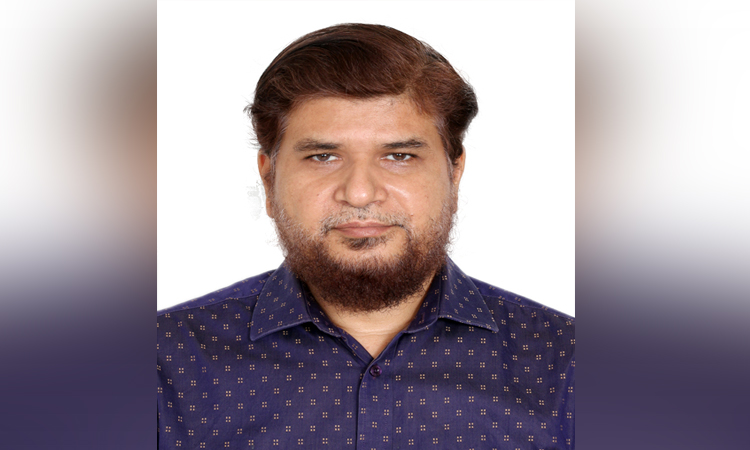
DHAKA, May 18, 2026 (BSS) - Teletalk Managing Director Nurul Mabud Chowdhury has said the government does not provide any subsidy for the state-owned mobile operator's operational expenses, as the operator sustains its activities entirely through its own revenue.
"Many people say the government has provided subsidy to Teletalk. I want to say with information that the government gives no subsidy for Teletalk's operational expenses. Teletalk runs its operational costs with its own income," he said.
His remarks come amid widespread discussions about the struggling condition of Teletalk compared to the strong performance of the country's three private operators.
Nurul Mabud Chowdhury said Teletalk is the only government operator that has to compete with world-class telecom giants to retain its market share.
Currently, Teletalk has 0.68 crore subscribers, while market leader Grameenphone boasts 8.44 crore, followed by Robi with 5.73 crore and Banglalink with 3.73 crore.
Referring to criticism over Teletalk's performance, Nurul Mabud Chowdhury said many raised the common question of why Teletalk could not grow despite huge public interest after its launch in 2005.
He said he has been in the telecom sector since 1991 and witnessed many developments in the industry. Before the mobile sector flourished, Citycell was operating in the country but it was expensive and not affordable for ordinary people, he said, adding that Bangladesh's mobile network journey mainly began in 1996 with three operators.
Questioning criticism over Teletalk, he said he does not know of any country where the mobile telecom journey started by giving licences only to the private sector without including the government entity.
"We entered operation nearly 10 years later after overcoming many obstacles. By then, private sector operators had already become giants through massive business expansion," he said.
The Teletalk MD said many people question the necessity of retaining Teletalk because of its small market share, but he also asks why there was so much craze over Teletalk in 2005.
"If mobile operators had functioned properly, people could easily get SIMs, call rates remained affordable and network quality was good, then there would not have been such a craze over Teletalk," he said.
He said he still receives applications, emails and phone calls requesting Teletalk network services in different areas, which indicates that something is still missing despite the presence of other operators.
On the spectrum issue - radio frequencies used for mobile and internet services - Nurul Mabud Chowdhury said many people claim Teletalk received spectrum free of cost, while media frequently report that Teletalk owes Tk 5,000 crore to the Bangladesh Telecommunication Regulatory Commission (BTRC).
"Teletalk is a government operator. Who will finance it? The government will...," he said.
He said even after excluding ongoing projects, the total government investment in Teletalk stands at nearly Tk 5,000 crore, including Teletalk's own investment of Tk 1,000 crore, meaning around Tk 4,000 crore has been invested by the government.
Comparing investment levels with competitors, he said major rival operators invested over Tk 60,000 crore and in that context Teletalk's market share is not bad in proportion to investment.
On spectrum allocation, the Teletalk MD said the operator has 95 megahertz (MHz) of spectrum like other operators, though it is scattered across different bands, and it will be streamlined.
He said BTRC has already planned to sell 800 MHz spectrum and requested Teletalk to work on the rearrangement of 900 MHz spectrum, which the operator will do.
Nurul Mabud Chowdhury said other operators possess even more frequency in the 1800 MHz and 2100 MHz bands, while a portion of the 2300 MHz band spectrum allocated in the last auction still remains vacant and any operator can take it.
"If we did not take it, it would have remained unused," he said.
He said Teletalk did not receive all frequencies at once as the government first conducted auctions and later allocated the unsold portions to the operator.
The Teletalk MD said spectrum remains insufficient in many areas, especially in haor regions, the Chattogram Hill Tracts and Sundarbans areas where Teletalk earlier expanded services to underserved regions despite lack of business potential.
He said demand in those areas has now increased significantly and other operators are also entering those markets, but Teletalk faces frequency shortages there.
"Technically, our PRB (Physical Resource Block) utilisation is so high that we cannot properly provide services due to spectrum shortage. That is why we are trying to use 2300 MHz there," he said.
The Teletalk MD said the operator has extensive plans centring on the newly received spectrum and hopes to present a much better network in the near future.
He said, "The honourable minister and adviser asked Teletalk to submit a five-year plan and the operator has already done so."
"Inshallah, if everything goes properly and we receive the necessary minimum investment, our network will become much better than its current position," he added.