Monday
24 August, 2026
News Flash
News Flash
By Maloy Kumar Dutta
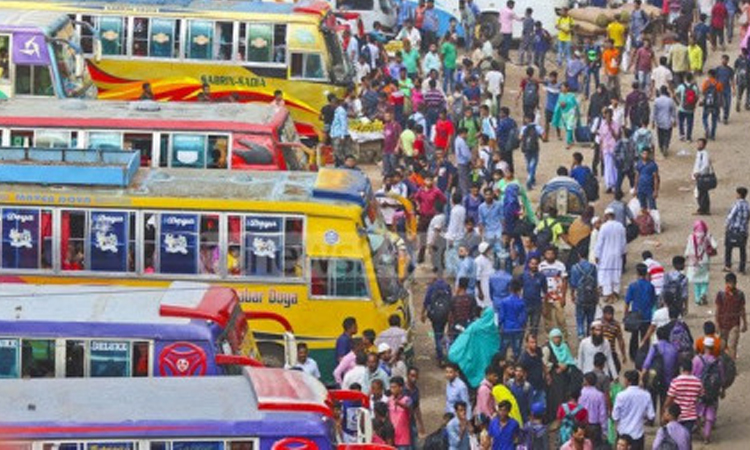
DHAKA, May 18, 2026 (BSS) - Bangladesh is once again preparing for the Eid travel rush, with road safety experts urging coordinated measures to manage overcrowded highways, reduce driver fatigue and improve passenger safety during one of the country's busiest travel periods.
Road safety specialists said long-standing challenges such as overloaded vehicles, unsafe driving practices and pressure on transport systems require sustained and coordinated solutions during major holiday seasons.
Professor Dr Mohammad Mahbub Alam Talukder of the Accident Research Institute at Bangladesh University of Engineering and Technology (BUET) said, "The causes of accidents are already known. What is missing is enforcement, accountability and planning."
Every major holiday places significant pressure on the transport network as millions of people travel within a short period. Experts said the increased movement often leads to overloaded vehicles, fatigued drivers and higher accident risks on highways.
Talukder highlighted concerns over unauthorised vehicles operating on highways, including city buses operating on long-distance routes without proper permits or trained drivers.
He also renewed demands for a complete ban on dangerous locally-made vehicles such as Nasimon-Korimon from major roads.
According to him, preventing illegal and unfit vehicles from entering highways should remain a priority during the Eid travel period.
He said Bangladesh's expanding road infrastructure should be matched with continued investment in skilled drivers, stronger road discipline and improved enforcement systems to maximise safety benefits.
One of the gravest concerns this year remains motorcycle fatalities.
Talukder said large numbers of young riders continue to travel long distances during Eid without licences or helmets, despite motorcycles accounting for a disproportionate share of deadly crashes.
He also warned that commercial drivers often work extended hours during holiday periods because of increased passenger demand, raising concerns about fatigue and road safety.
"Fatigue, overspeeding and unsafe driving become inevitable under these conditions," he said.
He proposed strict speed enforcement, including a 60-kilometre-per-hour cap on designated Eid routes, alongside scientific traffic planning based on road design, congestion patterns and population density.
Prof Talukder said Bangladesh must immediately mobilise all available public transport resources, including buses and trained drivers from government offices, public institutions and universities, to reduce dependence on unsafe commercial transport during Eid.
Talukder further called for a national multi-sector response involving the ministries of transport, local government, commerce and education under direct prime ministerial supervision.
He argued that police alone cannot manage the scale of Eid traffic and suggested deploying trained volunteers from NGOs to support traffic control and public awareness efforts.
Nirapad Sarak Chai Secretary General Liton Arshad echoed the concerns, saying coordination and implementation become particularly challenging during the peak Eid travel rush.
He said the Highway Police require additional manpower and technological support to effectively manage the large volume of Eid traffic on national highways.
Arshad said consistent implementation of safety measures remains essential during the holiday season.
He warned that unfit vehicles continue operating openly during Eid while many drivers, desperate to maximise income, drive for excessive hours without rest.
Arshad stressed that professional driver training and strict speed discipline remain largely absent despite repeated recommendations.
He also pointed to a deeply alarming trend: passengers travelling long distances on motorcycles and even trucks.
According to Arshad, motorcycles alone account for between 51 and 53 percent of Eid-period road fatalities.
He further identified dangerous infrastructure flaws, including feeder roads directly connecting to high-speed highways without adequate safety design, creating lethal conflict points.
Referring to global road safety practices, Arshad said proper management is central to reducing deaths and proposed temporarily assigning surplus government drivers, including personnel from Bangladesh Road Transport Corporation (BRTC), to support private transport operations during peak Eid movement.
He also suggested formulating comprehensive road safety laws, saying
"Transport sector influence and rule violations continue to undermine road safety efforts."
Data from the last three years show between 400 and 500 road accidents occur during Eid periods alone, underscoring the need for stronger preventive measures and coordinated planning.
"Sustained commitment and coordination among all stakeholders are necessary for long-term improvements in road safety," he added.
In response, Road Transport and Bridges Minister Shaikh Rabiul Alam said 69 mobile courts would operate across Dhaka during Eid travel to reduce traffic congestion and enforce regulations.
The minister said transport operators had been instructed not to allow passengers to board or disembark at random locations, while executive magistrates, intelligence personnel and highway police would remain deployed on highways.
The government has additionally requested garment factory owners to stagger worker holidays over three days to reduce travel pressure.
According to Bangladesh Jatri Kalyan Samity, at least 351 people were killed and 1,046 injured in 346 road accidents during this year's Eid-ul-Fitr travel period between March 14 and 28.
Meanwhile, the Road Safety Foundation reported 576 road accidents nationwide in March alone, leaving 532 people dead and 2,221 injured.