Friday
07 August, 2026
News Flash
News Flash
By Borun Kumar Dash and Abdur Rouf
DHAKA, Jan 21, 2026 (BSS)- In a significant turnaround from the chronic overcrowding seen in public hospitals, the Orthopedic Surgery Department of Dhaka Medical College Hospital (DMCH) has emerged as a model of reform, ensuring one patient per bed and delivering infection-free surgeries through a modern modular operation theatre.
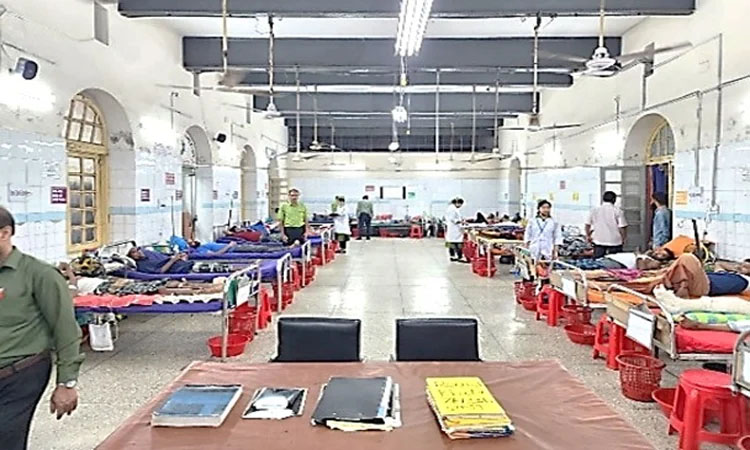
Strict enforcement of this policy has significantly reduced the rate of hospital-acquired infections. A visit to the Orthopedic Surgery Department of DMCH shows that the difficult policy of maintaining “one patient per bed” has been effectively implemented.
The wards are very clean and well maintained. Patients’ relatives are not allowed to enter the wards except during designated hours.
At regular intervals, duty doctors make announcements over the microphone. Several CCTV cameras have been installed to ensure round-the-clock monitoring of the entire department.
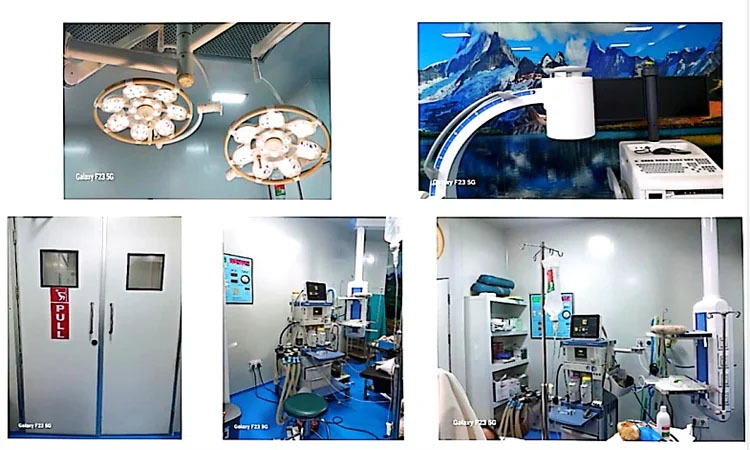
Officials said at the beginning of 2025, a modular operation theatre was introduced in the hospital for the first time. This modern theatre, launched with the support of Professor Shahidul Islam Akon, is extremely safe as it is equipped with air purification and a positive pressure system.
From January to November 2025, nearly 2,900 major and complex surgeries were performed in this department with no post-operative infection reported in any patient.
Such success in one of the busiest government hospitals in the country is rare and has set a new benchmark for public healthcare.
Professor Dr. Syed Zakir Hossain, head of the Orthopedic Surgery Department told BSS that paper use in the department has now been virtually eliminated.
“All activities are conducted through a fully digital system. With a dedicated high-capacity server and a 100 Mbps fiber-optic connection, all examinations, consent forms, and treatment plans are digitally stored as soon as a patient is admitted,” he said.
“As a result, there is no risk of files being lost or treatment being delayed due to missing information. Doctors can now view real-time data on screens and make quick and accurate decisions, reducing patient suffering to almost zero,” said Zakir Hossain.
Regarding the improvement of medical education, he said that a digital classroom connected to the modular operation theatre has been arranged for students.
“Every morning, students can watch live surgeries directly from the classroom, enabling them to learn complex procedures hands-on. In addition, international experts can join online for discussions, helping to establish the department as one of the world’s leading educational centers,” he said.
Prof Zakir Hossain further said that specialized clinics such as Spine Care, Pediatric Orthopedics, and Sports Medicine are currently operating to bring specialized services closer to patients.
In the near future, there are plans to introduce three super-specialty clinics: Hand Surgery, Ilizarov surgery and Deformity Correction, and Orthopedic Oncology. Once these services are launched, ordinary people will no longer need to seek treatment abroad or at expensive private hospitals, he said.
He said DMCH Director Brigadier General Md. Asaduzzaman recently praised the outstanding service of nurses in the orthopedic wards and honored them with commemorative gifts.
All nurses and ward attendants have received special training in orthopedic nursing care and infection-preventive modular systems, he said.
In addition, officers and staffs working in the department have received specialized training, ensuring the highest quality of care for patients and bringing the infection rate down to nearly zero, said Prof Zakir Hossain.
The orthopedic department has proven that modern, internationally standard healthcare is possible even in government hospitals. This is a matter of national pride and a source of hope for every patient, he said.
Regarding the department’s journey, Prof Zakir Hossain said it began in 1963 under the leadership of the late Professor Dr. Omar Ahmed Jamal, a pioneer of modern orthopedic treatment in Bangladesh.
At that time, the department started with only one hired professor and a handful of beds. For the past 62 years, it has been dedicated to serving the people of Bangladesh. During the great Liberation War of 1971, the department played a heroic frontline role,” he mentioned.
“Despite extreme dangers such as curfews and blackouts, doctors risked their lives to treat freedom fighters and civilians injured by bullets and explosions. Many wounded freedom fighters were even sheltered inside the wards, saving their lives,” he said adding that during the July mass uprising, the department’s doctors demonstrated the same spirit of service.
More than half a century later, during the student-led mass movement, the department once again shouldered a major responsibility as the city’s largest trauma center, he said.
In some shifts, more than 80 critically injured patients—most with gunshot or shrapnel wounds—had to be treated. Doctors and residents worked continuously for up to 96 hours, saving countless lives and limbs, without wavering from their commitment to service even in the most difficult times, he said.
Rezwana Parvin, ward in-charge of the male ward of the Orthopedic Surgery Department, told BSS that implementing the one patient per bed policy has greatly facilitated service delivery.
Large gatherings of patients’ relatives are not allowed inside the ward except at designated times, and duty doctors regularly give instructions via microphone, she said.
As all rules are strictly followed, infection spread from this department is virtually nonexistent, she said. In addition, patients are provided with four different colors of bed sheets, allowing nurses to easily understand and manage patient care needs, she said.
Ziauddin, a patient admitted to the male ward, said that the doctors in this department provide excellent care.
“I have received treatment at Dhaka Medical before, but the environment here is completely different. Doctors personally visit the ward repeatedly to observe the condition of the patients. The ward environment has become very pleasant. Previously, there was hardly space to walk due to overcrowding, but that crowd is no longer there. Such a nice look in a public hospital truly deserves praise,” he said.