Sunday
23 August, 2026
By Borun Kumar Dash and Abdur Rouf
DHAKA, Dec 18, 2025 (BSS) - As age advances, various problems related to bone loss and pain tend to increase in human body. To address these issues, relying solely on painkillers is not enough; rather, proper exercise and changes in daily lifestyle are essential.
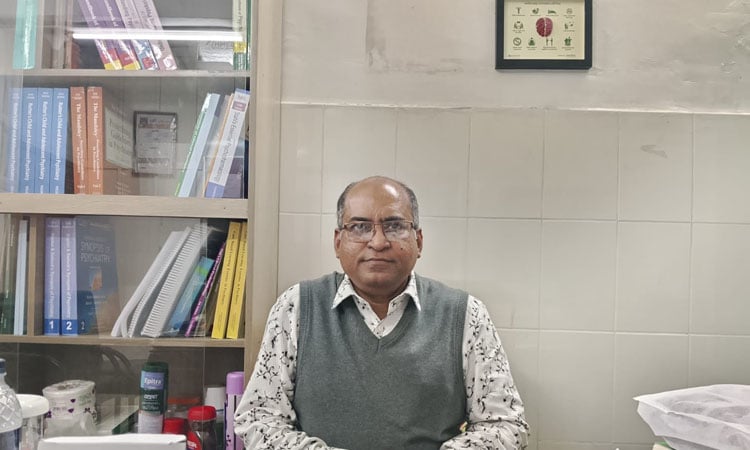
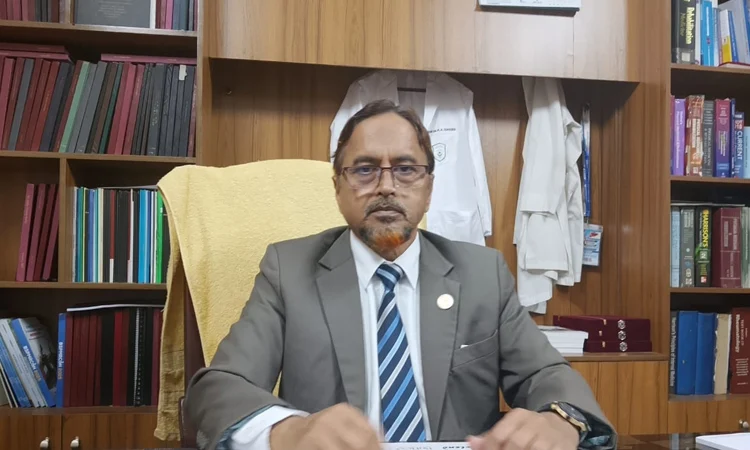
Chairman of Department of Physical Medicine and Rehabilitation at Bangladesh Medical University (BMU), Professor Md. Abdus Shakoor, said this in an interview with BSS.
“Generally, physical growth continues up to the age of 25. After that, degenerative changes gradually begin. With increasing age, it is natural for various problems to appear. During this time, diseases such as osteoarthritis, osteoporosis and rheumatoid arthritis may develop. In addition, younger people may suffer from ankylosing spondylitis, which, if not properly treated, can progress over the long term as age increases,” he said.
Professor Shakoor said, “In our country, people often use the term ‘bone loss’. In medical science, this is called osteoporosis. Compared to men, women are more affected by this condition. Especially after menopause, the rate of bone loss increases significantly in women. At this stage, pain in the waist, neck and back becomes very common. In most cases, people rely only on painkillers for such pain. But this is not the complete solution. Along with medicines, rehabilitation plays a very important role in treating these pains.”
He explained that the essence of rehabilitation is teaching patients how to sit, walk, work and manage their daily lives properly.
“For example, those who work long hours on computers need to learn correct sitting posture and proper computer use. Patients should also be guided on how to use bathrooms properly and whether a high commode is necessary. These measures help reduce pain and prevent future complications,” he said.
Professor Shakoor illustrated age-related bone changes with a simple example. “Just as the head of a hammer becomes flattened and its surface area increases after prolonged use, similar the changes occur in human bones. From the ages of 20 to 60, continuous walking and running put pressure on the heels, knees and hip joints. Over the time, this pressure increases the surface area of the bones, which we call ‘degenerative change’. This is a natural process that progresses with age. In such cases, along with regular treatment, changing lifestyle is crucial.”
Regarding treatment methods and modern technology, the BMU professor said, “In physical medicine, various modalities are used alongside medication. These include shortwave, microwave, ultrasound, infrared, electrotherapy and ultraviolet radiation. However, treatment is not limited to machines alone; patients are also given guidance on maintaining proper daily activities (Activities of Daily Living—ADL).”
On the role of exercise in recovery, he said, “Just as exercise is necessary to build the body, it is also indispensable for recovery from illness. Exercise is at the center of all treatments. Proper exercise not only keeps the body healthy but also helps prevent many diseases. Through exercise, joints become stronger, pain decreases and mobility improves. Along with medicines, appropriate exercise plays a vital role in recovery. However, it is important to know which type of exercise is suitable for which condition.”
Professor Shakoor pointed out that rural women often cook by bending down and blowing on traditional stoves or sweep while leaning forward. “Long-term habits like these put pressure on the spine, causing bone overgrowth and severe pain,” he said.
To address this problem, he suggested environmental modification. “Cooking stoves should be raised to an appropriate height. Alternatively, women should cook while sitting on a tool or chair so that pressure on the spine is reduced.”
The BMU physical medicine and rehabilitation specialist further said, “If a person suffers from paralysis or becomes physically disabled due to accidents or other causes, it is extremely important to consult a physical medicine and rehabilitation specialist. Physical medicine and rehabilitation does not mean medication alone. It combines medicines with exercise, therapy, guidance on daily activities and environmental modifications to help patients return to a normal life. While medicines may provide temporary pain relief, long-term recovery requires lifestyle changes and adherence to proper practices.”