Thursday
03 September, 2026
News Flash
News Flash
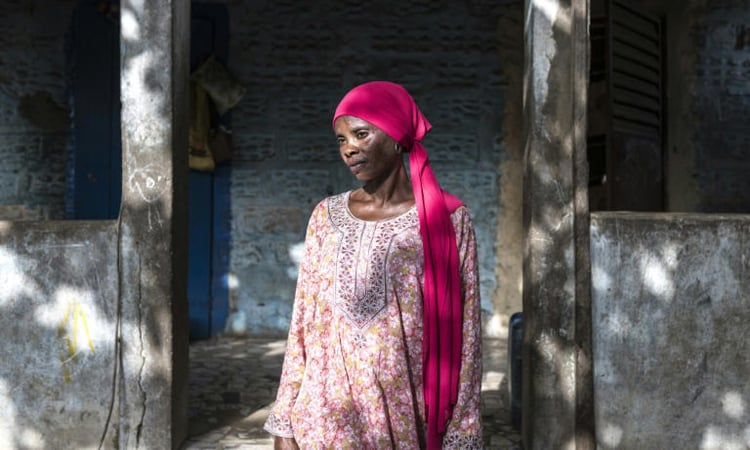
MBOUR, Senegal, Sept 3, 2026 (BSS/AFP) - Aminata Boye turned her grief into action: After her eldest son vanished trying to migrate in a rickety ocean canoe, she became a pillar of strength for those in Senegal suffering similar loss.
When AFP visited Boye earlier this year, she was making one of her regular visits to the many bereaved families in the Tefees neighbourhood of Mbour, a town on the west African country's coast.
Roughly one in three households in Tefees has had a member die or disappear due to migration, mostly young people. The families' suffering remains a taboo subject in Senegal, a key departure point for the thousands of Africans who have died or disappeared over the years attempting the perilous Atlantic route to Europe.
"They took the neighbourhood's soul with them," whispered Anna Diop, 43, whom Boye had come to check on.
On her street alone, 43 people have gone missing, she said.
Diop described how in 2024 she lost her two sons, Gora and Mame Doudou, aged 17 and 15.
"They were brave boys, not delinquents. They were hardworking and the joy of the neighbourhood," she said.
They had told her they were going to The Gambia to trade for a few days, as fishing was not going well.
But their canoe, or pirogue, which was actually carrying them to Europe, was found adrift with all 34 passengers dead.
The accident gutted her family: Diop also lost two nephews and two brothers in the same boat.
- Familiar anguish -
Overcome with emotion, Boye comforted Diop. She knows the anguish all too well -- in 2020 she experienced the same tragedy.
That year two of her sons set off from Senegal in pirogues just three days apart.
One, only 14 years old, reached Spain and is now studying there. But the other, Waly, 19, has been missing since.
Portraits of Waly hang in the courtyard of Boye's Mbour home, where the 48-year-old is raising her five other children alone.
Her son had also struggled due to difficulties fishing.
"Waly kept his departure a secret from me," Boye said. "I feel no anger towards him, he did not leave to die but to help his family."
After a week without news, she began agonising and finally confirmed he had boarded a boat that was spotted in distress off Mauritania.
The news shattered her: "I fell ill immediately, I didn't want to go out anymore or even hear people talk about boats."
She even sent relatives in Mauritania to check for him at hospitals to no avail.
Boye, who had already been involved in social work, developed a resilient exterior.
In a country where authorities largely adopt a repressive approach, she is working to highlight families' struggles and help them survive.
The year her son disappeared she founded the Collective of Victims of Irregular Migration in Senegal (COVES), after realising that the families "were left to fend for themselves and received no support from the authorities".
The association supports more than a hundred women whose children or husbands had either died or went missing while migrating. It also organises holiday and back-to-school collections, and holds sewing workshops providing income for the women.
- For the mothers -
Fatou Ngom, a mother of three whose husband went missing when his boat caught fire in 2022, said she sometimes asks Boye for rice "so I can cook something for my children".
Boye has become a key contact for other organisations including the International Committee of the Red Cross (ICRC).
She also travels abroad in search of the missing, working with the nonprofit Alarm Phone.
"Families come to me with photos of their children so I can start looking for them," she said.
Ndeye Ndiaye, a Mbour resident whose daughter, Awa, died in Morocco in 2024 after her pirogue was wrecked, said Boye "called me at home to talk and bring me back to my senses".
"It is thanks to Aminata (Boye) that I am still here talking to you, because I had almost lost my mind", said Ndiaye.
Boye often has a serious expression, which occasionally breaks into an infectious smile.
Her character was forged in childhood, working as one of the few girl fishers in the region until age 20.
When her brother left for Quranic school, she was the only child left at home: "I was close to my father, so he introduced me to fishing against my mother's wishes," she said.
Boye pulls no punches with her beliefs: "The state must work to raise awareness among young people and offer them prospects to keep them in Senegal", she said.
And she criticises Europe's restrictive visa policies and border closures, which she said "is partly why young people take to the sea" and die.
Migration is everywhere in Boye's life: Her street overlooks a known departure point, which has earned her neighbourhood the nickname "The Airport".
En route home, Boye ran into a young relative, eyes on the sea.
A heated discussion ensued: two days earlier he set out in a pirogue, but the engine failed, forcing everyone back.
"When they want to leave it's hard to hold them back," Boye said.
"His brother tried three times and I was the one who had to go and fetch him from the boat each time," she said, distress clouding her gaze.