Saturday
12 September, 2026
News Flash
News Flash
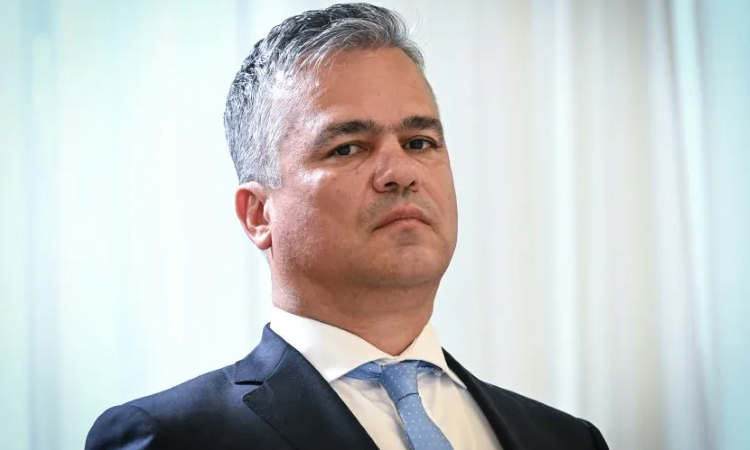
BUCHAREST, June 22, 2026 (BSS/AFP) - Romania's parliament is expected to vote on Monday on a new liberal prime minister as political turmoil has gripped the EU and NATO member bordering Ukraine.
The latest upheaval came in early May when Liberal Prime Minister Ilie Bolojan saw his government brought down in a no-confidence motion with support from the centre-left and far-right.
After the first new prime minister designate dropped out, Romanian President Nicusor Dan tapped politician Adrian Vestea, a 52-year-old fellow Liberal, on June 14 to form the next government.
Debate on Vestea's proposed Cabinet line-up began in parliament early Monday with a vote scheduled from 9:30 pm (1830 GMT).
Vestea's own party, led by Bolojan, has so far refused to back the prime minister designate, threatening him with expulsion from the party.
Vestea, who is a former mayor and regional governmental leader and has served as development minister in a previous Romanian government, needs 233 votes across both houses of parliament to form a government.
He has previously said he would negotiate with "the pro-Western democratic political parties" in parliament in hopes of finding a governing majority.
In the lead-up to Monday's vote he has also held talks with the AUR party, the largest far-right party in the country and critical of the EU.
The no-confidence vote in May that brought down Bolojan's government came after the centre-left Social Democrats (PSD) -- Romania's largest political party -- quit the pro-EU coalition and joined with far-right parties in voting against the government.
Dan has repeatedly ruled out a government that would include the far right, which is rising in Romanian politics.
Dan was elected president in a rescheduled vote in May 2025 following the controversial annulment of presidential elections in December 2024 over allegations of Russian interference.
AUR said in a statement earlier this month when Vestea was named as prime minister designate that his nomination "only serves to exacerbate the current crisis" and called for early elections.
Bolojan's coalition government, which took power in June 2025, enacted unpopular austerity measures, including raising taxes, in order to tackle a large budget deficit that had become the biggest in the European Union.