Saturday
12 September, 2026
News Flash
News Flash
History is littered with hundreds of conflicts over the future of a community, group, location or business that were "resolved" when one of the parties stepped ahead and destroyed what was there. With the original point of contention destroyed, the debates would fall to the wayside. Archive Team believes that by duplicated condemned data, the conversation and debate can continue, as well as the richness and insight gained by keeping the materials. Our projects have ranged in size from a single volunteer downloading the data to a small-but-critical site, to over 100 volunteers stepping forward to acquire terabytes of user-created data to save for future generations.
The main site for Archive Team is at archiveteam.org and contains up to the date information on various projects, manifestos, plans and walkthroughs.
This collection contains the output of many Archive Team projects, both ongoing and completed. Thanks to the generous providing of disk space by the Internet Archive, multi-terabyte datasets can be made available, as well as in use by the Wayback Machine, providing a path back to lost websites and work.
Our collection has grown to the point of having sub-collections for the type of data we acquire. If you are seeking to browse the contents of these collections, the Wayback Machine is the best first stop. Otherwise, you are free to dig into the stacks to see what you may find.
The Archive Team Panic Downloads are full pulldowns of currently extant websites, meant to serve as emergency backups for needed sites that are in danger of closing, or which will be missed dearly if suddenly lost due to hard drive crashes or server failures.
To use ArchiveBot, drop by #archivebot on EFNet. To interact with ArchiveBot, you issue commands by typing it into the channel. Note you will need channel operator permissions in order to issue archiving jobs. The dashboard shows the sites being downloaded currently.
There is a dashboard running for the archivebot process at http://www.archivebot.com.
ArchiveBot's source code can be found at https://github.com/ArchiveTeam/ArchiveBot.
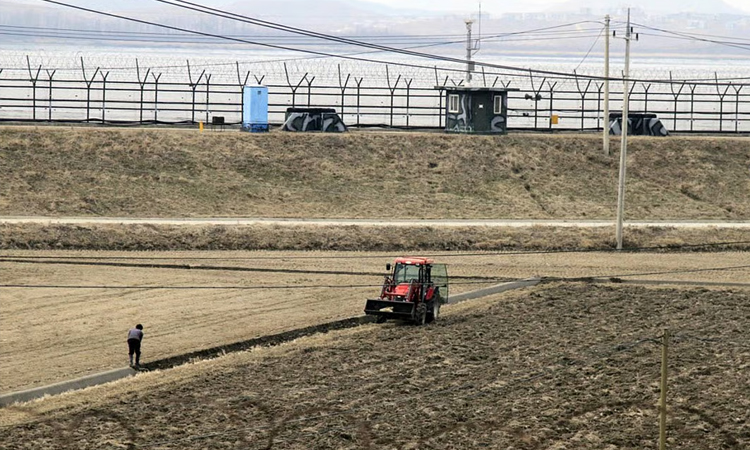
SEOUL, June 16, 2026 (BSS/AFP) - North Korea is stepping up cultivation of dry-field rice, which relies on irrigation or rain rather than flooded paddies, state media reported, in what experts said was a sign of worsening drought.
The nuclear-armed country is under multiple sets of sanctions over its weapons programmes and has long struggled with a moribund state-managed economy and chronic food shortages.
Elizabeth Salmon, the UN special rapporteur on human rights in North Korea, said in February that food shortages remain a key humanitarian concern in the country.
"The work for cultivating dry-field rice is being hastened in different parts of the DPRK," Pyongyang's official Korean Central News Agency (KCNA) said Tuesday.
The report came after KCNA's April warning that the country was experiencing an "unusual" and "severe" drought and was taking steps to protect crops.
North Korea's state television last month reported severe drought conditions in various parts of South Hwanghae Province in western North Korea, according to South Korea's Yonhap News Agency.
Experts said the latest report suggested drought conditions remain severe in the hermetic, impoverished country.
Kim Yong-hyun, a professor at Dongguk University, said dry-field rice is used as an alternative crop when water supplies are low.
"If North Korea is expanding the cultivation of dry-field rice, it may indicate concerns about food production later this year," he told AFP.
Park Won-gon, a professor of North Korean studies at Ewha Womans University, agreed the report suggested drought conditions "have not improved" in North Korea.
"North Korea annually faces a food shortfall of roughly 500,000 to one million tonnes," he added.