Saturday
12 September, 2026
News Flash
News Flash
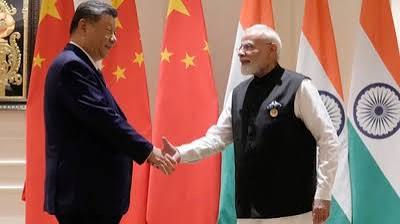
NEW DELHI, Sept 12, 2026 (BSS/AFP) - Indian Prime Minister Narendra Modi and
Chinese President Xi Jinping agreed to work together towards resolving their
countries' contested border, New Delhi's foreign ministry said Saturday after
the leaders met.
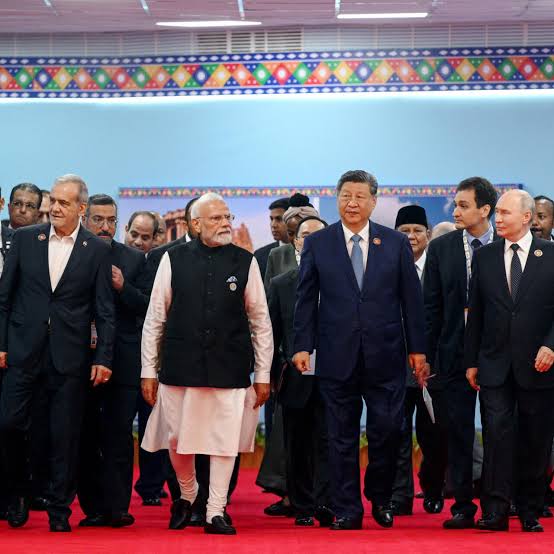
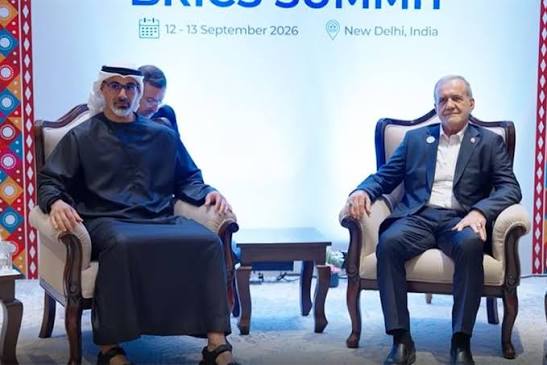
Xi's visit to New Delhi, to attend the 11-nation member BRICS summit, is also
being closely watched because it is his first to neighbouring India since
2019, and the biggest step yet in a cautious thaw between the nuclear-armed
rivals.
"The two leaders expressed commitment to a fair, reasonable, and mutually
acceptable resolution of the boundary question", India's foreign ministry
said in a statement after the meeting.
Modi "underlined the need for both sides to observe existing agreements and
understandings on border related issues," it added.
The Chinese leader is visiting six years after a deadly military clash along
the disputed border. Ties have since gradually improved through restored
flights, visas and high-level contacts.
The underlying territorial dispute remains unresolved, and both sides retain
heavy military deployments along their roughly 3,500-kilometre (2,175-mile)
high-altitude border along Tibet.
Dozens of Tibetans protested in New Delhi on Friday -- exiles, like their
Buddhist spiritual leader the Dalai Lama, who has lived in India since
fleeing a Chinese crackdown in 1959 -- waving placards against Xi's visit.
"Differences should not become disputes," New Delhi's foreign ministry said,
in a statement.
It said that Modi had "highlighted that both sides must be guided by three
mutuals -- mutual respect, mutual sensitivity and mutual interest".
China is now India's largest trading partner, with bilateral goods trade
reaching $151 billion in the 2025-26 financial year, according to Indian
government data.
But the relationship is heavily tilted towards Beijing. India imported $131
billion of goods from China, while exports were $19 billion, leaving a record
$112 billion trade deficit.
"On economic and trade relations, they underlined the need to address each
other's concerns, including structural trade imbalance and supply chain
issues, and facilitation of meaningful and predictable market access," the
foreign ministry statement said.
Xi, according to Chinese state broadcaster Xinhua, said the two nations can
"learn from each other's strengths" and "achieve shared development".