Saturday
12 September, 2026
News Flash
News Flash
History is littered with hundreds of conflicts over the future of a community, group, location or business that were "resolved" when one of the parties stepped ahead and destroyed what was there. With the original point of contention destroyed, the debates would fall to the wayside. Archive Team believes that by duplicated condemned data, the conversation and debate can continue, as well as the richness and insight gained by keeping the materials. Our projects have ranged in size from a single volunteer downloading the data to a small-but-critical site, to over 100 volunteers stepping forward to acquire terabytes of user-created data to save for future generations.
The main site for Archive Team is at archiveteam.org and contains up to the date information on various projects, manifestos, plans and walkthroughs.
This collection contains the output of many Archive Team projects, both ongoing and completed. Thanks to the generous providing of disk space by the Internet Archive, multi-terabyte datasets can be made available, as well as in use by the Wayback Machine, providing a path back to lost websites and work.
Our collection has grown to the point of having sub-collections for the type of data we acquire. If you are seeking to browse the contents of these collections, the Wayback Machine is the best first stop. Otherwise, you are free to dig into the stacks to see what you may find.
The Archive Team Panic Downloads are full pulldowns of currently extant websites, meant to serve as emergency backups for needed sites that are in danger of closing, or which will be missed dearly if suddenly lost due to hard drive crashes or server failures.
To use ArchiveBot, drop by #archivebot on EFNet. To interact with ArchiveBot, you issue commands by typing it into the channel. Note you will need channel operator permissions in order to issue archiving jobs. The dashboard shows the sites being downloaded currently.
There is a dashboard running for the archivebot process at http://www.archivebot.com.
ArchiveBot's source code can be found at https://github.com/ArchiveTeam/ArchiveBot.
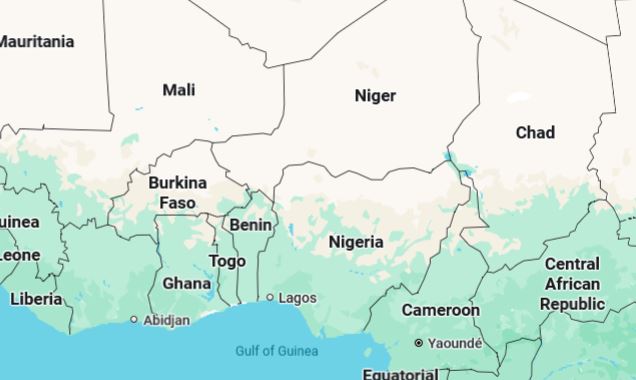
KANO, Nigeria, June 14, 2026 (BSS/AFP) - An attack by suspected radical militants from a group that was targeted by the United States in December airstrikes has killed 20 people in northwest Nigeria, an intel report showed on Sunday.
A confidential security report prepared for the United Nations seen by AFP said jihadists from the shadowy Lakurawa group raided the Fesken Rafi community in Kebbi state's Arewa district near the border with Niger, "killing more than 20 victims".
The raid reportedly occurred a few days ago, according to local media but was only reported over the weekend after the Kebbi state deputy governor visited the area. No exact date was given.
The attack happened after a lull in violence by Lakurawa in the past months, suggesting a resurgence of violence by the jihadist group, the report said, adding it may be intended to show its capability to stage complex operations in the face of intensified military offensives.
The US military struck parts of northwestern Nigeria on December 25, which the Nigerian government said targeted Islamic State group fighters, the Lakurawa jihadist group and "bandit" criminal gangs.
It is unknown how many were killed, and from which groups.
The motive of the latest attack was unclear.
However, jihadists and criminal gangs of kidnappers and cattle thieves called bandits have in recent weeks been attacking and kidnapping farmers who fail to pay levies they impose on communities to allow them cultivate their fields in northern and central Nigeria.
Lakurawa has remained active in communities along the Nigeria-Niger border despite efforts by security efforts for push them out of Kebbi state.
The report warned that the Lakurawa violence could transform into a "transnational threat" due to the group's multinational composition, which complicates counterterrorism efforts.
Some researchers link Lakurawa to the Islamic State in the Sahel, which is primarily active in Mali and neighbouring Niger, although others remain sceptical.
The jihadist insurgency in Nigeria, led primarily by Boko Haram and its rival faction, the Islamic State West Africa Province (ISWAP), has left tens of thousands dead and displaced millions.