Sunday
13 September, 2026
News Flash
News Flash
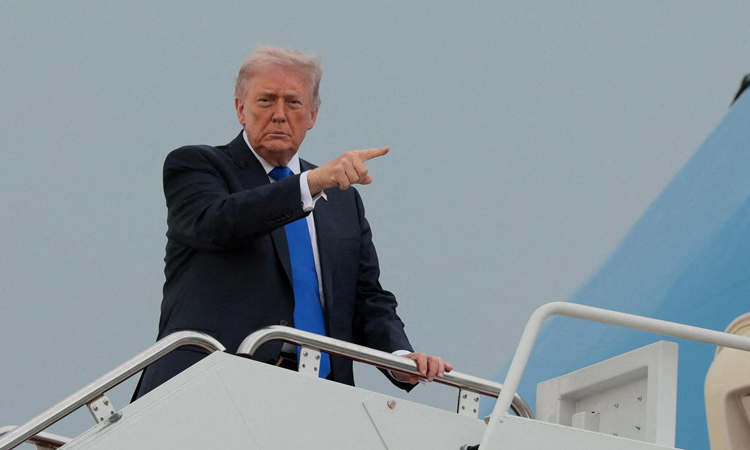
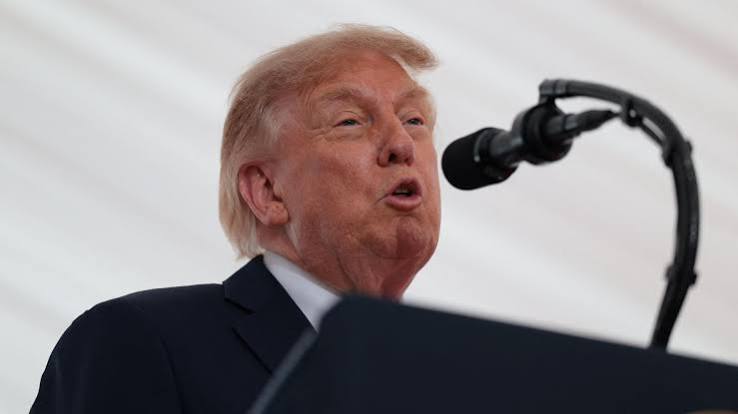
ISLAMABAD, Pakistan, April 26, 2026 (BSS/AFP) - US President Donald Trump announced he had cancelled his envoys' planned trip to Pakistan for peace talks with Iran on Saturday, but said that did not mean an immediate resumption of the US-Israeli war against the Islamic republic.
Shortly before the announcement, Iranian Foreign Minister Abbas Araghchi wrapped up his own diplomatic visit to Islamabad after meeting with Pakistani military chief Asim Munir, a key figure in the mediation effort, as well as Prime Minister Shehbaz Sharif and Foreign Minister Ishaq Dar.
The White House had previously said Trump emissaries Steve Witkoff and Jared Kushner were heading to the Pakistani capital for an "in-person conversation" with the Iranians that would "hopefully move the ball forward towards a deal".
But Trump told Fox News on Saturday that he had nixed the trip.
"We have all the cards. They can call us anytime they want, but you're not going to be making any more 18-hour flights to sit around talking about nothing," the president said he had told his team.
Asked by US media outlet Axios whether that meant a resumption of hostilities, Trump said: "No. It doesn't mean that. We haven't thought about it yet."
Iran's foreign ministry said Araghchi had left Islamabad and arrived in Muscat on Saturday for meetings with Omani officials. He is also expected to travel on to Russia to discuss efforts to end the war, which the United States and Israel began against Iran on February 28.
Araghchi described his Pakistan trip as "very fruitful" in a post on X, adding he had shared Iran's position on a "workable framework to permanently end the war".
"Have yet to see if the US is truly serious about diplomacy," he said.
Even before Trump's announcement, the prospect of new talks had been uncertain, with Iranian state television saying Araghchi had no plans to meet with the Americans, and that Islamabad would serve as a bridge to "convey" Iranian proposals.
Pakistani premier Sharif said he had spoken with Iranian President Masoud Pezeshkian by phone on Saturday, and assured him that Islamabad "remains committed to serve as an honest and sincere facilitator -- working tirelessly to advance durable peace".
- Opening Hormuz 'vital' -
The urgency of striking a deal to permanently end the war has mounted as the Strait of Hormuz, a vital conduit for the world's oil and gas supplies, has remained closed.
But Iran's powerful Revolutionary Guards said on Saturday that they had no intention of ending their effective blockade of the waterway, which has thrown energy markets into turmoil.
"Controlling the Strait of Hormuz and maintaining the shadow of its deterrent effects over America and the White House's supporters in the region is the definitive strategy of Islamic Iran," the Guards said on their official Telegram channel.
The US has imposed a blockade of its own on Iranian ports in retaliation.
In a defiant statement carried by state media, the Iranian military's central command said that if "the invading US military continues blockading, banditry, and piracy in the region, they should be certain that they will face a response".
Since the first and only round of US-Iran talks, also hosted by Pakistan, efforts to bring the two sides back to the table have hit an impasse, with Iran refusing to participate as long as the US naval blockade remains in place.
Iran, meanwhile, has allowed only a trickle of ships to pass through the Strait of Hormuz.
European Council President Antonio Costa said the waterway "must immediately reopen without restrictions and without tolling".
"This is vital for the entire world," Costa said.
- Netanyahu orders attacks -
On the war's Lebanese front, Israeli Prime Minister Benjamin Netanyahu ordered the military "to forcefully attack Hezbollah targets", after the armed forces accused the Iran-backed group of violating a ceasefire that was extended earlier this week.
Prior to the statement, Lebanon's health ministry said Israeli strikes on Saturday in the southern Nabatieh and Bint Jbeil districts had killed six people.
Trump had announced the three-week truce extension on Thursday and spoke in glowing terms of peace prospects after meeting with Israeli and Lebanese envoys.
But Mohammed Raad, the head of the parliamentary bloc for Hezbollah, urged the Lebanese government to withdraw from direct talks with Israel and warned that a lasting peace deal of the kind sought by Trump "will in no way enjoy Lebanese national consensus".
Netanyahu has accused the group of "trying to sabotage" the peace process.
In the coastal city of Sidon, Ahmad Shumar and his family were preparing to head back to their hometown in the south this week, after giving up on a previous attempt due to fears of Israeli attacks.
"We are going home now, not knowing whether there will be war or peace -- we will see," the 74-year-old said, surrounded by bags and mattresses.