Sunday
13 September, 2026
News Flash
News Flash
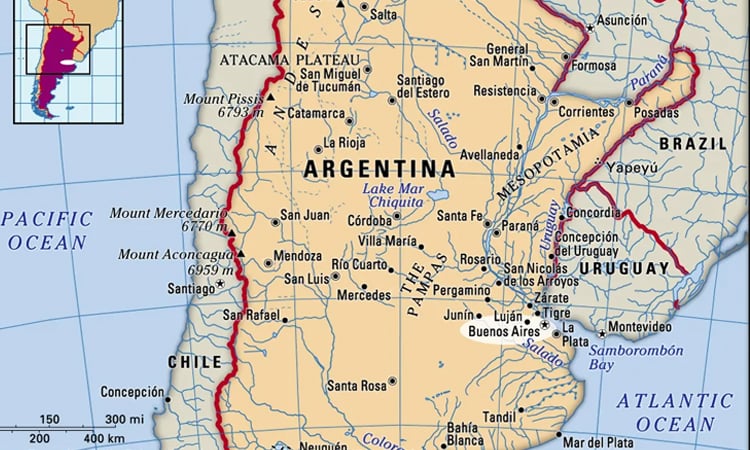
BUENOS AIRES, Argentina, March 24, 2026 (BSS/AFP) - They were young -- some students, some politicized, some not -- when they faced unchecked brutality in secret detention centers under Argentina's military dictatorship from 1976 to 1983.
They lived to tell a tale that many others could not -- thousands of people were killed in more than 600 such centers over nearly eight years.
Fifty years later, memories of the torture, hunger and the screams of fellow prisoners still come to the fore as if the so-called "Dirty War" were yesterday, three of them told AFP.
- Street ambush of teenager -
When the military coup was launched on March 24, 1976, "there was a feeling of, 'this is it," said Ana Careaga, who was 16 and pregnant at the time.
A few months later, she was taken.
"They detained me on June 13, 1977, in the street. A group of people approached, they grabbed me and slung me in the back of a car," said Careaga, now a 64-year-old psychologist.
Held in one of the country's notorious clandestine detention centers (CCD), she said "there were rooms called 'operating theaters' with a metal table, and there they subjected us to torture."
"They said, 'We know you want to die, but we are going to keep you alive to keep on torturing you.'"
"I counted the seconds until they turned into minutes, hours, waiting for food," she added. "But they brought it piping hot and took it away before it had had time to cool."
"I thought with the intensity of the torture my baby would be dead," but one day "I felt it move. It was as if life had triumphed amid death."
Released in September 1977, she fled via Brazil to Sweden, where she obtained refugee status and gave birth to her daughter.
Careaga learned later that her mother was among the dissidents killed in the regime's infamous "death flights," where military officers drugged and hurled prisoners from planes into the sea.
- 'Girls and boys screamed' -
Pablo Diaz, now a 67-year-old business leader, was abducted at home in La Plata, south of Buenos Aires, on September 21, 1976, and taken to a detention center. He was 18.
Like other student leaders, he had made demands to reduce public transport prices for students, a policy the dictatorship had scrapped.
He told his father he had simply painted graffiti in a toilet, but the regime came for him anyway at 4:00 am and searched his home for "subversive material."
"All they found was copy of Playboy under my mattress. They laughed, but they took me anyway. They took my mother's jewelry while they were at it," Diaz said.
In detention, they pulled his nails out, shocked him with electricity, and subjected him to mock executions.
He would also hear gunshots from nearby cells in mock executions where "girls and boys screamed and called out for their mothers."
"I knew that concentration camps existed once I'd been in one," he said. "I knew torture existed when they tortured me."
During his three-month detention he said that he witnessed three pregnancies, and that each of the babies was taken at birth by his captors.
Diaz also met and fell in love with 16-year-old Claudia Falcone.
"I promised her once we got out, we'd get engaged. She told me they had raped her," he said.
But Falcone didn't get out. She was shot dead along with other students, and Diaz was transferred to a legal jail.
- 'So massive and ruthless' -
Miriam Lewin, now a journalist of 68 but then a leftist of 19, remembers the day the tanks showed up on the street outside parliament.
"We didn't think that the repression would be so massive and ruthless," she said.
In May 1977 she was picked up and tortured to make her give away a militant friend's location.
She spent two years in captivity, the final one at ESMA, a former navy mechanical school in Buenos Aires that the military regime turned into one of the most notorious detention centers.
More than 5,000 political prisoners were taken to ESMA, which is now a museum and place of remembrance.
Lewin said she was subjected to "electric shocks, dry submarine" -- suffocation using a plastic bag -- "Russian roulette, gropings" and other abuse.
Lewin said many prisoners volunteered to take the death flights because they were told they were being taken to a center in the south, and "they could no longer stand being hooded and eating rat-infested food."