Saturday
02 May, 2026
News Flash
News Flash
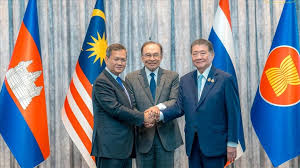
BANGKOK, Dec 27, 2025 (BSS/AFP) - Thailand and Cambodia agreed to an "immediate" ceasefire on Saturday, the two countries said in a joint statement, pledging to end border clashes that killed dozens of people.
The European Union called on both sides to implement the truce "in good faith", while UN human rights chief Volker Turk hoped it would lead to more permanent peace.
At least 47 people were killed and more than a million displaced in three weeks of fighting with artillery, tanks, drones and jets, according to official tallies.
The conflict spread to nearly every border province on both sides, shattering an earlier truce for which US President Donald Trump took credit.
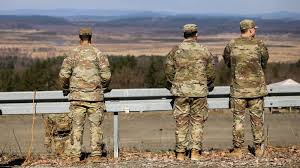
Cambodia and Thailand agreed to the ceasefire that took effect at 12 pm (0500 GMT), said the statement signed by the Southeast Asian neighbours' defence ministers at a border checkpoint on the Thai side.
The truce applies to "all types of weapons, including attacks on civilians, civilian objects and infrastructures, and military objectives of either side, in all cases and all areas".
Both sides agreed to freeze all troop movements and to allow civilians living in border areas to return home as soon as possible, the statement said.
They also agreed to cooperate on demining efforts and combatting cybercrime, while Thailand is to return 18 captured Cambodian soldiers within 72 hours.
Thai Defence Minister Nattaphon Narkphanit said that initial three-day window would be an "observation period to confirm that the ceasefire is real".
He called the truce "a door to a peaceful resolution" in a speech earlier on Saturday.
Displaced Cambodian Oeum Raksmey told AFP she was "very happy that people can return home" if the fighting stops.
"But I dare not return home yet. I am still scared," said the 22-year-old, who has sheltered with her family in Cambodia's Siem Reap province.
- 'Real peace' -
On the other side of the border, 55-year-old Thai village head Khampong Lueklarp was similarly cautious.
"I personally think the ceasefire won't really happen," said the head of Ban Ta Sawang Samakkee village in Sisaket province, adding he hoped for "a real peace".
The ceasefire came after three days of border talks convened following a crisis meeting of foreign ministers from the Association of Southeast Asian Nations (ASEAN), of which both Cambodia and Thailand are members.
EU foreign affairs spokesman Anouar El Anouni thanked "ASEAN for playing a positive part" and said the European bloc was ready to provide any support that was needed.
"The EU welcomes the ceasefire agreement signed by Cambodia and Thailand and calls on both sides to implement it in good faith," he said in a post on X.
The United States and China also pushed for an end to the fighting.
The Cambodian and Thai foreign ministers said on Saturday they will visit China on January 28-29 for trilateral talks and to meet Beijing's top diplomat Wang Yi.
The conflict stems from a territorial dispute over the colonial-era demarcation of the 800-kilometre (500-mile) Thai-Cambodia border, where ancient temples are claimed by both sides.
Five days of fighting in July killed dozens of people before a truce was brokered by the United States, China and ASEAN chair Malaysia.
Trump witnessed the signing of an expanded agreement between Thailand and Cambodia in October, but it was broken within months.
Each blamed the other for instigating the fresh fighting this month and traded accusations of attacks on civilians.
- 'Return home safely' -
At least 25 Thai soldiers and one Thai civilian were killed in the latest round of clashes, officials said.
Cambodia, outgunned and outspent by Bangkok's military, said 21 civilians were killed.
Phnom Penh has reported no military deaths, even though an official Facebook post showed first lady Pich Chanmony, the wife of Cambodia's leader Hun Manet, at a funeral for troops killed in the fighting.
The fighting was still raging while this week's border talks were underway.
Cambodia accused Thailand on Friday of intensifying its bombardment of disputed border areas, and Thai media reported Cambodian attacks overnight.
While both sides agreed to halt the fighting, they will still need to resolve the demarcation of their border following the ceasefire.
The contested temples are claimed by both nations because of a vague demarcation made by Cambodia's French colonial administrators in 1907.
The UN's Turk said he hoped the ceasefire "will pave the way for confidence building & peace".
Those affected "must receive all necessary assistance to return home safely", he said.