Saturday
18 April, 2026
News Flash
News Flash
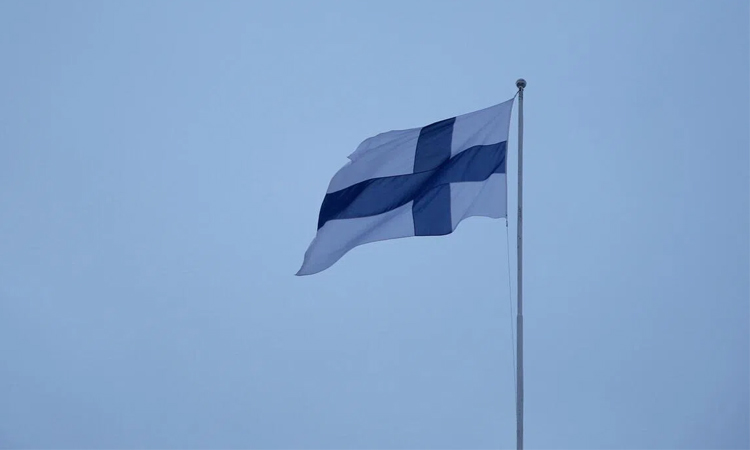
HELSINKI, Dec 2, 2025 (BSS/AFP) - Finland's unemployment rate has soared to one of the highest in the EU, and with no clear signs of a turnaround, experts say it poses a challenge to the country's welfare model.
Inez Aulen, 29, who recently graduated with a master's degree in media and communication, has applied for more than 50 jobs, despite having several years of experience and speaking three languages fluently, she told AFP.
She's been unemployed for five weeks, but employment services have told her to be ready for at least six months of job hunting and even suggested she apply for work abroad.
"I have studied and worked for the past six years, so I have never been in this situation before," Aulen said, describing it as an "emotional rollercoaster".
Finland's unemployment rate for people aged 15 to 74 reached 10.3 percent in October, the highest rate in the Nordic country since at least 2009, according to Statistics Finland.
Figures from the European statistics agency Eurostat showed Finland's seasonally adjusted unemployment rate hit 9.6 percent in September, the second highest in the EU after Spain's 10.5 percent.
The EU average was six percent.
- Stagnating economy -
The figures "reflect the prevailing economic situation in Finland, economic growth is currently on very shaky ground," said Henna Busk, a senior economist at the Pellervo economic research institute.
Finland's economy has struggled to fully recover since the 2008 financial crisis and its aftermath.
Stalled exports, weak consumer demand and geopolitical uncertainty, set against a backdrop of an aging population, hamper growth.
A sharp decline in the country's construction industry and halted trade relations with neighbouring Russia, with which it shares a 1,340-kilometre (830-mile) border following the Russian invasion of Ukraine, have added to the challenges, chief economist Jukka Appelqvist from Finland Chamber of Commerce explained to AFP.
Finland's right-wing government has implemented significant public spending cuts to tackle the country's debt, which stands at nearly 90 percent of GDP and balance public finances, which have "led to staff reductions in the public sector," Appelqvist said.
Elected in 2023, Prime Minister Petteri Orpo's government has promised to create 100,000 new jobs in the country of 5.6 million, but jobs have yet to materialise.
"It is very difficult to influence the labour market situation with any internal measures in Finland; it requires economic growth enabled by a boost in exports and household consumption," Busk explained.
Long-term unemployed, people with uncertain job security or fixed-term contracts, immigrants and young people are the groups mostly affected by unemployment -- but the number of jobless people with advanced education has also reached record highs.
"People with low incomes who depend on support are living on very limited incomes right now due to the austerity measures, while others who have the means to spend are saving out of fear," Mika Helander, a labour market researcher and sociologist at the Abo Akademi University, said.
- Austerity -
Heta Kopra, aged 48, who has been unemployed since 2017 after suffering a burnout, said the country's austerity measures had left the unemployed, the poor or disadvantaged "living in a sort of limbo".
"I now live in a state of fear of how to get by financially," she said.
She's worried that the Nordic country has lost its famous "spirit of the Winter War", referring to the national unity which was demonstrated between 1939 and 1940 after the Soviet Union invaded Finland.
Following its post-war reconstruction, Finland -- like its Nordic neighbours -- began expanding its welfare system in the 1960s, based on the idea that all citizens should be guaranteed a sufficient income and basic services.
"We have had a tradition of taking care of everyone, but now that has been turned upside down," according to Kopra.
The European Commission recently warned it was considering disciplinary measures as Finland was exceeding the maximum budget deficit of three percent of GDP allowed in the EU.
In another report, the commission highlighted Finland as one of nine EU countries that will be watched closely due to risks of growing social inequality.
Finland needs to find a "positive vision for the future", Helander said.
"But that idea is not being cultivated now," he said, arguing the government's austerity measures were merely "dismantling the welfare model".