Monday
27 July, 2026
News Flash
News Flash
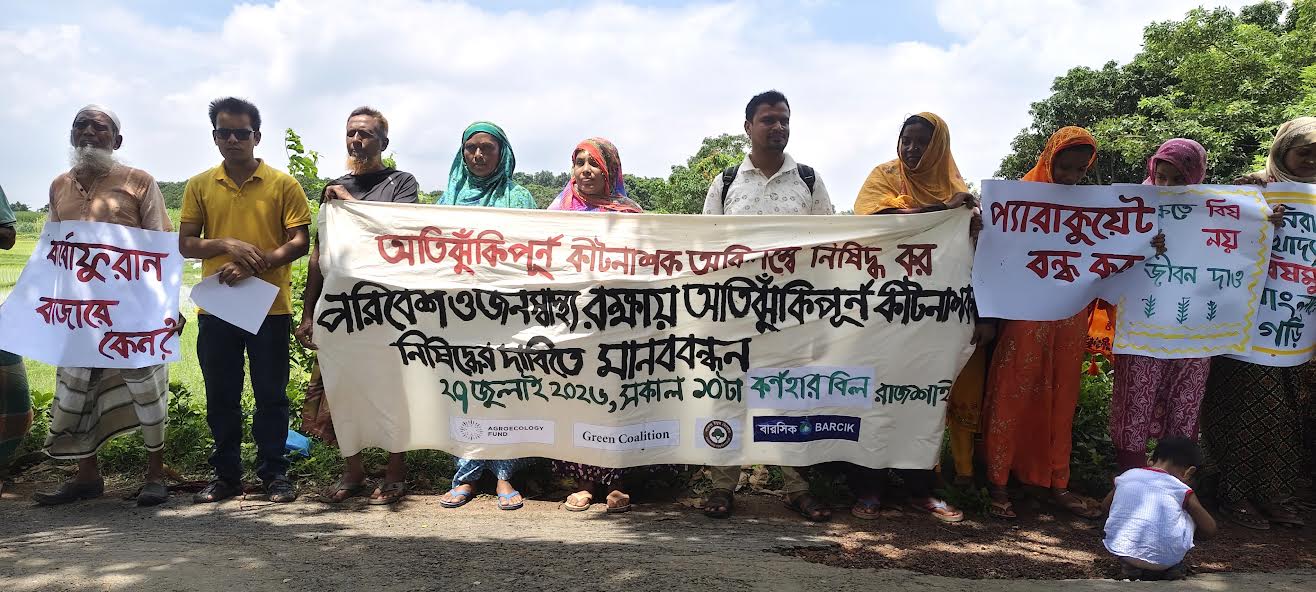
RAJSHAHI, July 27, 2026 (BSS) - Social watchdogs have called for effective state initiatives to ensure safe food, public health and biodiversity by immediately banning highly hazardous pesticides, including Paraquat, used in Bangladesh.
According to them, Paraquat, which has been banned in around 70 countries worldwide, is still being used freely in Bangladesh, posing long-term risks to public health, agriculture and the environment.
The demand was made at a human chain organised today in the Karnahar Beel area of Paba Upazila in Rajshahi, jointly by the development research organisation BARCIK, Barendra Youth Forum and Green Coalition.
Farmers, fisherfolk, agriculturists, youth representatives, environmental activists and members of civil society participated in the programme.
Among those present were Barendra Youth Forum President Atiqur Rahman Atik, BARCIK agriculturist and Programme Officer Touhidul Islam, farmer Altaf Hossain, Rakiba Begum and Agroecology Learning Centre operator Sultana Khatun.
The speakers said excessive use of chemical pesticides in the name of increasing agricultural production has turned into a silent crisis for public health and the environment.
They said highly hazardous pesticides, including Paraquat, are not only increasing health risks for humans but also having a devastating impact on indigenous fish, bees, pollinating insects, soil microorganisms, and aquatic and terrestrial biodiversity.
As a result, safe food production, farmers' health and the country's food system are under threat, they added.
The speakers said banning Paraquat is not a stance against agriculture; rather, it is a scientific and responsible decision in favour of farmers, consumers and the environment.
Fisherfolk, farmers and researchers participating in the programme said excessive pesticide use is rapidly damaging indigenous fish diversity, traditional food diversity of indigenous communities, pollinators and the agro-ecosystem.