Wednesday
05 August, 2026
News Flash
News Flash
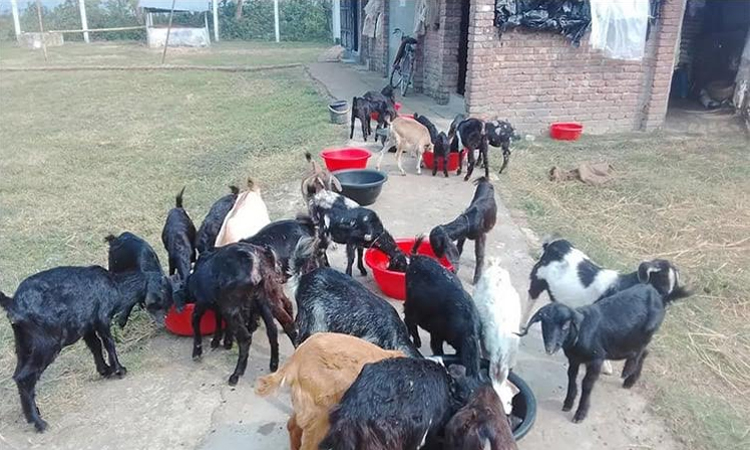
RAJSHAHI, May 2, 2026 (BSS) - Farmers and rural households across the Rajshahi region are passing busy days rearing and fattening goats as Eid-ul-Azha approaches, contributing significantly to the local economy and livelihoods.
According to the District Livestock Office, around 311,339 goats and sheep are currently being reared in the district. In addition, more than 150 large farms are raising nearly 550,000 goats, of which about 525,000 have been fattened this year for Eid, marking an increase of around 100,000 compared to last year.
Farmers are increasingly adopting natural feeding methods, including grass, straw, bran and oilcake, avoiding the use of harmful steroids or injections. This approach is ensuring safer meat production while maintaining environmental sustainability.
Goat farming is also emerging as a viable source of income for marginal farmers, women and educated unemployed youths, many of whom are becoming self-reliant through small-scale farming at household level.
In upazilas such as Bagmara and Godagari, government and private initiatives are supplying improved goat breeds and providing training to farmers to boost productivity. The Goat Development Farm at Rajabari in Godagari is playing a key role in promoting the Black Bengal breed.
Farmers expect to sell goats at prices ranging between Tk 5,000 and Tk 25,000 depending on size and market demand.
District Livestock Officer Dr Md Atawar Rahman said goat rearing has strong potential in the region, noting that the government has modernised seven farms across the country, including the one in Rajshahi, with improved facilities such as offices, accommodation, storage, compost units and water supply systems.
He said demonstration farms are being set up in different areas alongside training programmes and distribution of improved breeds to expand the sector further.
Professor Dr Md Jalal Uddin Sardar of the Department of Veterinary and Animal Sciences at Rajshahi University said the Black Bengal goat is among the world's leading meat-producing breeds, known for its high reproductive capacity, adaptability to local climate and quality skin.
He added that natural goat fattening practices are beneficial for both public health and the environment, though further development of the sector will require expanded training, modern technology and skilled manpower.
A farming couple, Sohel Rana and Rima Khatun from Doulatpur village in Bagmara upazila, said they turned to goat farming three years ago after failing to secure government jobs. This year, they invested Tk 200,000 to purchase 40 goat kids, selling eight for Tk 180,000 so far, and expecting to earn an additional Tk 450,000 from the remaining stock.
Alongside cattle farming, goat rearing is rapidly gaining popularity in Rajshahi, helping many rural families achieve financial stability while also contributing to meeting the country's growing demand for protein.