Wednesday
05 August, 2026
News Flash
News Flash
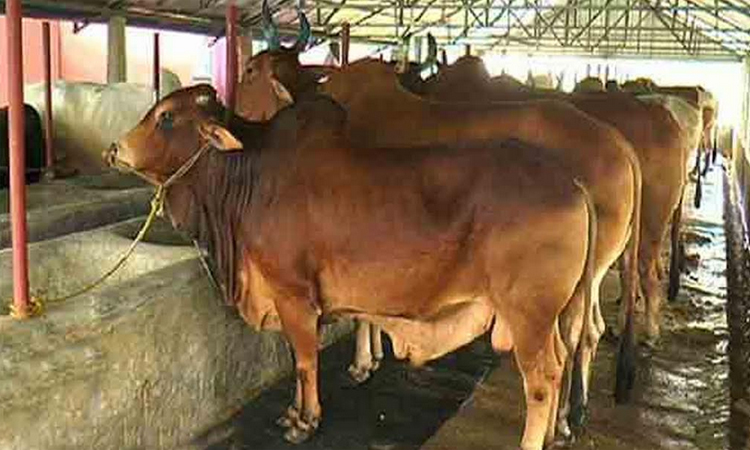
RAJSHAHI, April 25, 2026 (BSS) - Farmers across Rajshahi are passing busy days preparing sacrificial cattle ahead of Eid-ul-Azha, using both traditional and improved fattening methods as the festival draws near.
In villages and commercial farms throughout the division, cattle are being raised with careful attention to nutrition and health. After meeting local demand, a significant number of these animals are later supplied to other parts of the country.
With only about a month remaining before Eid-ul-Azha, farmers are intensifying care for livestock kept at household levels and on larger farms.
At the same time, cattle markets have begun to appear across all districts of the Rajshahi division, although traders and leaseholders say full-scale buying and selling activity will likely start within another week.
In rural areas, many households are still raising one or two indigenous cattle, while commercial farms are focusing on fattening breeds such as Sahiwal, Sindhi, Red Chittagong, Pabna and Mir Kadim cattle for sacrificial purposes.
According to the Department of Livestock Services, around 43 lakh sacrificial animals have been prepared in the Rajshahi division this year against a local demand of about 26 lakh. After fulfilling regional needs, nearly 17 lakh animals are expected to be transported to other parts of the country, particularly Dhaka, Chattogram and Sylhet.
Farmers are using natural feed including straw, green grass, maize, oil cake and bran for fattening cattle, avoiding steroids or harmful chemicals, they say.
Officials estimate that more than 100,000 animals have been prepared in over 1,500 farms in the division. Overall, over four lakh animals are ready for the upcoming Eid sacrifice, including a large number of cattle.
Livestock rearing and cattle fattening have become an important part of the rural economy in Rajshahi, creating self-employment opportunities for unemployed youth and women.
However, farmers have expressed concern over rising feed prices, which have increased production costs and may reduce profit margins this season.
In response, the Livestock Department is encouraging the use of online platforms for livestock trading to ensure fair prices for producers.
Farmers have also urged buyers to purchase healthy animals raised through natural methods without artificial growth promoters or harmful injections.
Demand for native breeds remains strong during Eid-ul-Azha, and these cattle are expected to reach markets in full volume within the next couple of weeks. Small farmers, however, say the rising cost of feed compared to previous years may push sacrificial animal prices higher this season.
Md Jahangir Alam, a farmer from Naogaon Sadar Upazila, said he has been raising five native cattle for about a year using only grass, maize, wheat bran and local feed, which keeps the animals healthy and attractive to buyers.
Another farmer named Jahid continued his family's livestock tradition and later expanded into commercial farming with his brothers on 12 kathas of land in Ronhat. Their farm now includes cattle as well as local and foreign goat and sheep breeds.
This year, the farm has prepared 45 cattle for sacrifice, with six workers employed full-time. With Eid approaching, they are feeding the animals three to four times daily and maintaining intensive care routines.
Workers at the farm said they are putting in extra effort hoping for a profitable season, especially during the Eid period.
The farm currently holds livestock worth over Tk 10 million, with daily maintenance costs ranging between Tk 8,000 and Tk 15,000, according to sources.
A worker at the farm said maintaining the cattle has become increasingly costly, though they continue working with hopes of good returns.
Dr Zulfikar Akhtar Hossain, an official of the Department of Livestock Services, said Rajshahi division has a surplus of sacrificial animals compared to demand, and after meeting local needs, the excess will be sent to other parts of the country.