Wednesday
05 August, 2026
News Flash
News Flash
Dilruba Khatun
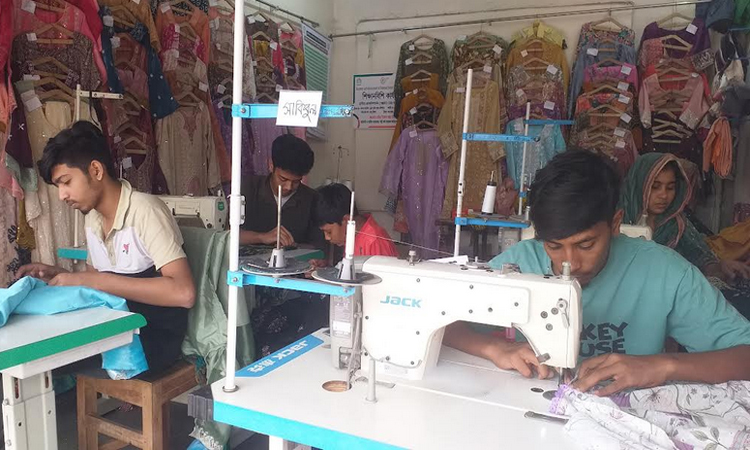
MEHERPUR, Mar 13, 2026 (BSS) - As the holy month of Ramadan draws to a close, the air in Meherpur is thick with anticipation. The aroma of new fabric mingles with the hum of sewing machines, and the town's tailors trade their rest for dedication, stitching festive dreams into reality one needle at a time.
The narrow alleys of Meherpur town have transformed into a symphony of colours. Cloth shops display vibrant fabrics in cascading waves — cotton, georgette, katan silk, velvet, net, tasar, and tissue — that seem to dance in the breeze. But the real magic happens behind the closed doors of the town's tailor shops, where craftsmen labour through sleepless nights, their nimble fingers weaving not just thread, but hope and joy for countless families.
"We stop taking new orders only on the 15th of Ramadan," said Nuruzzaman, a cutting master at Students Tailors. "Those who want different designs and good fitting usually come to us."
At Ayesha Ladies Tailors, cutting master Raju Ahmed manages a team of 15 skilled artisans — men and women working in harmony. Together, they produce approximately 100 garments daily, and the orders keep flowing even a week past Eid. Meanwhile, at Shapla Tailors, 12 craftsmen stitch an average of 12 to 15 garments each, every single day.
The workload is overwhelming, yet the wages tell a different story. "Due to the heavy workload, we have to work much longer than usual," shares Babu Hossain, a seasoned craftsman. "However, the wages have not increased much. We are not able to rest properly due to the additional workload."
Yet, they persist—because for them, Eid is not just a festival; it is a testament to their craft.
A Journey Through Time:
A century ago, tailoring was a rare profession. Those who practiced it were simply called 'Khalifas,' and only a handful worked in the trade. Today, nearly every home boasts a sewing machine, and many housewives craft their own clothes. Yet, the tailor's shop remains indispensable. From young to old, people flock to skilled artisans to have their favorite outfits tailored with precision and personal touch.
As Eid approaches, the demand peaks. After the 15th of Ramadan, the entire tailoring community — rich and poor alike — plunges into the age-old tradition of wearing new clothes. The anticipation is palpable: after a month of fasting, stepping into a brand-new outfit for Eid prayers is a joy that transcends all boundaries.
Fashion Trends of the Season:
This year, the market speaks the language of elegance. Cotton, georgette, katan silk, velvet, net, tasar, and tissue dominate the fabric scene. Clothes adorned with lace, chumki, and kundan work are in high demand. Lucrative designs — intricate lace patterns on cotton — have become the season's favorite among buyers.
Shamima Akhter, a lifelong tailor, has crafted three to four sets for herself this Eid. "The readymade clothing shops have almost the same designs," she explains. "So, I buy the clothes of my choice every Eid and have them made by the tailor."
The Unsung Heroes:
While the rest of Meherpur revels in Eid joy, the sweat and sleepless nights of these craftsmen remain the unseen foundation of the celebration. Their dedication transforms fabric into festive outfits, stitching smiles onto faces they may never see.
As the wheels of sewing machines continue to turn through the night, one thing remains clear: behind every shimmering Eid outfit lies a story of perseverance, skill, and an unbreakable spirit — stitched with love, one seam at a time.