Tuesday
04 August, 2026
News Flash
News Flash
By Md Mamun Islam
RANGPUR, Feb 20, 2026 (BSS) - As the harvesting of winter crops cultivated in
the char areas of the Rangpur Agricultural Region continues, bumper yields
and good market prices have raised hopes among hundreds of residents living
there.
In addition to harvesting winter crops during the Holy month of Ramadan and
selling their produce at profitable prices, the char people are dreaming of a
festive time with their families during the upcoming Eid-ul-Fitr too.
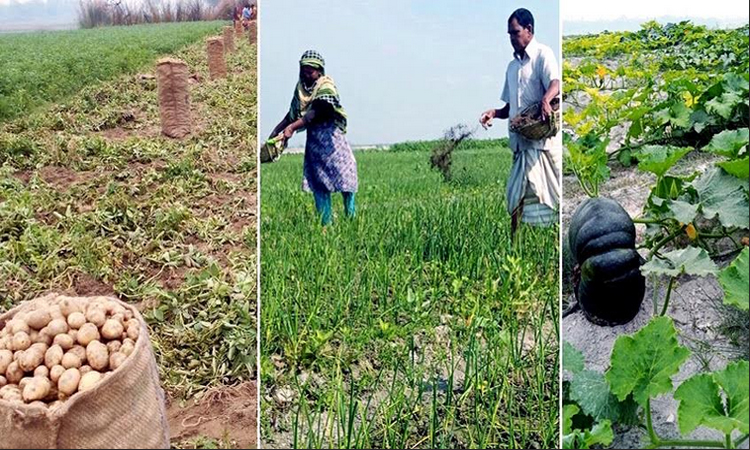
Officials of the Department of Agricultural Extension (DAE) said harvest of
early varieties of groundnut, potatoes, onions, vegetables, pumpkin and other
crops continues on char lands with excellent yields and the process will
continue till May next.
Talking to BSS, Additional Director of the DAE for Rangpur region Krishibid
Md Shirajul Islam said that excellent production of various crops in char
lands keeps the char economy alive, bringing fortune to many families under
adverse situations.
"This season, char people have cultivated various types of winter crops,
mostly adopting intercropping and mixed-relay methods and applying organic
fertilizers, producing healthier and more nutritious crops," he said.
During the current Rabi season, the char and riverside people have cultivated
crops on more than 82,000 hectares of charlands in all five districts of
Rangpur, Gaibandha, Lalmonirhat, Kurigram and Nilphamari in the region.
They have cultivated crops like Boro rice, potato, sweet pumpkin, squash,
brinjal, onion, garlic, green chili, gourd, bitter gourd, carrot, banana,
mustard, pulses, cauliflower, cabbage, groundnut, wheat and many other crops
on the char lands and dried-up riverbeds.
Krishibid Islam said, "Char people are producing around six lakh metric
tonnes of crops worth about Taka 1,200 crore from 82,000 hectares of char
lands in the region yearly."
Deputy Director at Burirhat Horticulture Centre in Rangpur of the DAE
Agriculturist Dr Md Abu Sayem said crop cultivation on char lands has been
increasing every year in the region.
The vast char areas, dry riverbeds and alluvial plains of the Brahmaputra,
Teesta, Dharla, Dudhkumar, Ghaghat, Jamuna, Kartoa and other rivers have been
practically converted into agricultural lands where a variety of crops have
been cultivated this time like previous years.
"The expanded cultivation of various winter crops on char lands in the region
has changed the fate of many char people," he said.
Talking to BSS, people living in char villages of Purbo Mohipur, Paschim
Mohipur, Kolkond, Bagdohra, Gannarpar and Chhalapak in Gangachara upazila of
Rangpur said they are busy now in crop harvesting and taking care of growing
crops on char lands.
Couple Shahinur Islam and Fancy Begum of Char Purbo Mohipur of the upazila
said they have cultivated various crops like pumpkin, 'Khira', green chilli,
maize and other crops on two acres of the dried-up beds of the Teesta this
time.
"I have already sold harvested 'Khira', pumpkin and other crops at Taka one-
lakh," said Shahinur and hoped that he is expecting to earn a net profit of
around Taka two lakh excluding all expenses after completing harvest this
season.
Anwar Hossain, Abul Quasem, Farhaduzzaman and Kobiza Khatun of Purbo Mohipur
village said they have already started harvesting their cultivated winter
onions, pumpkin, 'Khira', green chilli, maize and other crops in the dried-up
beds of the Teesta.
Like the others, Anwar Hossain expected to earn a better profit of around
Taka two lakh excluding all expenses after completing harvest of his
cultivated crops on two-acres of char lands by mid-May next.
Couple Aminul Islam and Ummey Kulsum of village Char Taluk Shahbaz in Kawnia
upazila of Rangpur said they have cultivated pumpkin, groundnut, onion,
garlic and vegetables on two acres of char lands on dried-up beds of the
Teesta this season.
"Like many other char people, we are also getting repeated bumper production
of our cultivated various crops on char lands during the winter to earn
better profits and enrich our fortunes along with keeping the char economy
alive," said Ummey Kulsum.