Tuesday
04 August, 2026
News Flash
News Flash
RAJSHAHI, Feb 19, 2026 (BSS) - United efforts of all the government and non-government organizations are crucial to adapt to climate change in the region, particularly the water-stressed Barind area.
Climate change is posing serious threats to agriculture, fisheries, livestock, and the livelihoods of marginalized communities. Local experts emphasized that collective action is crucial to ensure food security and sustainable development in the region.
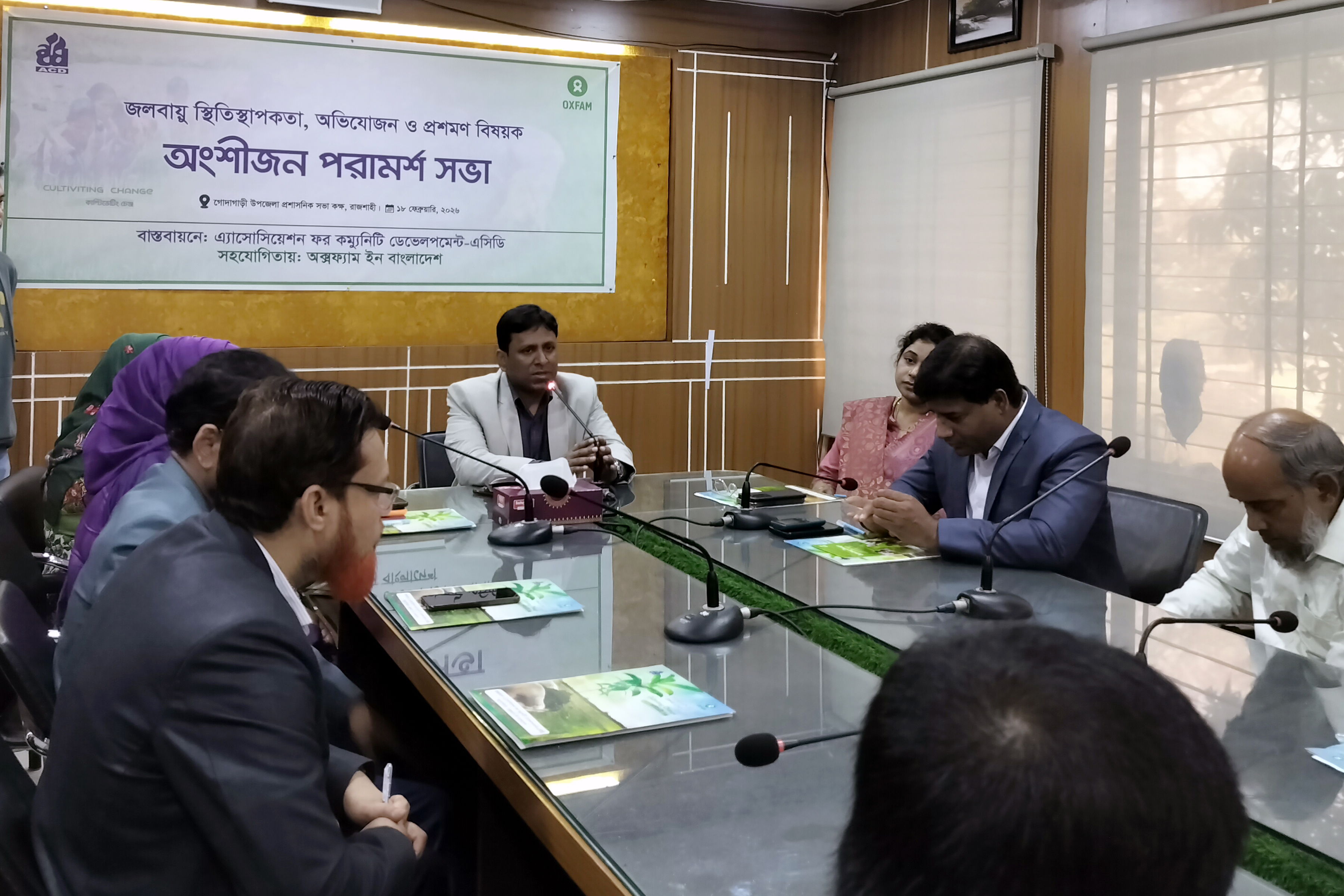
Government officials and development activists made the observation while addressing a stakeholder meeting on 'Climate Resilience and Adaptation' at Godagari Upazila Parishad conference hall in the district on Wednesday.
Association for Community Development (ACD) as part of its 'Cultivating Change project' organized the meeting supported by Oxfam in Bangladesh.
Government officials, women farmers, members of indigenous communities, media personnel and other stakeholders joined the meeting.
Upazila Nirbahi Officer (UNO) Nazmus Sadat Ratna, Agriculture Officer Mariam Ahmed, Livestock Officer Dr. Shaila Sharmin, Senior Fisheries Officer Wahiduzzaman, Project Implementation Officer Mominul Haque and Assistant Engineer of the Barind Multipurpose Development Authority Abdul Latif Sardar addressed the meeting as resource persons.
Social Services Officer Muhammad Manik, Youth Development Officer Sohel Rana, Cooperative Officer Jigar Hazrat, Women Affairs Officer Nilufa Yasmin and President of Godagari Press Club Kamruzzaman Babul also spoke.
Subrata Kumar Pal, Project Coordinator of the "Cultivating Change" project, facilitated the meeting.
The meeting was told that climate change is now a reality. Such consultative meetings will help to formulate future action plans. If the government and the people work together, it is possible to make the Barind region climate-resilient.
To face the drought situation, farmers must combine traditional cultivation methods with modern technology. Water conservation, mulching, and mixed cropping are now extremely important. The Agriculture Department has taken necessary measures for the farmers.
Sharing her experience, a woman farmer, Olivia Biswas, said, "After receiving training through ACD, we are now practicing new cultivation methods. We have also learned how to ensure climate-resilient production. We have diversified our crops. As a result, even during drought, some crops survive and our livelihoods continue."
Speakers noted that the drought situation in the Barind region is intensifying day by day, severely affecting food production and livelihoods.
They highlighted sustainable agricultural practices, water conservation, and the use of local knowledge as effective ways to address the impacts of climate change.