Saturday
12 September, 2026
News Flash
News Flash
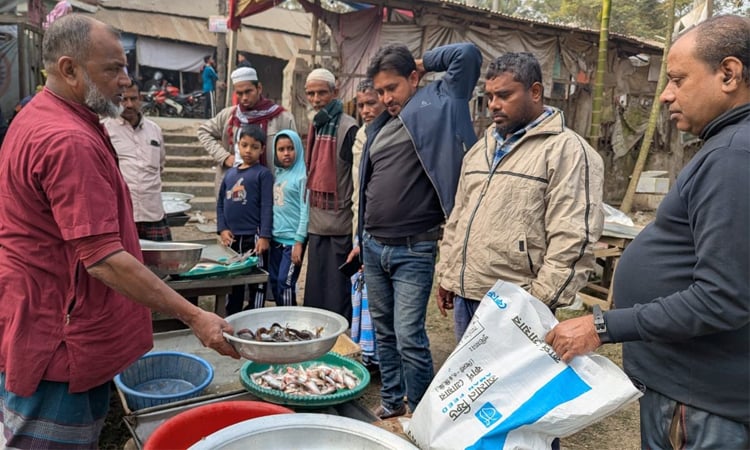
SHARIATPUR, Jan 15, 2026 (BSS) - The first morning of Magh arrived with a familiar rhythm in Shariatpur today as the traditional 'Pair Hilsa' fair
sprang to life at Manohar Bazar in the sadar upazila, drawing hundreds of people in a celebration of memory, faith and food.
At dawn, as winter mist still lingered, traders laid out gleaming pairs of hilsa fish while buyers gathered with quiet anticipation. For members of the Hindu community, the day carries special meaning.
It is customary to bring home a pair of hilsa on this morning, cook it following religious rituals and serve it to family members as part of a time-
honoured tradition. The fair, which runs from sunrise until noon, also features rural delicacies and colourful toys, turning the market into a vibrant village carnival.
The origins of the fair are wrapped in oral history. Some locals believe it is more than a hundred years old, while others trace it back nearly two
centuries. Another account places its beginning in the closing years of British rule. Whatever its exact age, the fair has remained a living tradition, passed down through generations.
According to custom, male members of the household buy a pair of hilsa from the market and bring it home, where women receive the fish with paddy, durba grass and vermilion, observing religious rites before cooking it with seasonal vegetables.
The meal is then shared with deep devotion, symbolising abundance, continuity and familial bonds. Hindu families across villages in Shariatpur have upheld this ritual for decades, keeping its spirit alive.
Like previous years, today's fair turned Manohar Bazar into a hub of activity from early morning, as hundreds of buyers and sellers filled the area with lively chatter and bargaining.
The celebration is known locally as the 'Pair Hilsa Fair' because the ritual centres on buying two fish together, a symbol of harmony and completeness.
Geeta Rani Malo of Madhyapara arrived at the fair recalling her childhood visits with her mother. After buying hilsa, eggplant and bottle gourd leaves, she selected various snacks for her daughter.
"Coming here brings back so many memories," she said with a smile. "The greatest joy comes after cooking the fish and serving it to the people I love."
Badal Chandra Das from Kashabhog village, who works at a private institution, stopped by the fair on his way to work to follow the family tradition. "In
the past, my father used to bring home the fish from this fair. My mother would cook it with great care," he said.
"After Durga Puja, we usually avoid hilsa for almost three months. Since childhood, there has always been a special longing to taste it again. I came today to buy a pair, but prices are high. For low-income families like ours, it is becoming harder to enjoy hilsa the way we once did," he added.