Sunday
16 August, 2026
News Flash
News Flash
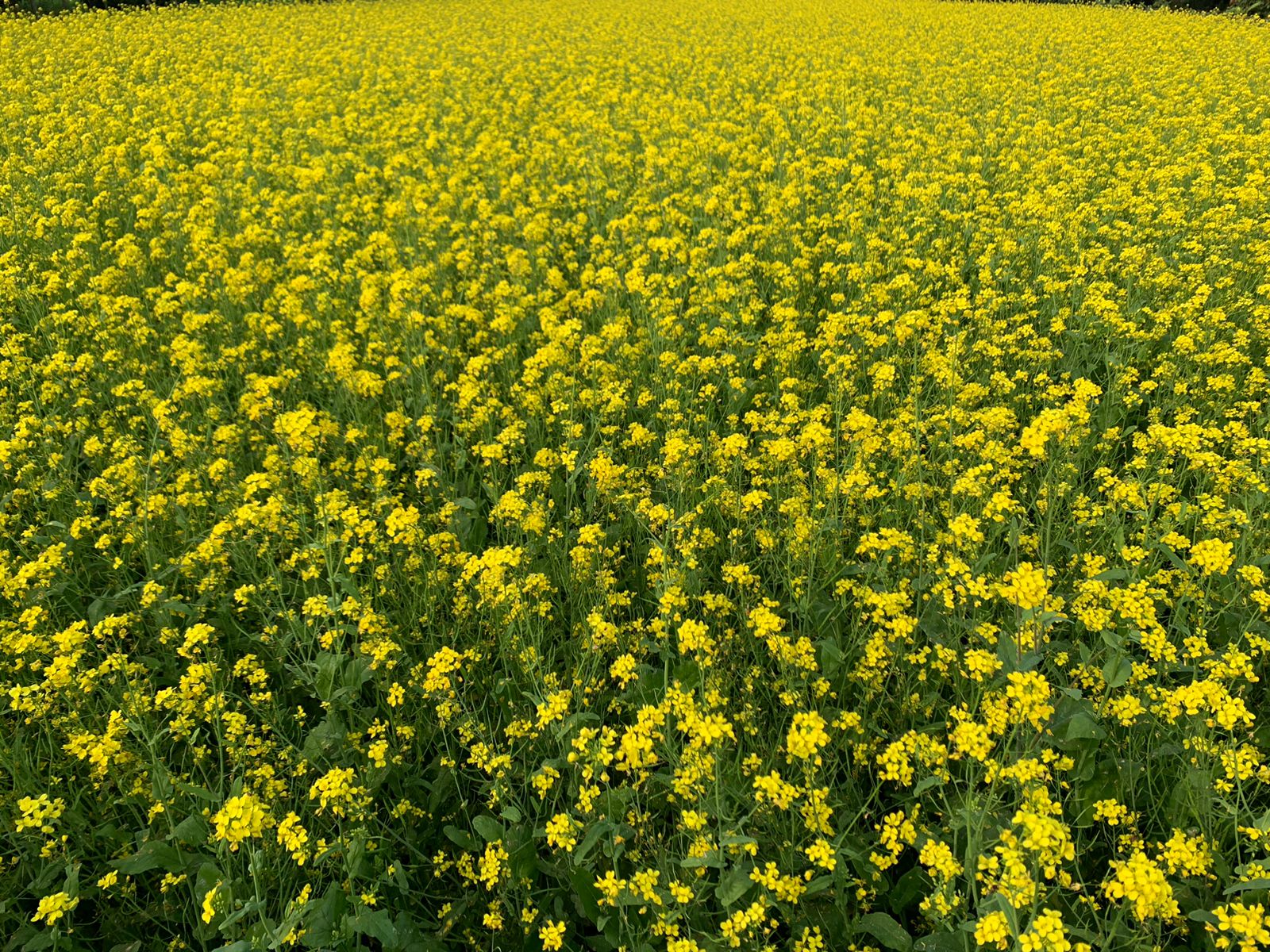
MEHERPUR, Jan 4, 2026 (BSS) - Mustard cultivation in the district has exceeded the target set by local office of DAE this season, raising hopes of a bumper harvest among farmers.
According to the Department of Agricultural Extension (DAE), the target for mustard cultivation in the district during the current Rabi season was 3,850 hectares. However, farmers brought mustard under cultivation on 4,095 hectares, surpassing the target by a significant margin.
Vast tracts of land across Meherpur are now covered with yellow mustard flowers, creating a striking winter landscape. Farmers said the increased cultivation reflects both the profitability and short duration of the crop, as well as rising market prices for mustard oil.
DAE officials and farmers said the fields are showing healthy growth, with bees actively pollinating the flowers—an encouraging sign for yield. If no major natural calamity occurs, a good harvest is expected.
Local farmers reported an average production of 7 to 8 maunds of mustard per bigha.
Last year, mustard sold for Taka 2,500 to Taka 3,000 per maund, making it a profitable crop compared to many alternatives.
Abu Hossain, a mustard farmer from Ujalpur village in Sadar upazila, said cultivation costs range between Taka 3,000 and Taka 4,000 per bigha.
“Mustard can be harvested within three months and needs less irrigation. If seven maunds are produced, earnings can reach around Taka 15,000 per bigha,” he said, adding that there has been no noticeable leafhopper attack this season—the crop’s main threat.
Mustard cultivation also benefits soil fertility, as fallen leaves enrich the land, while husk and plants can be used as fuel.
Sanjeev Mridha, Deputy Director of the Meherpur District Agricultural Extension Department, said high prices of mustard and edible oil have encouraged farmers to cultivate mustard immediately after harvesting Aman paddy. “The weather has remained favorable and disease incidence is low. If conditions remain stable, we expect a bumper mustard harvest this season,” he said.
Farmers across the district said the expanding yellow fields symbolize not only agricultural growth but also renewed optimism for better income during the winter season.