Sunday
23 August, 2026
News Flash
News Flash
By Md Mamun Islam
RANGPUR, Jan 2, 2025 (BSS) - The EIR project implemented by the Barind Multipurpose Development Authority (BMDA) has emerged as a successful model for reviving ecosystems and improving environmental conditions across the Rangpur region, restoring greenery and biodiversity after decades of decline.
The achievements have come through the re-excavation of long-extinct rivers, canals, beels and ponds under the five-year project titled "Expansion of irrigation in greater Rangpur district through best uses of surface water and conservation of rainwater (EIR)", being implemented from 2019 to 2025 at a cost of Tk 288.11 crore.
Along with restoring water bodies, BMDA has installed low-lift pumps (LLPs), solar-powered dug wells, constructed foot-over bridges and cross dams, and planted more than 2.30 lakh trees along the banks of the revived rivers, canals and beels.
As a result, rural communities are enjoying wide-ranging benefits. The project has boosted agriculture and pisciculture, encouraged tree plantation, and created opportunities for vegetable and banana cultivation, fodder farming for cattle, and duck rearing, all of which have contributed to improved livelihoods.
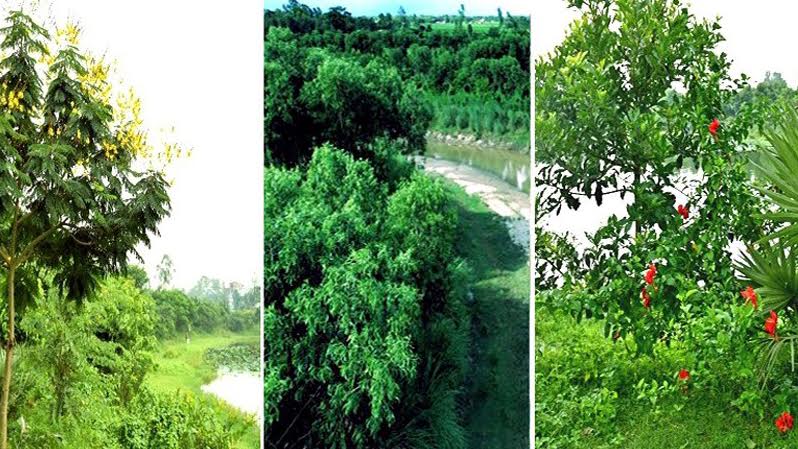
The re-excavated water bodies and their surroundings are now alive with birds, insects and animals that had nearly disappeared from the area. Their banks are covered with a variety of trees and plants, creating lush green landscapes that have transformed the local environment. Colorful flowers, native birds and diverse vegetation along the shores present a striking natural beauty that has renewed people's connection with nature.
Trees planted along the banks have become habitats for many native bird species such as Shalik, Dove, Cuckoo, Jalpipi, Jalmayur, Dahuk, Hadichacha, Doel, Bau Katha Kao, Papiya, Bulbuli, Chatak, Tuntuni, storks, kingfishers, Hudhud, Soheli and Khanjana. The water bodies and adjacent areas also support a wide range of aquatic plants and animals, including algae, moss, fish, butterflies, frogs, bees, squirrels, fireflies, reptiles and small mammals.
Local residents told BSS that they are witnessing the revival of lost ecosystems and biodiversity for the first time in about four decades.
Farmer Harun-or-Rashid of Jharpara village in Badarganj upazila said the re-excavation of the extinct Mora Teesta River and tree plantation along its banks have restored biodiversity and freed large tracts of land from waterlogging.
Housewives Julekha Khatun of Kamarpara village and Lucky Begum of Jharpara said they are now earning livelihoods by rearing ducks and cultivating bananas and vegetables on the banks of the revived Mora Teesta River. Indigenous fish species such as Mola, Dhela, Darkina and Chela are now found in abundance, while tree plantation and crop cultivation have created a greener landscape.
Farmer Ahad Ali of Kazipara village said re-excavation of the extinct Ghirnoi River has removed waterlogging from his land and restored the local ecosystem after decades. Fishermen from Kazipara and nearby Kuthipara villages reported improved fishing opportunities in the revived river, where tree-lined banks have transformed the surrounding environment.
A scenic landscape has also emerged after the re-excavation of Bharardaho Beel in Badarganj upazila. Around 213 species of rare timber, fruit, medicinal and flowering plants have been planted along its 100-foot-wide banks. With rich flora and fauna, the beel has become a bird sanctuary and a popular destination for people seeking natural beauty.
In Mithapukur upazila, homeless housewives Jahanara, Aklima and Nur Salma of Betgara village said re-excavation of the Shosthichhara Beel has benefited hundreds of local families. Stored water from the beel is now used for irrigation and household needs, while its banks support vegetable farming, Napier grass cultivation and duck rearing.
Riverine People Director and Begum Rokeya University professor Dr Tuhin Wadud said the re-excavated water bodies have successfully restored lost ecosystems and biodiversity, providing safe habitats for native fish, insects, birds and animals.
EIR Project Director and BMDA Superintending Engineer Md Habibur Rahman Khan said the project has transformed the greater Rangpur region, allowing people to enjoy the stunning greenery and environmental benefits created by the revived ecosystems along the restored water bodies.