Sunday
23 August, 2026
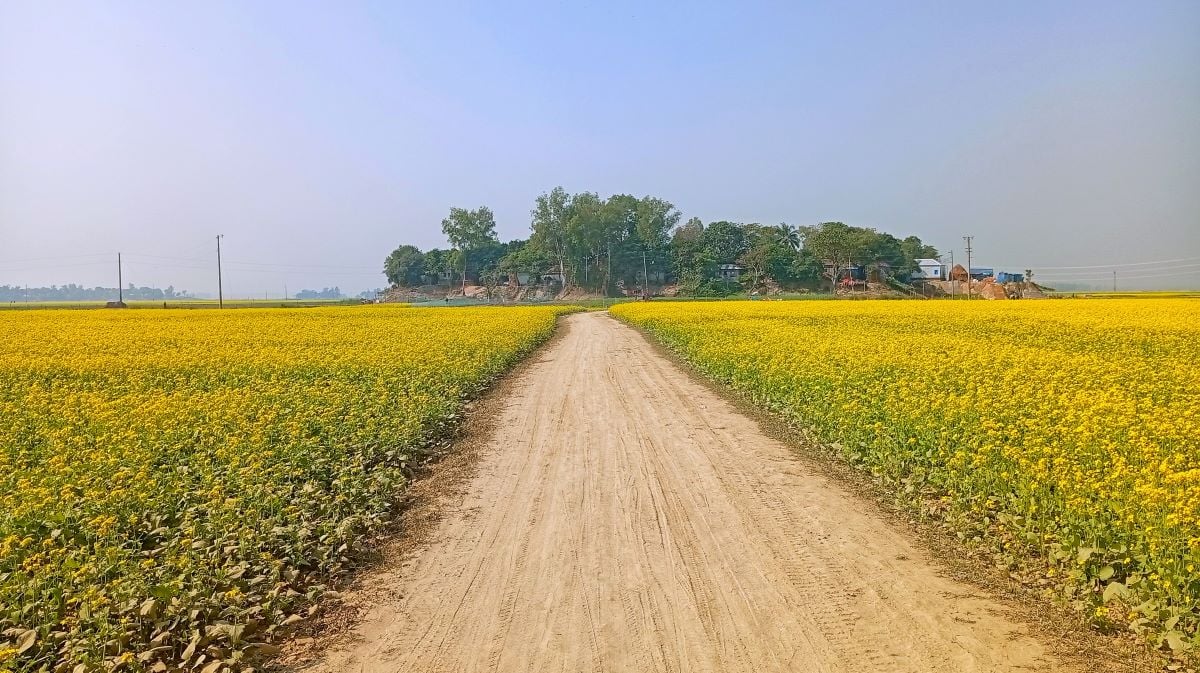
PABNA, Dec 23, 2025 (BSS) - Vast stretches of farmland across Pabna district have turned bright yellow as mustard flowers bloom in full swing this winter, creating a picturesque landscape and bringing optimism to farmers and beekeepers alike.
Every year during winter, mustard flowers blanket fields in almost all upazilas of the district, filling the air with fragrance and the hum of bees. The sight has drawn nature lovers to rural areas, while farmers are hopeful of good yields and fair market prices this season.
According to the Department of Agricultural Extension (DAE), the target for mustard cultivation this season in Pabna was set at 49,082 hectares, of which 42,545 hectares have already been cultivated.
Farmers are increasingly adopting high-yielding mustard varieties such as Bari-14, Bari-15, Bari-18 and Bina-9.
The department also expects around 110 metric tons of honey to be produced this season by installing beehives in mustard fields, much of which will be supplied to local markets and exported abroad.
In areas of Chalan Beel, including Dilpasha union of Chatmohar and Bhangura upazilas, endless rows of mustard flowers now dominate the landscape.
Similar scenes can be observed across Chatmohar, Bhangura, Faridpur, Singra, Gurudaspur, Tarash and Ullapara, transforming the region into a vibrant yellow expanse. The natural beauty has also highlighted the tourism potential of the Chalan Beel area.
Farmers say mustard cultivation requires low investment and minimal effort. Shariful Islam, a farmer from Darappur village in Chatmohar upazila, said he cultivated mustard on three bighas of land this year.
“The high-yielding varieties can be harvested within 55–60 days without irrigation. After harvesting Aman paddy, we can easily grow mustard and still prepare the land in time for Boro cultivation,” he said, adding that mustard leaves improve soil fertility and reduce fertilizer costs for subsequent crops.
Another farmer, Abdur Rahima from Handial Pakpara village, said he cultivated mustard on four bighas of land, spending about Taka 9,000 per bigha. “If the yield is good, we can get 6 to 7 maunds per bigha. With current market prices ranging from Taka 2,800 to Taka 3,000 per maund, mustard farming is profitable,” he said.
Beekeeping has also expanded alongside mustard cultivation. Nayan, a beekeeper who brought beehives from Satkhira to Bhangura, said honey collection during the mustard season is highly productive. “We sell honey at Taka 400 to Taka 500 per kg. Bees increase pollination, which helps farmers get better yields,” he said, adding that he expects to collect about 1,590 kg of honey from 53 beehives this season.
Deputy Director of DAE in Pabna, Md Jahangir Alam Pramanik, said rising demand for locally produced mustard oil has encouraged farmers to expand cultivation.
“Mustard farming is reducing dependence on imported edible oil and increasing farmers’ income. At the same time, modern beekeeping in mustard fields is creating new livelihood opportunities,” he said.
With favorable weather conditions, farmers in Pabna remain optimistic about a successful mustard harvest this year, further strengthening the district’s agricultural output and rural economy.