Saturday
22 August, 2026
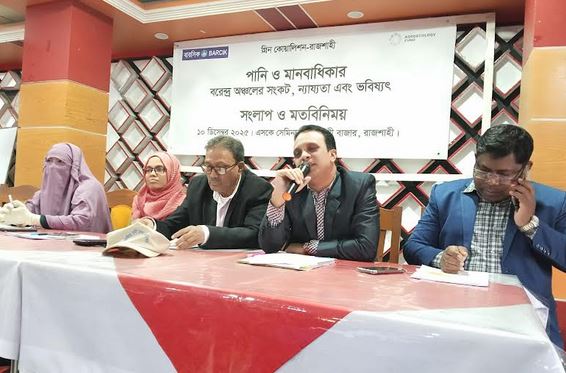
RAJSHAHI, Dec 10, 2025 (BSS) - Researchers and development activists at a dialogue here today unequivocally called for ensuring water rights to all, especially the marginalized ones as they deserve the rights equally.
They said the issue of safe drinking water and sanitation isn't only an individual or personal problem but also a national problem. So, there's no alternative to ensure justice, transparency, accountability and good governance everywhere in the sector.
The observation came in the dialogue titled "Water Disparity and Human Rights: Crisis, Structure and Way Forward” held at SK Food World to mark the World Human Rights Day 2025.
The main theme for the day this year is "Water and Human Rights: Our Everyday Essentials."
While presenting his keynote paper, BARCIK Regional Coordinator Shahidul Islam talked about the existing water crisis in the Barind area elaborately, saying adoption of adequate and effective measures has become indispensable to address the existing water crisis in the vast Barind tract.
Associate Professor Abhijit Roy from the Department of Anthropology at Rajshahi University addressed the dialogue as focal person with River Researcher Mahbub Siddiqui in the chair.
Executive Engineer Zillul Bari at Barind Multipurpose Development Authority, Assistant Engineer Faruque Ahmed at Rajshahi WASA, development activist Afzal Hossain local unit president of Bangladesh Mohila Parishad Kolpona Roy, Journalist Rashed Ibne Obayed and Muhammad Anisuzzaman also spoke.
The discussants unanimously said water resource management in the Barind region is crucial due to declining groundwater levels, exacerbated by climate change and unsustainable irrigation practices.
They said a holistic approach is needed, focusing on surface water conservation, efficient supply, demand management, and community involvement to ensure sustainable water resources for the region.
Mahbub Siddikey stressed the need for ensuring water resource management through proper implementation of water law and rules.
The meeting was told that the over-extraction of groundwater for irrigation is a major issue, leading to declining water levels. Droughts and erratic rainfall patterns due to climate change are intensifying water scarcity.
In his remarks, Afzal Hossain said inadequate water management practices, including inefficient irrigation methods, contribute to water wastage. Conversion of wetlands and water bodies for agriculture and other purposes reduces surface water storage.
Besides, insufficient coordination between different stakeholders and lack of a comprehensive management plan hinder effective water management.
He, however, said adopting a holistic approach that considers ecological, social, and economic needs is needed.
Youth Leader Atikur Rahman said involving local communities in water management planning and implementation through participatory rural appraisal and other methods is required.