Wednesday
02 September, 2026
News Flash
News Flash
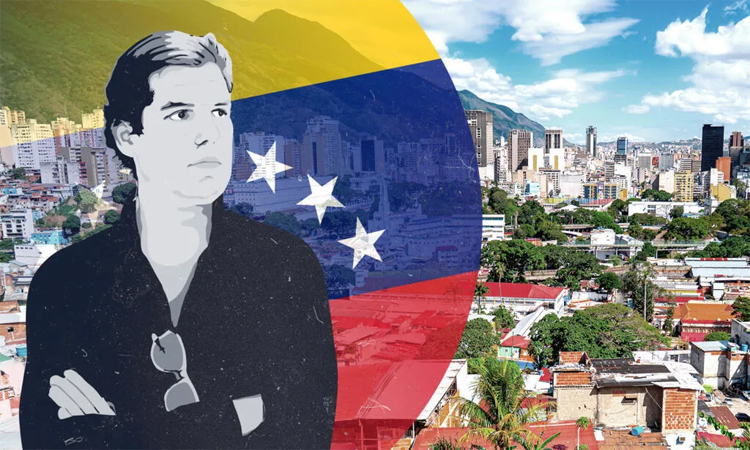
CARACAS, Sept 2, 2026 (BSS/AFP) - Alejandro Betancourt, who made his fortune through murky dealings with Venezuela's bygone Chavista administrations, is now rubbing shoulders with US President Donald Trump under Washington's massive oil deal with Caracas.
The multibillion-dollar pact hands about one-fifth of Venezuelan reserves over to the United States and has been described by Trump as "the biggest oil deal in world history."
Betancourt has found himself at the center of the bargain.
The accord grants his company, North American Blue Energy Partners (NABEP), "100-year concessions for 17 oil fields with proven reserves of approximately 65 billion barrels," the White House stated Monday.
NABEP is the second-largest private oil producer in Venezuela, which holds the world's largest proven crude reserves.
- 'Bolichico' -
Its 46-year-old owner is a low-profile operator who studied at Suffolk University in the US city of Boston.
Betancourt avoids public appearances in his home country but has appeared in business publications sporting well-fitted shirts and sweaters draped over his shoulders.
He is known as a "bolichico" -- a businessman who amassed huge wealth under the administrations of late socialist leader Hugo Chavez and his successor Nicolas Maduro.
Trump's new man on the ground has also been linked to a corruption scandal in the state oil company PDVSA.
The case saw 100 senior officials dismissed and charged with tampering with figures that led to the disappearance of $500 million.
Betancourt was among those accused of inflating prices in company contracts, according to Tarek William Saab, who was attorney general at the time.
He signed at least 12 contracts worth $5 billion overall through his company Derwick Associates in 2009, says NGO Transparencia Venezuela, when a severe energy crisis was wracking the Chavez-governed country.
Derwick Associates imported power plants that ultimately produced just 20 percent of the megawatts that had been promised.
The NGO estimates that Venezuela paid a 138 percent markup on the project worth around $2.1 billion.
- More legal woes -
Betancourt was arrested in the United Kingdom in 2025 when Switzerland opened criminal proceedings against him for money laundering.
Prosecutors in Zurich told AFP that they had initially requested his extradition but later withdrew the request due to "specific aspects of British extradition law."
Switzerland's attorney general said it had asserted Zurich's exclusive jurisdiction in the case during a brief phone call with then US attorney general Pam Bondi, amid reports of US pressure to drop the charges.
Betancourt returned to Venezuela from Miami in June, according to media reports.
He is involved in around 50 companies around the world, including the Spanish sunglasses firm Hawkers, which he acquired in 2016. Football star Lionel Messi later collaborated with Hawkers on a designer line.
- 'Shady' -
Barbados-based NABEP was founded in April 2024 and that same month became the first firm to sign a production sharing agreement with PDVSA, a source who requested anonymity told AFP.
The company came to life in a "somewhat shady environment," said Oswaldo Felizzola of the Institute of Higher Administration Studies (IESA).
"Venezuela was under sanctions and that company was already carrying out operations" at a time when other multinationals steered clear of the country, he said.
Weeks after Nicolas Maduro's abduction by US forces on January 3, NABEP's General Director Pedro Balart celebrated a new investment scheme for private actors at an official event, calling it a "win-win."
The company was committed to producing 300,000 barrels of oil a day "by the end of this year," he said.
Experts estimate that NABEP currently produces between 150,000 and 180,000 barrels per day, while the US company Chevron produces between 230,000 and 250,000 barrels per day.
Interim leader Delcy Rodriguez insists that Venezuelan sovereignty will remain intact despite the extent of the control granted to the US by Friday's deal.
Guided by Washington, she has opened up Venezuela's mining, oil and electricity sectors to foreign and private capital.
Venezuelan oil production rose by 29.8 percent between January and July, reaching an output of 1.2 million barrels per day.
That figure falls short of the three million barrels produced daily at the end of the last century, however.